
TL;DR

Get backup power and energy gear delivered free with Prime
- Fast, free delivery on millions of items
- Prime Video, Amazon Music and more included
- Member-only deals all year
Google says fuel prices are now available to UK users of Google Maps and Waze, with petrol and diesel prices shown for nearby stations. The feature uses the UK Government’s Fuel Finder data, but the announcement does not specify how frequently prices update or guarantee that every station is listed.
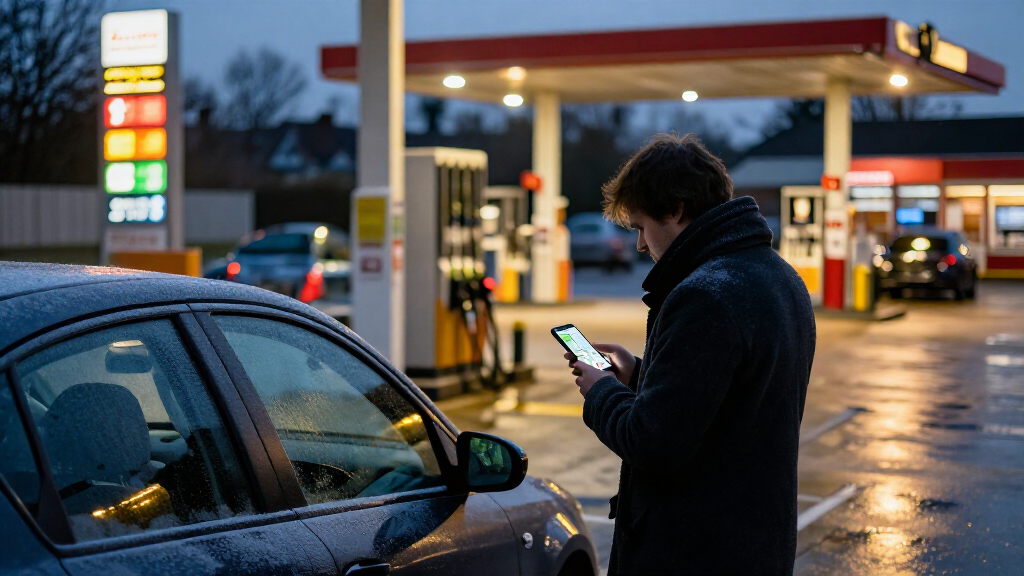
Google says drivers in the UK can now use Google Maps and Waze to view petrol and diesel prices at nearby fuel stations, a change that could help motorists compare costs before choosing where to fill up. The feature uses data from the UK Government’s Fuel Finder scheme and can be accessed by searching for “petrol” or “fuel” in either app.
According to Google’s announcement, price information appears on the map for stations nearby. Users can check rates for petrol and diesel and see prices for the different fuel types offered at a station. Google presents the tools as a way to compare local options without relying only on the nearest forecourt.
The company said the feature was developed with the UK Government and the Waze community, and that it uses Fuel Finder data. Google described the information as a real-time view of fuel costs, but did not explain in the announcement how quickly a station’s reported price appears in the apps or how often listings are refreshed.
To look for prices, motorists can open Maps or Waze and search for “petrol” or “fuel.” The announcement says users can then see nearby stations and displayed prices. It does not provide a separate app version, device requirement, or detailed step-by-step instructions beyond that search.
Compare Prices Before Filling Up
Fuel is a recurring cost for many households, and even modest differences between nearby stations may affect what a driver pays for a tank. Displaying prices within navigation apps gives motorists another way to compare local options while planning a journey, rather than making a separate search or stopping at the first available forecourt.
The practical value will depend on whether information is current and complete for a driver’s area. Seeing prices in an app can make comparison more convenient, but it does not by itself show whether a station has fuel available, whether its displayed price has changed since reporting, or whether travelling farther to a cheaper station is worthwhile. Drivers may still want to check the station’s price on arrival.
The feature also brings government fuel-price data into services many motorists already use for directions. That may make the data easier to find during ordinary trip planning, although Google’s announcement does not quantify how many stations are covered or estimate potential savings for users.
As an affiliate, we earn on qualifying purchases.
The announcement is presented by Google as a UK launch made in partnership with the government and the Waze community. Its stated data source is Fuel Finder, the government scheme used to supply station price information. The report says the feature covers petrol and diesel and lets users view prices for the fuel types available at an individual station.
Google framed the change against the pressure of living costs and the expense of motoring. The development is a practical addition to existing map and navigation apps, not a new fuel-pricing scheme: the prices shown are described as coming from Fuel Finder. The source material does not give a rollout timetable, a list of supported locations, or details of how the government data is submitted and checked.
““We’re launching fuel prices in the UK on Google Maps and Waze.””
Price Updates and Station Coverage
Google’s announcement does not specify how often prices update, how quickly a change at a forecourt reaches Maps or Waze, or what “real-time” means operationally. It also does not state how many stations are listed, whether coverage is uniform across the UK, or how missing or out-of-date entries are handled.
The source does not confirm that every fuel type or station will appear for every user, and it gives no details about app availability by operating system or version. It also does not say whether the displayed price reflects availability at the pump when a driver arrives. Those details may affect how useful the listings are for a particular journey.
Check Listings During Your Journey
Motorists can search for “petrol” or “fuel” in Google Maps or Waze and compare the prices shown at nearby stations. As the feature is used, the practical questions to watch are whether coverage expands, how regularly listings refresh, and whether Google or the government publishes further details on data quality and station participation.
For now, drivers should treat the app listings as a comparison aid rather than a guarantee of the price or fuel availability when they reach a station. Google’s announcement does not set out a further launch milestone or give a date for additional information.
Key Questions
How can I find fuel prices in Google Maps or Waze?
Google says to search for “petrol” or “fuel” in either app. Nearby stations and their listed prices should appear on the map.
Which fuel prices are included?
The announcement names petrol and diesel and says users can view prices for the different fuel types offered by a station.
Where does the price information come from?
Google says the feature uses data from the UK Government’s Fuel Finder scheme and was developed with the government and the Waze community.
Are the prices guaranteed to be current?
Google describes the information as a real-time view, but its announcement does not specify update frequency or guarantee that a listed price will still be available when a driver arrives.
Does the announcement say every UK station is included?
No. Google does not provide a station count or confirm that all forecourts are covered. Coverage and handling of missing listings are not explained in the source announcement.
Source: rss
Halloween Picks
halloween
As an affiliate, we earn on qualifying purchases.