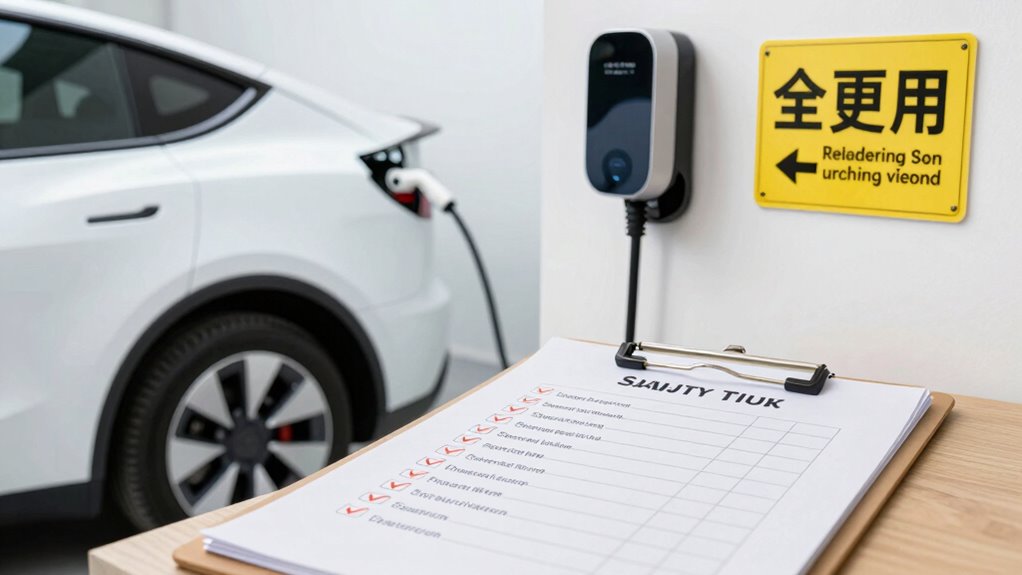
Before plugging in your home EV charger, verify the outlet or circuit is rated correctly and on a dedicated breaker. Check your equipment for damage, wear, or loose connections, and confirm the charger is grounded properly. Inspect the charging cord and plug, test indicator lights, and verify vehicle connection security. Safety features should be active, and the area free of hazards like moisture or debris. Stay vigilant—more tips to make your charging safer and smoother are ahead.
Key Takeaways
- Verify the charger is properly installed according to manufacturer instructions and local electrical codes.
- Ensure the outlet or circuit is dedicated, rated correctly, and on a separate breaker for safe operation.
- Conduct a thorough pre-use inspection of the charging cord, plug, and connection points for damage or wear.
- Confirm the charging station is properly grounded and all safety features are functional.
- Check that the vehicle’s charging port aligns correctly and that indicator lights show normal operation before plugging in.
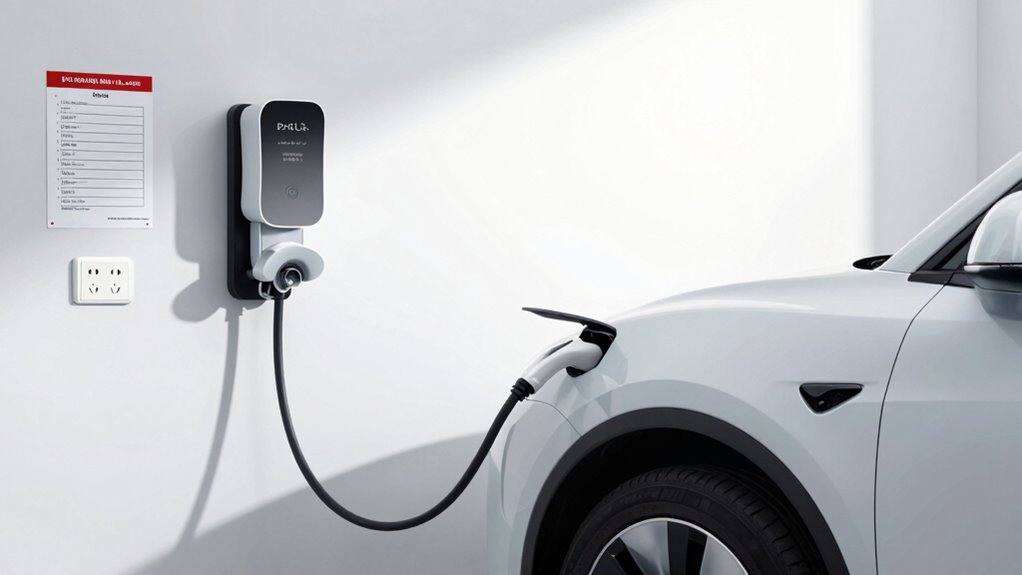
Charging your electric vehicle at home is convenient, but guaranteeing safety is essential. Before you plug in for the first time, it’s important to review your setup thoroughly. Proper installation of your charging station helps prevent hazards like electrical fires or shocks. Start by examining the installation tips provided by the manufacturer. Make sure the outlet or circuit dedicated to your EV charger is rated appropriately and is on a separate breaker to avoid overloads. If you’re unsure about the wiring or breaker capacity, consult a licensed electrician. They can verify that everything complies with local electrical codes and is safe to use. An improper installation could lead to malfunction or dangerous situations, so don’t skip this step.
Once the charger is installed, you should familiarize yourself with troubleshooting basics. Testing the charger before your first use can reveal issues early. Check the power supply connection and ensure there are no loose wires or damaged components. Use a multimeter to verify voltage levels if you’re comfortable doing so, or have a professional do it for you. Inspect the charging cord and plug for signs of wear or damage. Damaged cords can cause short circuits or electrical shocks, so replace any frayed or cracked cables immediately. Also, confirm that the charging station is properly grounded. Grounding is critical for safety, preventing electrical shocks in case of faults. Additionally, high-quality projectors often feature built-in safety mechanisms that help prevent electrical issues during operation.
As you prepare to start charging, verify that your vehicle’s charging port aligns properly with the station and that the connector fits securely. Many issues during charging stem from loose connections or incompatible hardware. If your charger has an indicator light, confirm it shows normal operation. If it signals an error, consult the troubleshooting basics section in the user manual. Regularly maintaining your charging equipment is equally important. Keep the area free of debris, moisture, and flammable materials. If you notice any unusual smells, sparks, or overheating, disconnect immediately and have a professional inspect your setup.
Frequently Asked Questions
Can I Use Any Standard Outlet for EV Charging at Home?
You can’t use any standard outlet for EV charging at home. Check your charger compatibility and outlet requirements first. Most EV chargers need a dedicated, properly grounded outlet, often a 240-volt outlet for faster charging. Using a regular 120-volt outlet may work for Level 1 charging but is slow. Always verify your outlet meets your charger’s specifications to avoid safety hazards and ensure efficient charging.
How Often Should I Inspect My Charging Station for Safety?
You should inspect your charging station at least once every three to six months to spot any electrical hazards early. Regular inspections help you identify loose connections, frayed cords, or damaged components that could cause safety issues. Stay vigilant, especially after severe weather or if you notice any irregularities during use. Consistent inspection frequency guarantees your charging setup remains safe, reducing the risk of electrical hazards and keeping your home protected.
Are There Specific Electrical Codes I Must Follow?
Did you know that nearly 60% of electrical fires start at home? You must follow electrical codes, including wiring standards and obtaining electrical permits, to guarantee safety. These regulations help prevent hazards and ensure your charging station is compliant. Always check local requirements before installation, and consider hiring a licensed electrician. Staying within electrical codes protects your home and loved ones, making your EV charging setup both safe and legal.
What Troubleshooting Steps if My Charger Doesn’T Work?
If your charger doesn’t work, start by checking charger compatibility with your vehicle and electrical system. Then, perform wiring diagnostics—inspect connections, outlets, and circuit breakers for damage or loose wires. Make certain the charger is properly plugged in and that the circuit has power. If issues persist, consult a licensed electrician to verify everything meets safety standards and to troubleshoot further, preventing potential electrical hazards.
Is Professional Installation Necessary for Home EV Chargers?
Think of installing your home EV charger like building a sturdy bridge—you want it done right. Professional installation isn’t always necessary but highly recommended to guarantee charger compatibility and safety. It might cost more upfront, but it can save you from costly errors later. Experts handle wiring, permits, and code compliance, giving you peace of mind. Ultimately, professional help makes your charging setup reliable and safe.
Conclusion
By ticking off these safety checks, you’re building a fortress of protection around your home charging setup. Think of it as tending a garden—you’ll enjoy peace of mind knowing everything is in perfect bloom. Taking these steps guarantees your EV charges safely and smoothly, preventing potential hazards from sneaking in like weeds. So, stay vigilant and proactive—your home’s safety is the foundation for a worry-free driving experience.