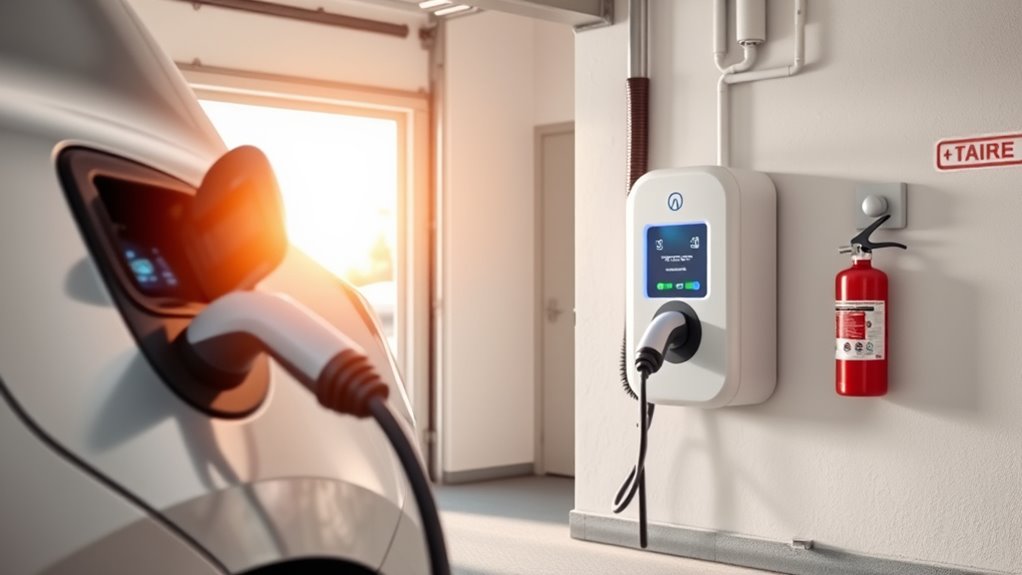

To safely charge your EV at home, verify your charger is certified and installed correctly following manufacturer instructions. Inspect cables and outlets regularly for damage, and avoid using damaged or frayed cords. Keep the charging area dry, away from water sources, and avoid using extension cords unless approved by the manufacturer. Proper electrical system maintenance and adherence to safety guidelines reduce risks like fires and shocks. Stay attentive to safety measures, and you’ll safeguard your home while keeping your EV charged efficiently.
Key Takeaways
- Use only certified chargers and follow manufacturer installation instructions for safe operation.
- Regularly inspect charging cables and outlets for damage before use.
- Keep the charging area dry, clean, and away from water sources.
- Avoid using unapproved extension cords and ensure proper electrical capacity.
- Follow local electrical codes and maintain equipment to prevent hazards.
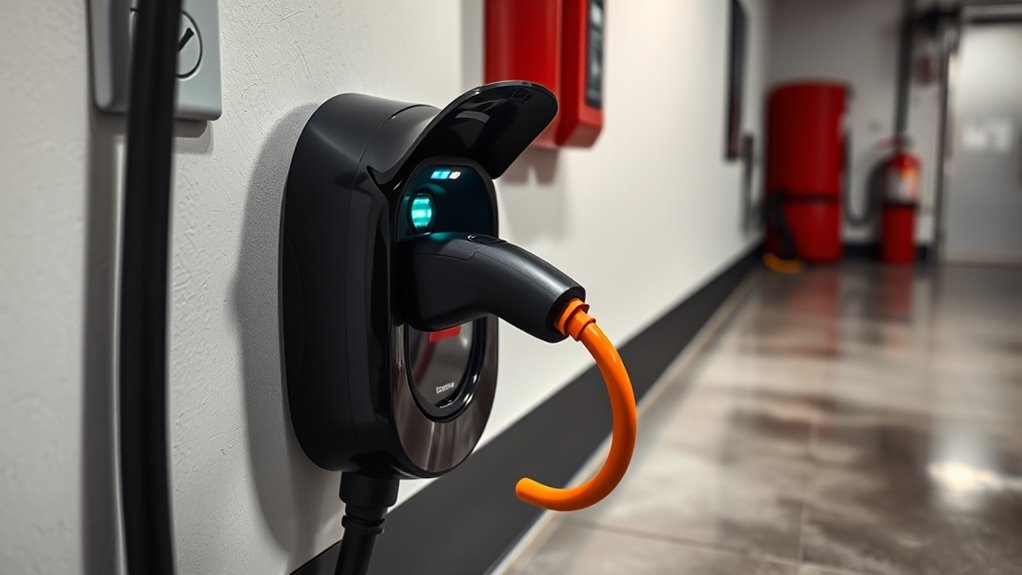
Charging your electric vehicle (EV) at home can be convenient, but it’s essential to prioritize safety to prevent accidents or damage. One of the most important aspects of safe home charging is understanding charger safety. Your EV charger is an electrical device that, if improperly used, can pose serious risks. Always verify that your charger is certified by relevant safety standards and installed according to manufacturer instructions. Avoid using damaged or frayed cords, and never force a connection if it doesn’t fit properly. Proper charger safety reduces the likelihood of electrical hazards, such as short circuits or overheating, which can lead to fires or electric shocks.
Electrical hazards are a real concern when charging at home, especially if the electrical system isn’t up to date or properly maintained. Before plugging in your EV, inspect your outlet and charging cable for signs of damage. If you notice exposed wires, burn marks, or other damage, don’t use the charger until it’s repaired or replaced. It’s also wise to have a qualified electrician evaluate your home’s electrical system, especially if you’re installing a new charging station or if your home is older. Ensuring your electrical wiring can handle the additional load minimizes the risk of overloads or short circuits, which are common electrical hazards associated with home EV charging.
When setting up your charging station, position your charger and cables away from water sources and high-traffic areas to reduce the risk of accidental damage or tripping hazards. Keep the area around the charging port clean and dry; moisture can increase the risk of electrical shock. Never attempt to modify or bypass safety features on your charger—these are in place to protect you from electrical hazards. Also, avoid using extension cords unless they are specifically rated for EV charging and approved by the manufacturer. Extension cords can increase resistance and heat, elevating the risk of electrical failure or fire.
Another important consideration is the color temperature of your charging setup, which can influence visible safety indicators and overall electrical safety. Finally, always follow the manufacturer’s instructions and local electrical codes when charging your EV. Regularly check for updates or recalls related to your charging equipment. Proper maintenance, strict adherence to safety guidelines, and awareness of potential electrical hazards are key to keeping your home EV charging safe. By taking these precautions, you’ll ensure that your charging routine remains convenient and safe, giving you peace of mind every time you plug in.
Frequently Asked Questions
Can I Use a Regular Household Outlet for My EV Charger?
Yes, you can use a regular household outlet for your EV charger, but you should prioritize household outlet safety. Confirm your outlet can handle the charger’s power requirements to avoid compatibility issues. Check the charger’s specifications and verify that your outlet’s amperage matches. If your EV charger demands higher power, consider upgrading to a dedicated circuit to prevent overheating or electrical problems, maintaining safe and efficient charging.
How Often Should I Inspect My EV Charging Equipment?
Did you know that regular inspections can reduce electrical hazards by up to 80%? You should inspect your EV charging equipment at least once every three to six months, depending on usage. An inspection schedule helps catch wear and tear early, ensuring proper equipment maintenance. Look for frayed cords, loose connections, or signs of damage. Staying proactive keeps your charging safe and efficient, giving you peace of mind every time you plug in.
Are There Specific Safety Certifications I Should Look For?
You should look for EV charging equipment with certification standards like UL, ETL, or CSA, which guarantee it meets strict safety requirements. Check for safety labels that confirm compliance with these standards. These certifications indicate the charger has been tested for electrical safety and durability, helping protect you and your home. Always choose certified products to minimize risks and ensure safe, reliable charging at home.
What Should I Do if I Smell Burning During Charging?
If you smell burning while charging, immediately unplug your EV charger and stay clear of the area. Check for smoke detection signs and confirm your fire extinguisher is ready nearby. Do not attempt to handle the situation yourself if the smell persists or if smoke appears; instead, call emergency services. Prioritize your safety, and remember that quick action can prevent a fire from spreading.
Can I Leave My EV Charging Overnight Safely?
You can leave your EV charging overnight, but think of it as tending a delicate garden—proper battery maintenance and smart charging station placement are key. Make certain your charger is in a well-ventilated, cool spot away from flammable materials. Regularly check for any signs of trouble, like unusual heat or smells. By doing so, you turn overnight charging into a safe, effortless routine, nurturing your vehicle’s health and your peace of mind.
Conclusion
By following these simple safety tips, you protect your property and preserve your peace of mind. Prioritize proper practices, prevent potential problems, and keep your home and loved ones safe. Staying vigilant and vigilant ensures your EV charging experience remains worry-free and wonderful. Remember, safety starts with you—stay smart, stay secure, and enjoy your journey with confidence and care. Your cautious commitment creates a safe, seamless, and stress-free charging routine.