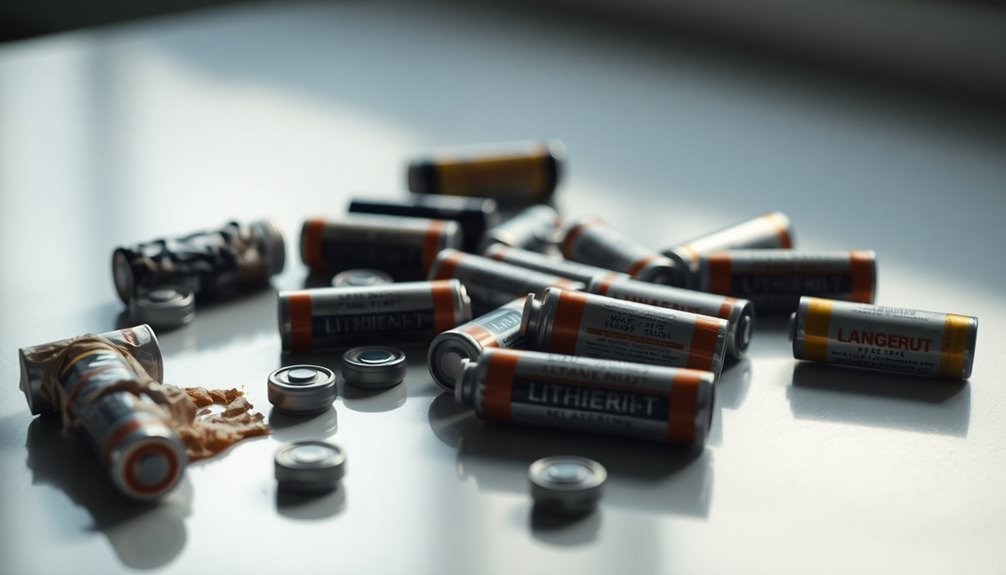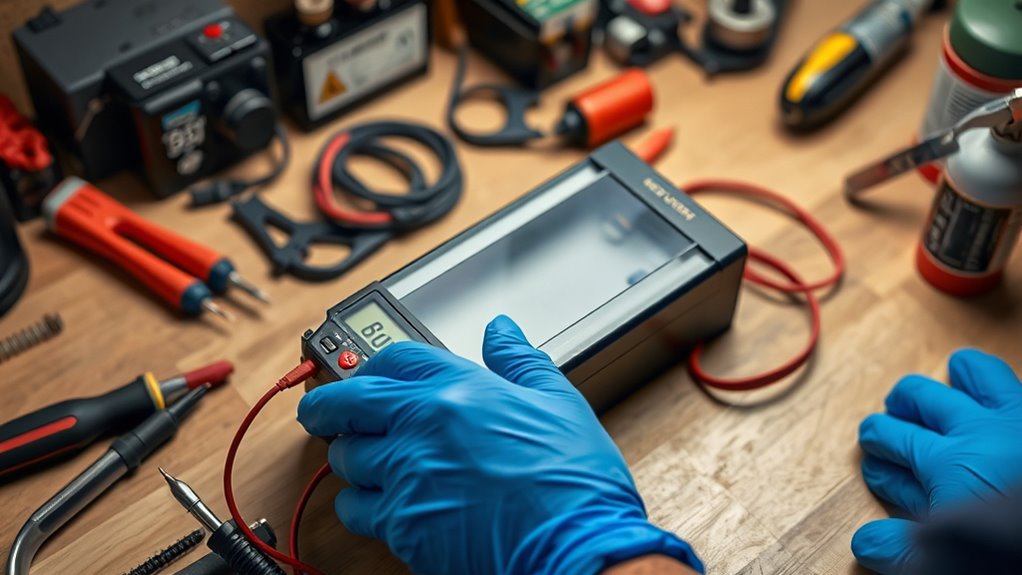

To prevent DIY battery fires, always wear protective gear like gloves and goggles, and work in a well-ventilated, clutter-free area away from flammable materials. Use insulated tools and proper chargers compatible with your batteries. Keep a fire extinguisher nearby and never leave charging batteries unattended. Regularly inspect for damage or swelling, and follow manufacturer instructions carefully. Staying vigilant and using the right tools can greatly reduce fire risks—discover more safety tips as you explore further.
Key Takeaways
- Always use protective gear like gloves and goggles when handling batteries to prevent leaks and sparks.
- Keep a Class C fire extinguisher nearby and avoid water for lithium-ion battery fires.
- Work in well-ventilated, clutter-free areas away from flammable materials to prevent overheating and fires.
- Inspect batteries for damage, swelling, or defects before use, and avoid overcharging or unattended charging.
- Follow manufacturer instructions precisely and stay vigilant to identify early signs of overheating or failure.
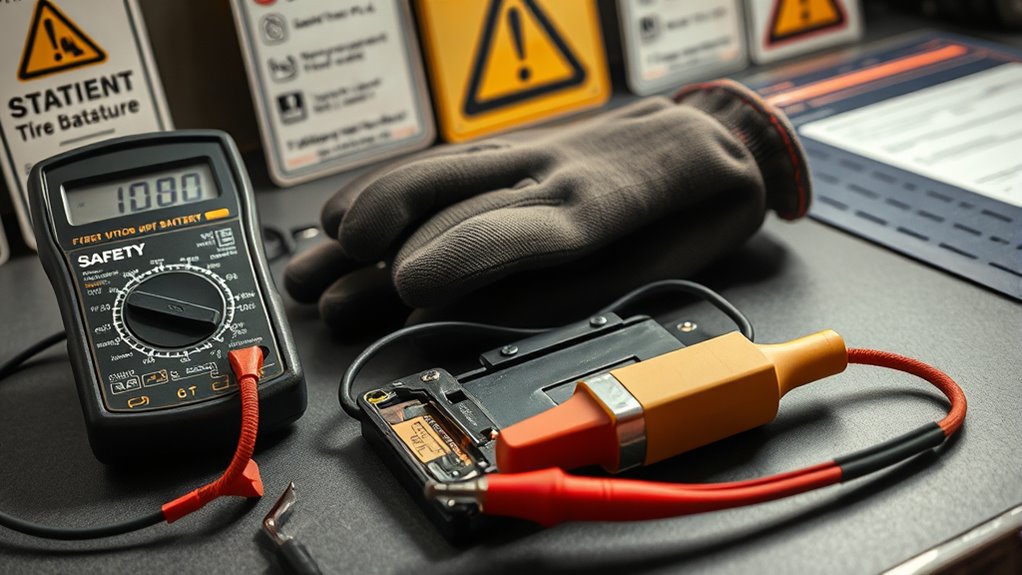
Have you ever considered how easily a DIY battery fire can ignite if you’re not careful? When working with batteries, especially lithium-ion or other high-capacity types, safety should always be your top priority. Proper battery safety practices are vital to prevent fires that could cause damage or injury. One of the most effective ways to do this is by using the right tools and following established fire prevention methods. By doing so, you minimize risks and guarantee your project stays safe from start to finish.
First, invest in quality safety gear, including gloves, goggles, and a fire-resistant mat or container. These tools help you handle batteries safely and contain any accidental sparks or leaks. When working with batteries, avoid metal jewelry or conductive tools that could cause a short circuit. Instead, use insulated tools designed specifically for electronics work. These prevent accidental contact between the battery terminals and other conductive surfaces, considerably reducing the chance of sparks or fires.
You should also keep a fire extinguisher nearby—preferably one rated for electrical fires (Class C). Having this accessible allows you to respond quickly if a battery starts to overheat or catch fire. Never attempt to put out a lithium-ion battery fire with water, as this can make the situation worse. Instead, use a fire extinguisher rated for electrical fires or a sand bucket to smother flames safely. Additionally, work in a well-ventilated area, away from flammable materials, to prevent the buildup of heat or fumes that could ignite nearby objects.
Another vital aspect of fire prevention is proper battery handling and storage. Always inspect batteries for damage or swelling before use. Damaged batteries are more prone to short circuits and fires. When charging or discharging batteries, use chargers designed for that specific type and capacity. Overcharging or using incompatible chargers can lead to overheating. Never leave charging batteries unattended, and always monitor their temperature during charging sessions. If a battery becomes excessively hot, disconnect it immediately and move it to a safe, non-flammable area.
Finally, educate yourself about the specific characteristics and risks associated with the batteries you’re working with. Follow manufacturer instructions precisely, and don’t take shortcuts. Remember, the key to fire prevention is vigilance and careful handling. Proper battery safety practices are essential to minimize hazards and ensure your project remains safe. By using the right tools, practicing safe battery safety, and maintaining awareness throughout your project, you can greatly reduce the risk of a dangerous DIY battery fire. Staying proactive ensures your safety and the safety of those around you, making your DIY efforts both successful and secure.
Frequently Asked Questions
What Are Common Signs of Impending Battery Fires?
You should watch for signs of an impending battery fire, like battery swelling or unusual odors. Swelling indicates gas buildup inside the cell, while strange smells may signal chemical leaks or overheating. If you notice either, stop using the battery immediately, disconnect it from any devices, and handle it with care. Taking prompt action can prevent a potential fire, keeping you and your surroundings safe.
How Often Should I Inspect DIY Battery Setups?
Think of your DIY battery setup as a garden that needs regular tending. You should inspect it at least once a month, focusing on connections, signs of corrosion, and any swelling or damage. This inspection schedule guarantees you’re catching issues early before they bloom into fires. Stick to a consistent maintenance frequency, and you’ll keep your batteries safe, extending their lifespan and preventing potential hazards.
Are There Specific Fire Extinguishers for Battery Fires?
Yes, there are battery-specific extinguishers designed for battery fires. These fire suppression methods use agents like Class D dry powder, which effectively smothers lithium or other battery fires without spreading them. You should always have one nearby if you’re working with DIY battery setups. Regularly check your extinguisher’s pressure and ensure it’s suitable for electrical and battery fires. Being prepared with the right tools keeps you safe and prevents fire escalation.
How Do I Safely Dispose of Damaged Batteries?
You should safely dispose of damaged batteries by taking them to a designated battery recycling center, as they handle hazardous waste properly. Avoid throwing them in the trash or recycling bins, because they can cause fires or environmental harm. Contact local hazardous waste programs for pickup or drop-off options. Proper disposal helps prevent leaks, fires, and pollution, ensuring safety for you and the environment.
Can I Prevent Battery Fires With Protective Gear?
Yes, you can help prevent battery fires with protective gear and safety equipment. Wearing gloves, goggles, and an anti-static apron keeps you safe from potential sparks or chemical leaks. Always use insulated tools and work in a well-ventilated area. Proper protective gear minimizes risks, ensuring you handle batteries safely and reduce the chance of accidental fires or injuries during DIY projects.
Conclusion
By following these tips and using the right tools, you can prevent DIY battery fires and keep your projects safe. Always work in a well-ventilated space, wear protective gear, and double-check your connections—think of it as your modern-day knight’s armor. Remember, even in this age of smartphones and hoverboards, respecting battery safety is key. Stay vigilant, and your battery adventures will stay safe—no more “fire in the hole” surprises!