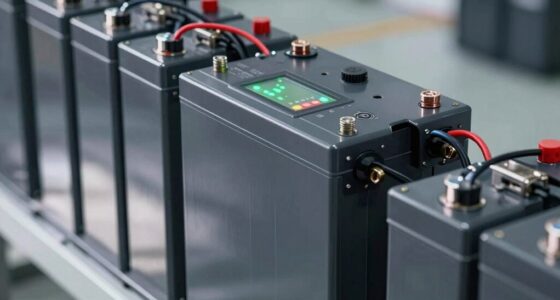
When choosing between DC breakers and fuses, consider your system’s importance and how quickly you need to respond to faults. Fuses are simple and cheap, ideal for systems with infrequent overloads, but they require replacement after blowing. Breakers are more expensive but offer quick reset, making them better for critical or high-reliability applications. Understanding these basic rules helps you pick the right protection device, and if you keep exploring, you’ll discover even smarter choices for your setup.
Key Takeaways
- Use fuses for low-cost, infrequent overload protection in small or non-critical systems.
- Choose DC breakers for high-reliability, quick-reset protection in critical or complex applications.
- Fuses are single-use and require replacement; breakers are reusable and easily resettable.
- Breakers often have adjustable trip settings and smart features for tailored and remote control.
- Select protection device based on system size, safety needs, maintenance preferences, and operational continuity.
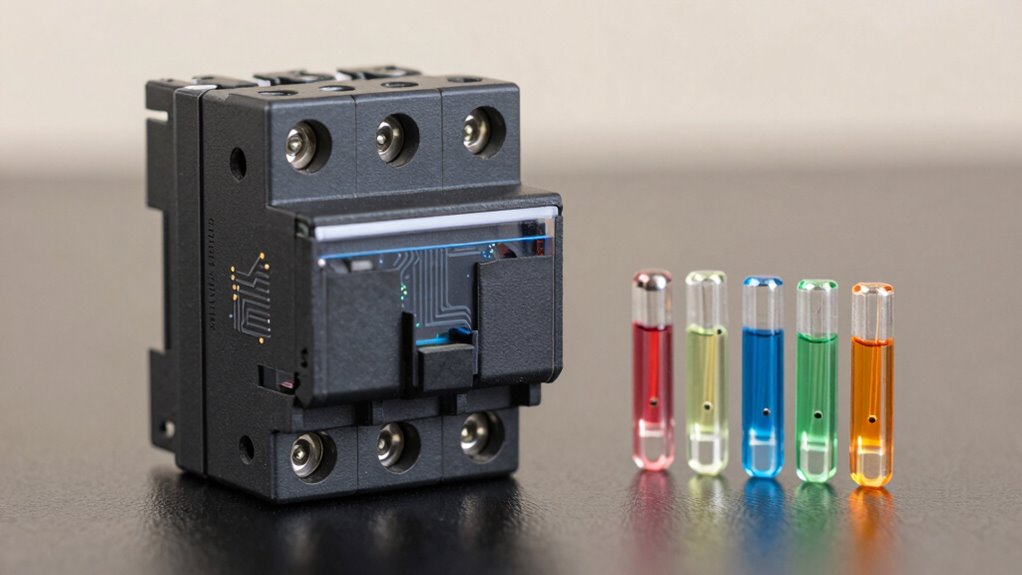
When it comes to protecting electrical systems, understanding the differences between DC breakers and fuses is essential. Both are vital components of circuit protection, designed to prevent damage from overloads and short circuits, but they serve different roles in maintaining electrical safety. Knowing which one to use in a specific situation can help you ensure your system operates reliably and safely. Fuses are simple devices that contain a thin strip of metal that melts when too much current flows through it. When that happens, the fuse blows, breaking the circuit and stopping the flow of electricity. They’re inexpensive, easy to replace, and effective for protecting circuits against overcurrent conditions. However, fuses are one-time use; once they blow, you need to replace them before the circuit can function again. This can be inconvenient in systems that require frequent maintenance or quick recovery. DC breakers, on the other hand, are more sophisticated. They are designed to automatically trip when they detect an overload or short circuit, opening the circuit to stop current flow. Unlike fuses, breakers can be reset easily without replacement, making them more practical for systems that need continuous operation or frequent protection. They also provide more precise control over circuit protection because many DC breakers include adjustable trip settings, enhancing electrical safety by allowing you to tailor protection levels to specific needs. Additionally, circuit protection devices like DC breakers can be integrated with smart control systems for remote monitoring and management. Choosing between DC breakers and fuses depends on your application’s requirements. For instance, if you need a simple, low-cost solution for a system with infrequent overloads, fuses might be the way to go. They’re suitable for small-scale or less critical systems where replacing a blown fuse isn’t a major concern. Conversely, if your system demands high reliability, quick recovery, and ongoing protection, DC breakers are generally preferred. They allow for faster responses and easier maintenance, which is crucial in critical applications like solar power systems, electric vehicles, or industrial setups. Keep in mind that circuit protection isn’t just about preventing equipment damage; it’s also a fundamental aspect of electrical safety. Properly selecting and maintaining the right protection device helps prevent dangerous faults that could pose shock hazards or lead to fires. Whether you opt for fuses or DC breakers, understanding their differences and how they contribute to electrical safety ensures you create a safer environment and maintain the integrity of your electrical systems.
Frequently Asked Questions
How Do DC Breakers Handle High-Voltage DC Circuits Differently?
DC breakers handle high-voltage DC circuits differently by incorporating advanced arc suppression techniques to extinguish arcs quickly and prevent damage. They also have higher voltage tolerance, allowing them to safely interrupt large currents without false tripping. Unlike fuses, these breakers can be reset easily after a fault, offering reliable protection while managing the unique challenges of high-voltage DC circuits effectively.
What Are the Maintenance Requirements for DC Breakers Compared to Fuses?
You need to perform regular inspection routines on DC breakers to guarantee they operate correctly, checking for wear, corrosion, and mechanical issues. They generally require less frequent replacement compared to fuses, which need immediate replacement after blowing. While fuses require minimal maintenance, DC breakers may need periodic testing and cleaning every few years. Proper maintenance of both ensures reliable circuit protection and extends their service life.
Can Fuses Be Reset After They Blow, Like DC Breakers?
Fuses can’t be reset after they blow because they require fuse replacement, unlike DC breakers with reset capability. When a fuse blows, it’s a fixed fault that needs replacing, not resetting. You must carefully choose between fuse replacement and resetting a breaker based on your protection needs. Recognizing this difference helps you maintain a safe, sound system, ensuring you select the right device for reliable, robust protection.
Are DC Breakers More Cost-Effective Than Fuses Long-Term?
DC breakers are generally more cost-effective than fuses over the long term because they can be reset and reused, reducing replacement costs. While the initial investment might be higher, you’ll save money in the long run through fewer replacements and maintenance. The cost comparison favors DC breakers if you prioritize long-term savings, especially in systems where frequent protection is needed, making them a smarter financial choice.
How Do Environmental Conditions Affect the Performance of Each Protection Device?
Imagine your protection device facing harsh weather, like rain and heat. Environmental conditions greatly influence their performance—fuses can corrode faster with moisture, reducing reliability, while DC breakers often have better corrosion resistance and thermal stability. High temperatures may cause breakers to trip prematurely, but fuses might blow unexpectedly. Choose devices designed for your environment to guarantee consistent protection, especially in extreme conditions where durability matters most.
Conclusion
Ultimately, choosing between DC breakers and fuses is like selecting a gentle guardian for your system’s delicate dance. Think of a breaker as a vigilant sentinel, quietly stepping in when needed, while a fuse softly whispers a temporary pause, ready to reset. Both serve as caring protectors, keeping your equipment safe from unseen storms. Trust your instincts and these subtle guardians to guide your choice, ensuring your system remains safe and serene, no matter what challenges arise.