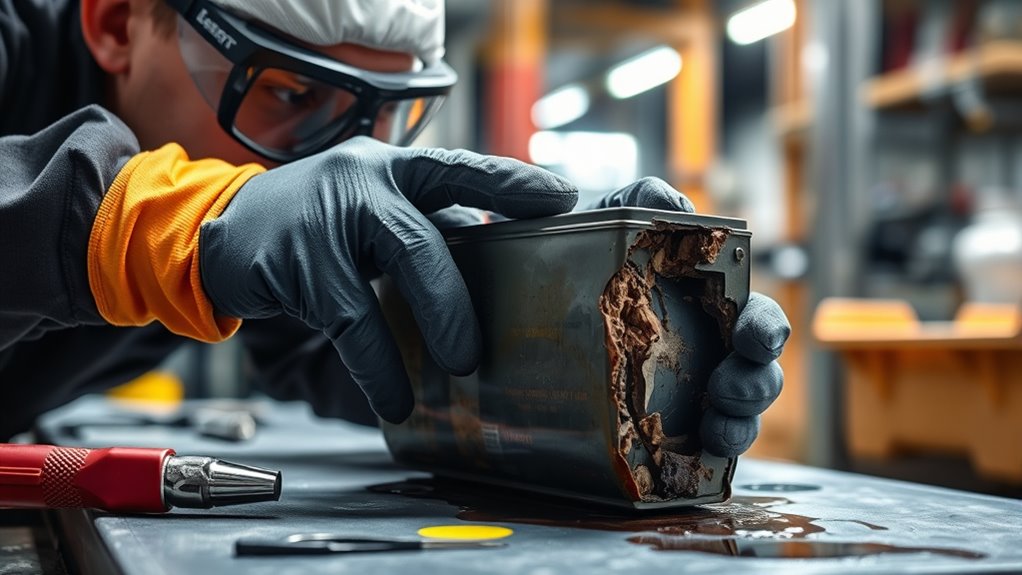

When handling damaged or leaking batteries, wear protective gloves and goggles to avoid chemical burns or irritation. Carefully isolate the battery using non-porous materials like plastic or glass, and contain any leaks immediately in a sealed container or bag. Never attempt to recharge, puncture, or fix the battery. Proper disposal at a hazardous waste facility is vital to prevent environmental contamination. For detailed safety steps, continue exploring effective protocols and precautions.
Key Takeaways
- Always wear protective gloves and goggles before handling a damaged or leaking battery.
- Contain leaks immediately using non-porous, compatible materials like plastic or glass.
- Avoid recharging or puncturing the battery; handle it carefully to prevent further damage.
- Transport the battery to a designated hazardous waste disposal facility; do not dispose of it in regular trash.
- Follow local hazardous waste guidelines and consult professionals for proper disposal to prevent environmental harm.
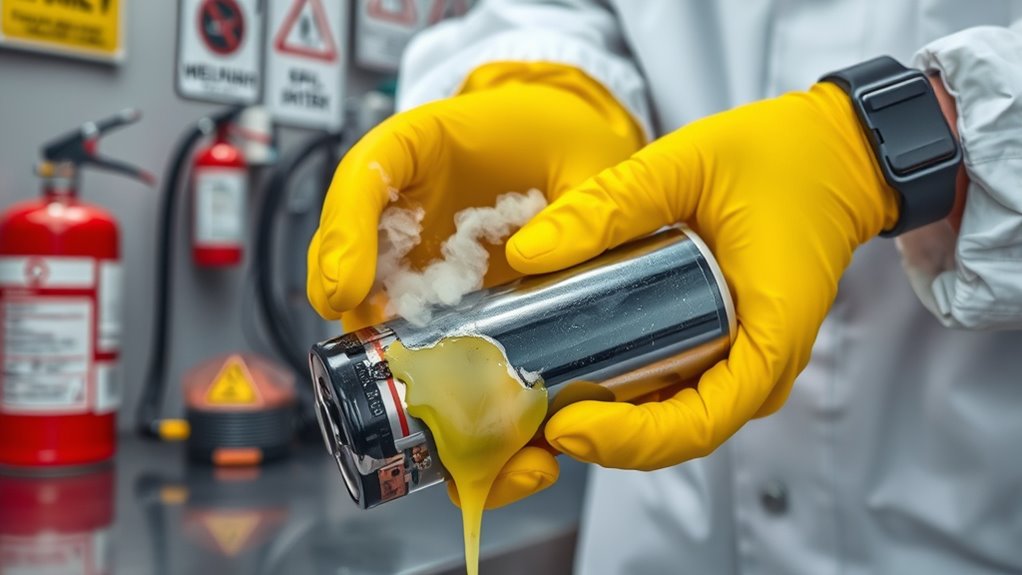
When you discover a damaged or leaking battery, it’s essential to handle it carefully to prevent health risks and property damage. Leaking batteries can release harmful chemicals, which pose serious health hazards if inhaled or come into contact with your skin. To protect yourself and those around you, start by wearing protective gloves and goggles. These safety measures help prevent chemical burns or irritation from exposure. Once you’re protected, the first step is to contain the leak to avoid spreading corrosive materials. Use non-porous materials like plastic or glass to isolate the battery, and if possible, place it in a leak containment container—such as a plastic bag or sealed plastic box—designed to contain leaks. This prevents the chemicals from seeping into surfaces or the environment.
Handling the damaged battery requires caution to minimize risks. Do not attempt to recharge, puncture, or forcefully remove the battery’s contents. Instead, carefully lift the battery using tools like tongs or a plastic scoop if necessary, avoiding direct contact. If the battery is swollen or visibly damaged, treat it as hazardous waste and prioritize leak containment to prevent further deterioration or accidental rupture. Once contained, you need to plan for proper battery disposal. Do not throw it in regular trash or recycling bins, because hazardous chemicals can leak and cause environmental contamination. Instead, transport the damaged battery to a designated hazardous waste disposal facility or contact local recycling centers that accept batteries. Many communities have specific disposal protocols for damaged batteries, ensuring they’re handled safely and in compliance with regulations.
Proper disposal is essential because leaking batteries contain chemicals like acids, heavy metals, and other toxins that can harm ecosystems and human health. When handling damaged batteries, always follow local guidelines for hazardous waste management. If you’re unsure about the disposal process, consult with professional waste disposal services to ensure safe removal. Remember, even if the battery seems stable after leak containment, it’s important to get it evaluated and disposed of correctly. Never attempt to repair or recharge a damaged battery, as this can cause further leaks or explosions. Additionally, regular monitoring of batteries can help detect early signs of damage or leaks before they become hazardous. By adhering to safety protocols—wearing protective gear, containing leaks, and ensuring proper disposal—you reduce the risk of accidents and environmental harm. Ultimately, handling damaged or leaking batteries responsibly safeguards your health, your property, and the environment from potential dangers.
Frequently Asked Questions
How Can I Prevent Batteries From Leaking or Getting Damaged?
To prevent batteries from leaking or damage, you should practice proper battery maintenance and storage safety. Always store batteries in a cool, dry place away from direct sunlight or extreme temperatures, and keep terminals covered to avoid short circuits. Regularly inspect batteries for signs of damage or corrosion, and replace them when necessary. Proper handling and timely maintenance help extend battery life and minimize the risk of leaks or damage.
What Personal Protective Equipment Is Necessary During Cleanup?
Imagine you’re donning your armor before a battle. You need protective gloves to shield your skin from corrosive leaks and eye protection to guard against splashes or fumes. These items act as your barrier, preventing harm from hazardous materials. Always wear the right personal protective equipment, like gloves and goggles, to stay safe while cleaning up leaking batteries, ensuring you avoid chemical burns or eye injuries during this critical task.
Are There Specific Disposal Methods for Damaged Batteries?
Yes, you should dispose of damaged batteries through proper battery recycling programs, as they handle hazardous waste safely. Do not throw them in regular trash, since leaking or damaged batteries pose environmental and health risks. Contact your local hazardous waste facility or designated recycling center to guarantee correct disposal. Always follow manufacturer instructions and safety protocols to prevent accidents during disposal, protecting yourself and the environment.
How Do I Identify a Potentially Dangerous Battery Leak?
A battery leak signals danger like an alarm blaring. You’ll spot chemical indicators such as discoloration, a slimy or crusty residue, or corrosion signs like white or greenish deposits on terminals. If the battery appears swollen, cracked, or leaks any fluid, it’s time to act immediately. Don’t ignore these signs—they’re your warning to handle the situation carefully and follow safety protocols to prevent harm.
What Are the Long-Term Health Risks of Exposure to Leaking Batteries?
Exposure to leaking batteries can pose long-term health risks like chemical exposure and respiratory hazards. You might develop chronic respiratory issues or skin irritation if you breathe in or contact leaked chemicals over time. It is crucial to minimize exposure by cleaning leaks carefully and seeking medical advice if symptoms persist. Protect yourself by wearing gloves, masks, and working in well-ventilated areas to reduce potential health complications.
Conclusion
Remember, safety always comes first when dealing with damaged or leaking batteries. Follow the proper protocols, wear protective gear, and dispose of batteries responsibly. Don’t put yourself in a pickle by ignoring these precautions. It’s better to be safe than sorry, so stay alert and handle each situation with care. By doing so, you’ll avoid bigger problems down the road and keep yourself out of harm’s way. After all, prevention is worth a pound of cure.