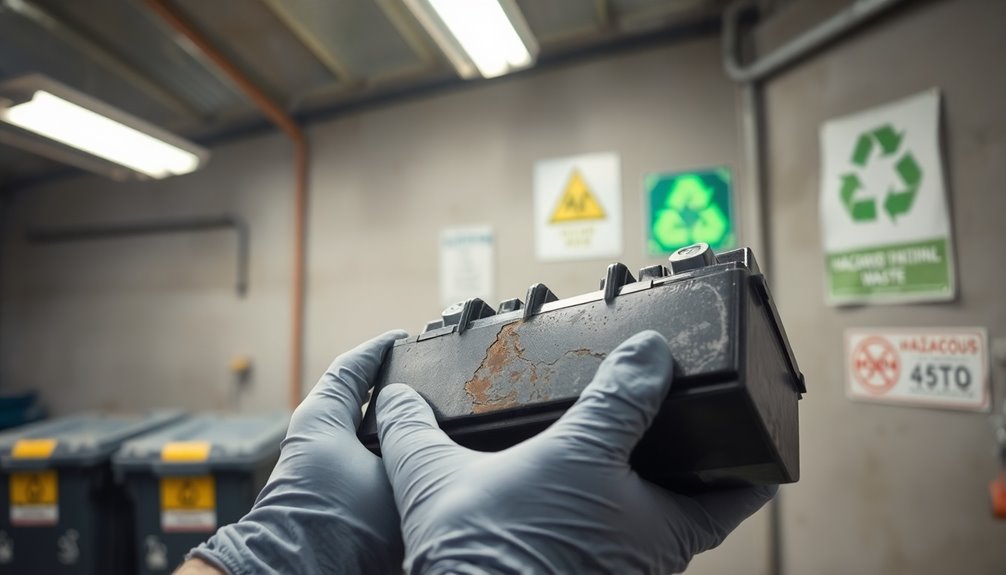
When choosing a battery spill kit, you need absorbent materials designed for acids and chemicals, along with protective gear like gloves and goggles to keep yourself safe. Make sure it includes disposal bags or labeled containers for hazardous waste and instructions for proper cleanup and disposal. Proper equipment minimizes environmental impact and health risks, while ensuring compliance with safety standards. Keep the kit accessible and well-maintained—continue to learn what else is essential for effective spill management.
Key Takeaways
- Ensure the spill kit contains absorbent materials specifically designed for acids and battery chemicals.
- Include proper PPE such as gloves, goggles, and lab coats to protect responders.
- Use labeled disposal containers for hazardous waste generated during cleanup.
- Follow manufacturer instructions for safe absorption, neutralization, and disposal procedures.
- Regularly inspect and maintain the spill kit to ensure readiness for battery chemical spills.
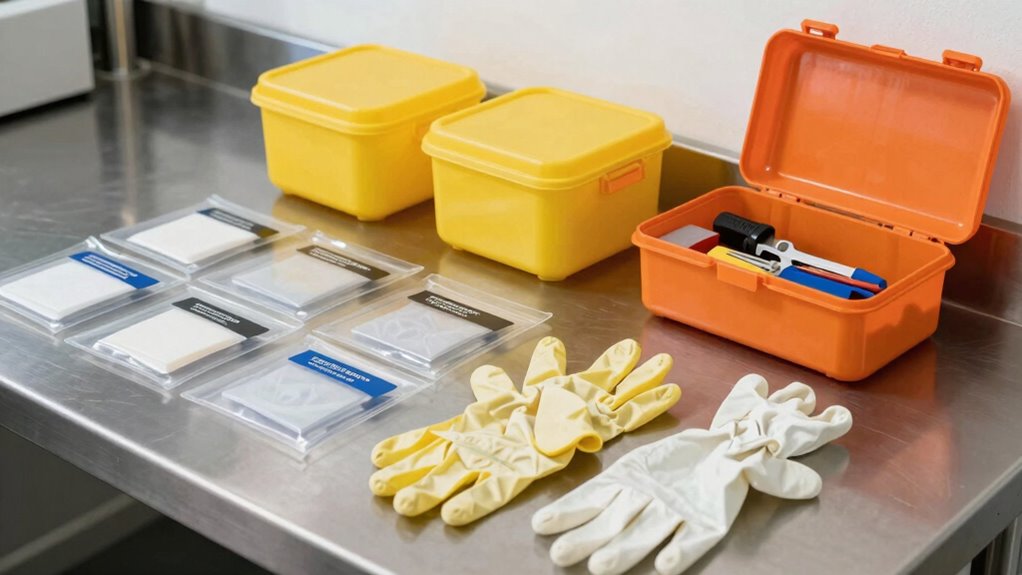
Have you ever considered what to do if a battery spills hazardous acid or chemicals? It’s a situation that can happen unexpectedly, especially in environments where batteries are stored, charged, or replaced regularly. Knowing how to respond quickly and correctly is vital to prevent injury, property damage, and environmental harm. That’s where having a proper battery spill kit becomes essential. These kits are designed to help you manage spills effectively, but only if you know what’s needed and why.
When dealing with a battery spill, your first priority is to follow strict safety procedures. This includes wearing appropriate personal protective equipment, such as gloves, goggles, and a lab coat or apron. Battery acids and chemicals are corrosive and can cause severe burns or eye injuries. Once protected, you should contain the spill immediately to prevent it from spreading. Use absorbent materials included in your spill kit to soak up the liquids. These materials are specially designed to neutralize acids and chemicals, reducing the risk of further damage or exposure. Proper handling of corrosive substances also involves understanding the hazardous nature of battery chemicals to ensure safe cleanup.
Prioritize safety: wear protective gear and contain battery spills immediately to prevent injury and damage.
Proper disposal of the spilled materials and contaminated absorbents is a vital step. You must adhere to local regulations and guidelines for battery disposal. Hazardous waste must be handled carefully, ensuring it doesn’t leach into the environment or pose a risk to sanitation workers. Your spill kit should include disposal bags or containers that are clearly labeled for hazardous waste, along with instructions on how to package and transport the waste safely. Never attempt to dispose of battery acids or chemicals in regular trash or drains, as this can lead to serious legal and health consequences.
Having an effective spill kit is not just about the equipment itself but also about understanding the safety procedures that go along with it. Regular training on how to use the kit ensures everyone on site knows the proper steps. Prompt and correct response minimizes damage, reduces cleanup costs, and keeps everyone safe. It’s also wise to have a clear plan in place for reporting spills and coordinating with emergency services if needed.
Frequently Asked Questions
Are Battery Spill Kits Suitable for All Types of Batteries?
Battery spill kits aren’t suitable for all types of batteries because spill kit versatility depends on the battery chemistry. For example, acid spill kits work well for lead-acid batteries, but lithium-ion batteries require specialized containment and cleanup methods. Always check the spill kit’s compatibility with your specific battery type to guarantee safe and effective spill response. Using the right kit helps prevent hazards and minimizes damage.
How Often Should a Battery Spill Kit Be Inspected or Replaced?
You should inspect your battery spill kit regularly, ideally after each use or at least monthly, to guarantee all supplies are in place and functional. Follow the recommended replacement schedule provided by the manufacturer, typically every 12 to 24 months, or sooner if supplies are used or damaged. Consistent inspection and timely replacement keep your spill kit ready to handle emergencies effectively, minimizing hazards and ensuring safety.
Can a Spill Kit Be Used for Acid or Chemical Spills Unrelated to Batteries?
Yes, you can use a spill kit for acid or chemical spills unrelated to batteries. Just make certain the kit is designed for chemical safety and spill containment of the specific acids or chemicals involved. Using the right kit helps prevent harm, contain the spill effectively, and protect your environment. Always check if your spill kit is suitable for different chemical hazards, and follow proper safety procedures during cleanup.
What Training Is Needed to Effectively Use a Battery Spill Kit?
You need specific training in hazard recognition and emergency response to effectively use a battery spill kit. This includes understanding how to identify acid spills, properly don protective gear, and contain the hazard safely. You’ll learn how to quickly assess the situation, select the right containment materials, and respond effectively to prevent injury or damage. Proper training guarantees you’re prepared to handle battery acid spills confidently and safely.
Are There Legal or Regulatory Requirements for Maintaining Spill Kits?
You must follow legal compliance and meet regulatory standards for maintaining spill kits. Regulations vary by industry and location, but generally, agencies like OSHA and EPA require you to keep spill kits accessible, properly stocked, and regularly inspected. Failing to adhere to can result in fines or legal issues. Make sure you stay updated on local laws and standards to ensure your spill kits are always ready and compliant.
Conclusion
Now that you understand what a battery spill kit truly needs, picture yourself confidently handling a spill—your kit ready, gloves on, and acids neutralized in seconds. Think of it as your safety net, a lifeline amid potentially dangerous chaos. With the right tools at your fingertips, you can turn a threatening spill into a manageable moment, ensuring safety and peace of mind. Prepare now, so you’re always ready to act swiftly when every second counts.