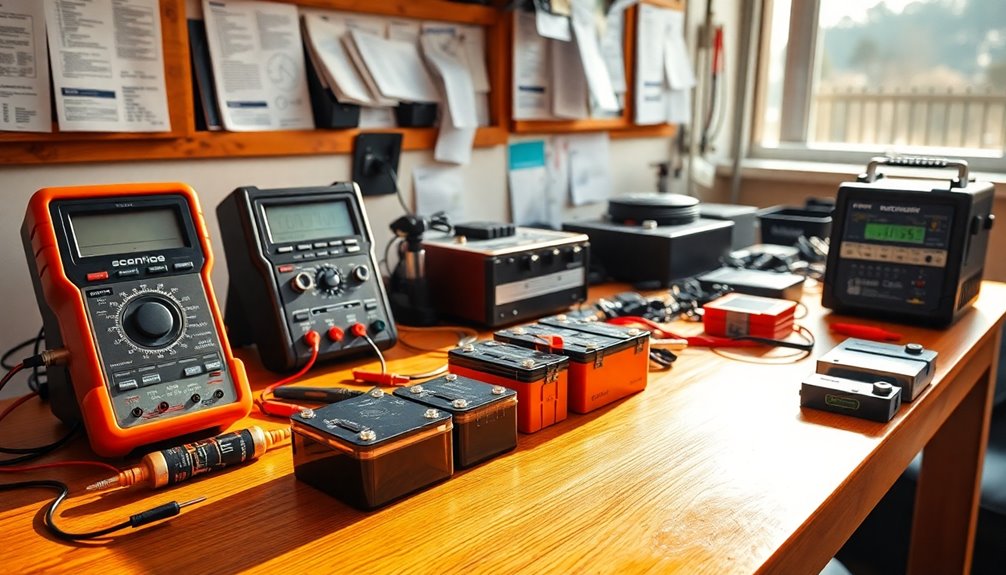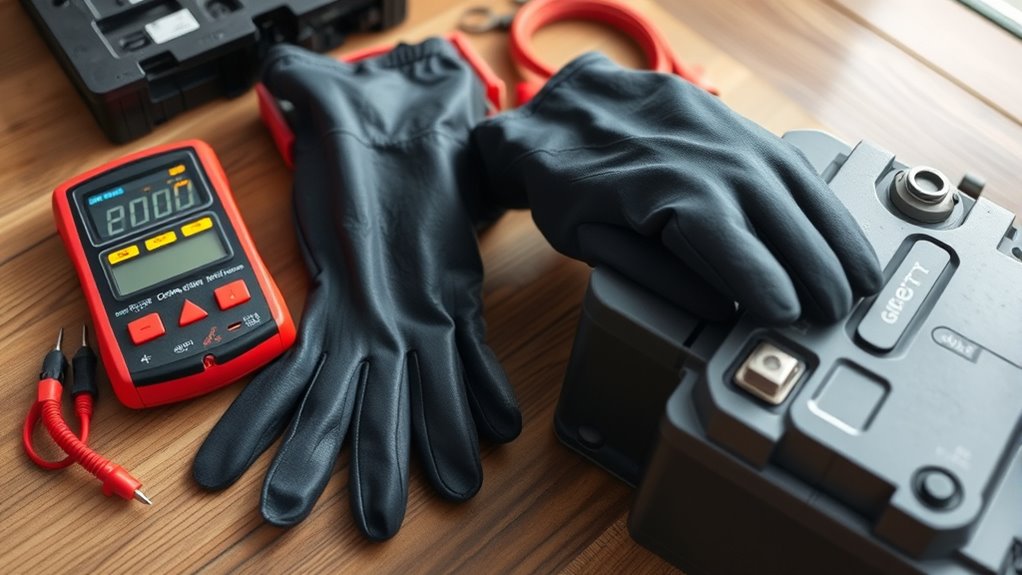

Before starting battery reconditioning, prioritize safety by wearing proper PPE like gloves and safety glasses to prevent chemical burns and eye injuries. Work in a well-ventilated area to stay clear of dangerous fumes and gases. Keep flammable materials away and have a fire extinguisher nearby. Use insulated, well-maintained tools and handle batteries carefully, avoiding damaged or swollen units. For detailed tips on safeguarding yourself throughout the process, continue exploring essential safety measures.
Key Takeaways
- Wear appropriate PPE, including safety goggles, gloves, and protective clothing, before handling batteries.
- Ensure your workspace is well-ventilated to disperse hazardous fumes and gases produced during reconditioning.
- Keep flammable materials away and have a fire extinguisher rated for electrical and chemical fires nearby.
- Inspect tools and equipment for damage, and use insulated, proper tools to prevent electrical shorts or sparks.
- Carefully disconnect batteries, avoiding damage to casing or terminals, and handle damaged or swollen batteries with extra caution.

Before you start reconditioning batteries, ensuring safety is vital to prevent accidents or injuries. Reconditioning involves handling chemicals and electrical components that can be hazardous if not managed properly. To protect yourself, always wear the right protective equipment. Safety goggles or glasses shield your eyes from corrosive splashes or sparks, while gloves made of rubber or nitrile safeguard your skin from harmful acids and chemicals. A long-sleeved shirt and pants add extra protection against accidental spills or splashes. Never skip these safety measures because even a small amount of acid or battery electrolyte can cause burns or irritation.
Proper ventilation is equally important when working with batteries. Batteries release potentially harmful fumes and gases during reconditioning, especially if they’re damaged or venting. Conduct your work in a well-ventilated area, preferably outdoors or in a space with excellent airflow. If you’re indoors, open windows and use fans to disperse fumes. Avoid working in confined or enclosed spaces where gases can accumulate, increasing the risk of inhalation or even explosion. Make sure your workspace has a working carbon monoxide detector if you’re indoors, as some gases produced during reconditioning can be dangerous. Additionally, battery safety should always be prioritized to prevent any hazards associated with chemical exposure or electrical faults.
Before you begin, clear the area of any flammable materials, such as paper, cloth, or chemicals that could ignite if exposed to sparks or heat. Keep a fire extinguisher nearby, rated for electrical and chemical fires, and know how to use it. This precaution can considerably reduce damage or injuries if something goes wrong. Additionally, ensure your tools and equipment are in good condition, insulated, and suitable for battery work. Damaged wires or improper tools can cause shorts or sparks.
Handling batteries also requires awareness of their specific types and conditions. Damaged or swollen batteries are more likely to leak or vent dangerous gases, so avoid working on compromised units. Always disconnect batteries carefully, avoiding metal jewelry or conductive objects that could cause shorts. If a battery shows signs of damage or corrosion, handle it with extra caution, and consider disposing of it safely rather than reconditioning it.
Frequently Asked Questions
Can All Battery Types Be Reconditioned Safely?
Not all battery types can be reconditioned safely. Your ability to recondition depends on the battery chemistry, as some, like lithium-ion, pose significant safety hazards due to their volatile nature. You should avoid attempting to recondition batteries that contain dangerous chemicals or those with high risk of leaks or explosions. Always research the specific battery chemistry and follow safety guidelines to prevent accidents and guarantee safe reconditioning.
What Personal Protective Equipment Is Recommended?
Think of yourself as a safety knight guarding your own domain. You should wear protective gear like gloves and goggles to shield your skin and eyes from acid splashes. Safety clothing, such as long sleeves and an apron, acts like armor against spills. These precautions keep you safe from harmful fumes and accidental contact, ensuring you can focus on reconditioning batteries without risking your health.
Is Professional Training Necessary Before Reconditioning Batteries?
You don’t need professional training to recondition batteries, but understanding battery chemistry and safety protocols is essential. Learning about different battery types helps you handle them properly, reducing risks. Following safety protocols ensures you safeguard yourself from hazards like acid spills or electrical shocks. If you’re new, consider taking a course or consulting experienced sources to build your knowledge and confidence, making your battery reconditioning safer and more effective.
How Do I Handle Damaged or Swollen Batteries?
Handling damaged batteries is like walking a tightrope—you must proceed with caution. If you notice swelling or damage, don’t attempt to recondition it. Carefully wear gloves and eye protection, then place the swollen or damaged battery in a non-metallic container. Avoid puncturing or putting it in water. Contact a professional for proper disposal. Remember, safety first—swollen batteries pose serious risks, so treat them with the utmost care.
Are There Legal Restrictions on Reconditioning Batteries at Home?
You need to check your local laws before reconditioning batteries at home, as there may be legal restrictions related to battery disposal and handling hazardous materials. Some areas require proper disposal methods and may prohibit certain practices without proper licensing. To stay compliant, research local regulations and follow guidelines for legal compliance. Always dispose of damaged or unsafe batteries properly to avoid legal issues or environmental harm.
Conclusion
Remember, taking safety precautions is like wearing a seatbelt—you might not need it every day, but when you do, it could save your life. Just as a spark can ignite a fire, a small oversight can lead to accidents. By staying vigilant and prepared, you create a safe environment for your reconditioning journey. Think of safety as the steady hand guiding you through each step, ensuring you finish with a fully reconditioned battery and no regrets.