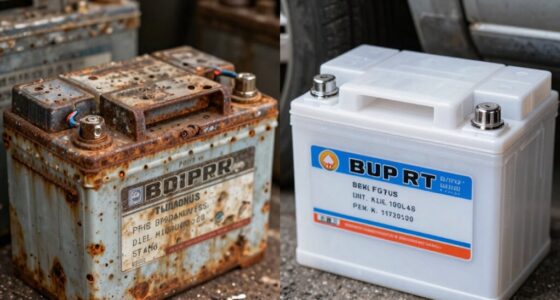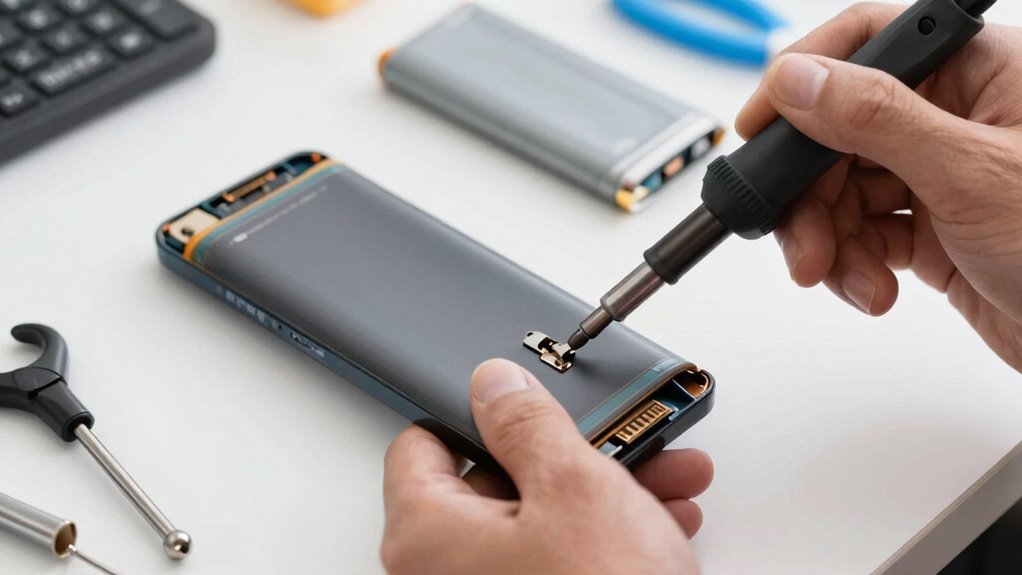

Quick battery fixes, like jump-starts or replacing with a temporary battery, offer immediate relief but often miss the root cause of the problem, leading to repeated failures. In contrast, durable solutions focus on diagnosing and fixing underlying issues such as charging system problems or poor maintenance habits. By addressing these core causes, you can extend your battery’s lifespan and avoid frequent replacements. Keep exploring to discover how proper diagnosis and maintenance can save you money and keep your vehicle reliable.

Get backup power and energy gear delivered free with Prime
- Fast, free delivery on millions of items
- Prime Video, Amazon Music and more included
- Member-only deals all year
Key Takeaways
- Quick fixes provide temporary relief but do not address underlying battery or electrical system issues.
- Durable solutions involve diagnosing root causes and performing comprehensive repairs for long-term reliability.
- Relying on quick fixes leads to repeated failures and increased maintenance costs over time.
- Proper maintenance and testing help identify early signs of battery decline, supporting durable, long-lasting solutions.
- Investing in thorough repairs prevents recurring breakdowns, saving money and enhancing vehicle safety.
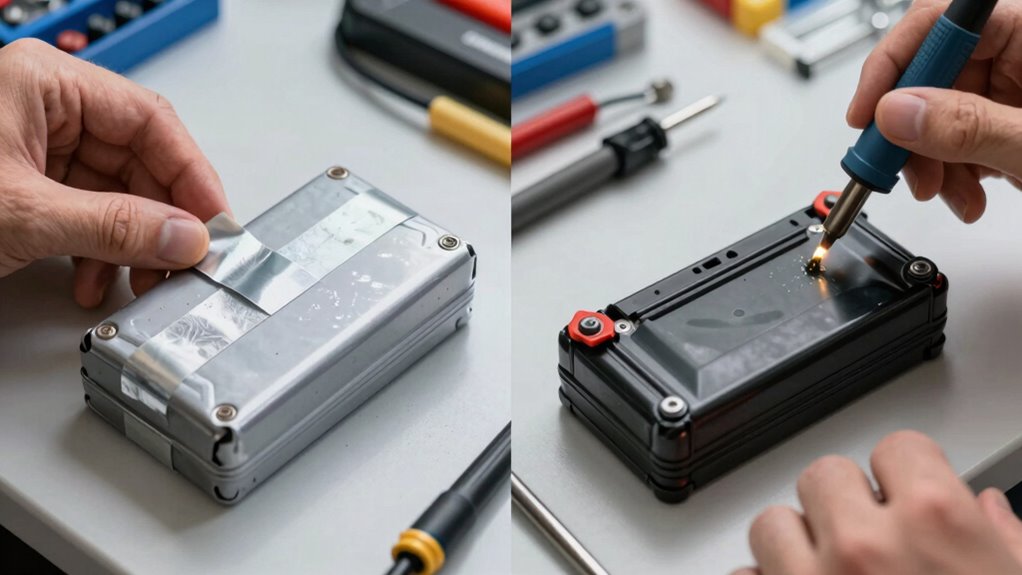
When your car’s battery dies unexpectedly, it’s tempting to reach for a quick fix like jump-starting or replacing it with a temporary battery. These solutions might get you back on the road fast, but they often ignore the underlying issues that lead to battery failure. To truly address the problem, you need to understand the difference between quick fixes and durable solutions. One of the key factors influencing your battery’s longevity is its lifespan, which is heavily affected by your charging habits. If you frequently leave your headlights on or neglect regular maintenance, your battery wears out faster. Proper charging habits, such as ensuring your alternator charges efficiently and avoiding short trips that don’t fully recharge the battery, can extend its life significantly.
Quick fixes like jump-starts or swapping batteries are often driven by immediate needs and don’t account for these long-term factors. They might temporarily solve the problem, but if your battery is nearing the end of its lifespan, it’s only a matter of time before it fails again. Relying on these short-term solutions can lead to repeated breakdowns and ultimately more expenses. Instead, a durable solution involves diagnosing the root cause of the battery’s decline. This means checking your vehicle’s charging system, testing the battery’s health, and making necessary repairs or replacements based on accurate data. Regular maintenance, such as cleaning terminals and ensuring connections are tight, also plays a crucial role in preventing premature battery failure.
Quick fixes like jump-starts offer temporary relief but don’t address underlying battery issues or prevent future failures.
You should also consider how your driving habits impact your battery’s health. For example, if you often drive short distances, your battery might not be getting enough time to fully recharge, which accelerates its deterioration. Incorporating good charging habits, like driving longer distances periodically or using a trickle charger if your vehicle sits unused for long periods, can help preserve your battery’s lifespan. These proactive measures not only improve reliability but also save you money in the long run. Additionally, understanding how charging habits influence your battery’s lifespan can help you develop better routines to keep your vehicle running smoothly. Recognizing the importance of battery maintenance is essential for extending its effective life and avoiding costly replacements.
Furthermore, educating yourself about battery testing methods can provide early insights into potential issues before failure occurs. Employing preventative maintenance practices, such as regularly inspecting your battery and electrical connections, can significantly improve its longevity. In essence, quick fixes might be appealing when you’re in a pinch, but they don’t address the core issues that shorten your battery’s lifespan. A durable solution requires understanding your vehicle’s electrical system, adopting proper charging habits, and performing routine maintenance. Regularly monitoring your battery’s condition through testing techniques can help catch problems early, saving you time and money. Investing in these practices ensures your battery remains healthy longer, reducing the chances of unexpected failures and costly replacements down the line.
As an affiliate, we earn on qualifying purchases.
Frequently Asked Questions
How Can I Tell if My Battery Needs a Quick Fix or Replacement?
You can tell if your battery needs a quick fix or replacement by observing its performance and using battery calibration. If your device shuts down suddenly or shows inconsistent battery percentage, a quick fix like recalibration or adjusting your charging habits might help. However, if these steps don’t improve performance, it’s likely time for a replacement. Consider professional testing to accurately assess your battery’s health and decide the best course.
Are Quick Fixes Safe for My Battery’s Long-Term Health?
Quick fixes are like band-aids—they might seem helpful but can hide bigger issues, risking your battery’s long-term health. They’re often not eco-friendly, as improper disposal can harm the environment. Instead, consider battery recycling and eco-friendly disposal methods to protect your device and the planet. While quick fixes are tempting, investing in durable solutions guarantees your battery stays reliable and safe for the long haul, saving you money and reducing environmental impact.
What Signs Indicate a Durable Battery Solution Is Necessary?
You need a durable battery solution if you notice frequent charging cycles, inconsistent performance, or rapid battery drain. Changes in battery chemistry over time can cause these issues, signaling the necessity for a long-term fix. If your battery struggles to hold a charge or shows physical signs like swelling, it’s a clear sign that a durable solution is necessary to protect your device’s health and ensure reliable operation.
How Much More Expensive Are Durable Solutions Compared to Quick Fixes?
Durable solutions often cost two to five times more than quick fixes, but they save you money long-term. While quick fixes might seem cheaper upfront, neglecting proper battery recycling and poor charging habits can lead to repeated repairs and replacements. Think of it as investing in a sturdy, reliable battery versus patching up a fragile one. In the end, durability pays off with fewer disruptions and better performance.
Can Quick Fixes Temporarily Extend My Battery’s Lifespan Effectively?
Quick fixes like battery calibration and adjusting your charging habits can temporarily extend your battery’s lifespan, but they aren’t long-term solutions. You might notice some improvement initially, but over time, these methods won’t prevent battery degradation. To truly prolong your battery’s health, consider durable solutions like replacing the battery or upgrading your device. Relying solely on quick fixes can lead to more frequent replacements and decreased device performance in the long run.
Conclusion
So, next time your battery fails unexpectedly, ask yourself: are you just patching the problem or truly fixing it? Quick fixes might seem tempting, but they rarely last. The real question is, how deep are you willing to go to find a lasting solution—and what might you uncover about your approach along the way? Sometimes, the most important fixes aren’t obvious, and the true challenge lies in knowing when to dig deeper. Will you choose the temporary or the enduring?
Columbus Day / Indigenous Peoples' Day Picks
long weekend sales
As an affiliate, we earn on qualifying purchases.