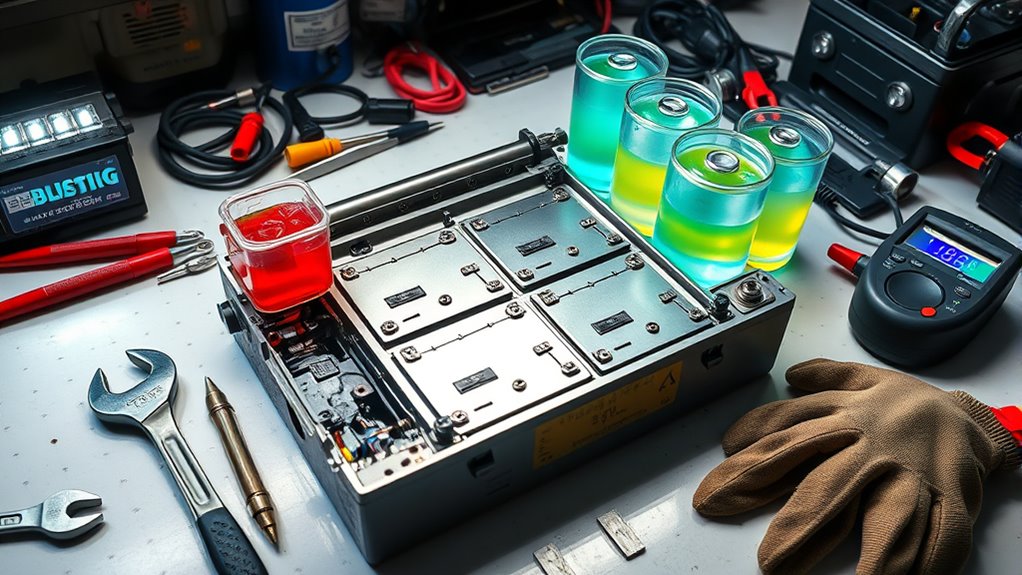

To recondition a lead-acid battery, start by measuring its voltage; if it’s below 12.4V, it needs attention. Fully discharge it with a resistor or bulb, then add a reconditioning solution or distilled water with Epsom salt into each cell. Carefully recharge slowly, monitoring voltage and temperature to dissolve sulfate deposits. If you follow these steps closely, you’ll see improvements in performance. Keep going, and you’ll discover more ways to extend your battery’s lifespan.
Key Takeaways
- Measure battery voltage to assess capacity loss and determine if reconditioning is possible.
- Fully discharge the battery safely before adding reconditioning solutions or distilled water with Epsom salt.
- Add specialized reconditioning solutions and perform gradual, controlled charging to dissolve sulfate buildup.
- Monitor voltage and temperature during charging to prevent overheating and optimize capacity restoration.
- Recycle the battery responsibly if reconditioning does not improve performance.

If your lead-acid battery isn’t holding a charge like it used to, reconditioning it can be be a cost-effective solution. Instead of purchasing a new battery, you can restore its capacity by carefully following a few steps. The first thing to do is to check the battery’s current condition through voltage testing. Using a multimeter, measure the voltage across the terminals; a reading below 12.4 volts indicates the battery has lost some of its capacity and may need reconditioning. This step helps you determine if the battery can be salvaged or if it’s better to recycle it instead.
Once you confirm the battery’s voltage is low but not completely dead, you should perform a thorough cleaning of the terminals. Corrosion buildup can hinder proper electrical flow, so scrub the terminals with a wire brush and a mixture of baking soda and water. After cleaning, it’s essential to inspect the battery’s interior for any signs of damage or leakage. If everything looks intact, the next step involves discharging the battery fully. This can be done by connecting a light bulb or resistor until the voltage drops to around 10 volts, ensuring the battery is completely discharged before reconditioning.
Check and clean corrosion on terminals, then fully discharge the battery before reconditioning.
Next, you’ll need to address the sulfation buildup that causes reduced performance. To do this, carefully add a specialized battery reconditioning solution or distilled water combined with a small amount of Epsom salt into each cell. Carefully top up the cells, making sure not to overfill. Afterward, you should charge the battery slowly using a regulated charger. During charging, keep an eye on the voltage and temperature to prevent overheating. This gradual process can help dissolve sulfate crystals that have formed on the plates, restoring the battery’s ability to hold a charge.
Additionally, understanding the importance of contrast ratio can help you evaluate the effectiveness of your reconditioning process, as it impacts the overall performance of the battery in various conditions. Throughout the process, it’s important to keep in mind the principles of battery recycling. If the battery fails to respond after reconditioning attempts or if the voltage testing shows persistent low readings, it’s more responsible to recycle the lead-acid battery properly. Many recycling centers accept old batteries, ensuring that toxic materials are disposed of safely and that valuable lead and plastic components are reused.
Frequently Asked Questions
What Safety Precautions Should I Take During Reconditioning?
You should always prioritize battery safety by wearing protective equipment like gloves and goggles to prevent acid burns and eye injuries. Work in a well-ventilated area to avoid harmful fumes. Handle the battery carefully, avoiding sparks or flames, and disconnect it properly before starting. Keep a fire extinguisher nearby, and never expose the battery to extreme temperatures. Following these safety precautions helps protect you during reconditioning.
How Long Does the Reconditioning Process Typically Take?
The reconditioning process usually takes about 4 to 6 hours, depending on the battery’s condition and your experience. You’ll go through a few battery cycles, each involving discharge and recharge phases. Using proper reconditioning tools, like a voltmeter and charger, helps speed up the process and guarantees safety. Be patient and follow each step carefully, as rushing can damage the battery or pose safety risks.
Can All Lead-Acid Batteries Be Reconditioned Successfully?
Not all lead-acid batteries can be successfully reconditioned because battery chemistry varies, affecting reconditioning outcomes. Some batteries, especially those with severe damage or deep sulfation, may be beyond recovery. You should consider reconditioning costs and the battery’s condition before attempting it. If your battery shows signs of extensive damage or age, reconditioning might not be worth it, and replacing it could be a better, more reliable choice.
What Are the Signs a Battery Can No Longer Be Reconditioned?
Think of your battery as a garden; when it’s overgrown with weeds, it’s hard to revive. If you notice extreme Battery degradation, persistent failure to hold charge, or if the plates are severely corroded, reconditioning hits its limits. These signs indicate the battery can no longer be restored, much like a garden beyond saving. When these issues appear, it’s time to contemplate replacement, as reconditioning won’t bring back its vitality.
Is Professional Help Recommended for Complex Battery Issues?
Yes, for complex battery issues, professional repair is highly recommended. DIY safety risks escalate with intricate problems, and expert technicians have the right tools and knowledge to handle them safely. Attempting DIY fixes on complicated battery problems can lead to safety hazards or further damage. Trusting professionals ensures proper diagnosis and repair, giving you peace of mind while avoiding potential accidents or costly mistakes.
Conclusion
Now that you’ve learned how to recondition your lead-acid battery, you’re practically a modern-day alchemist, turning old, dead batteries into usable power. With patience and a bit of know-how, you can save money and extend your battery’s life. Just remember, like any good craftsman from the age of steam, precision and care are key. So go ahead—revive that battery and keep your gadgets humming, just like the pioneers of yesteryear would have done.