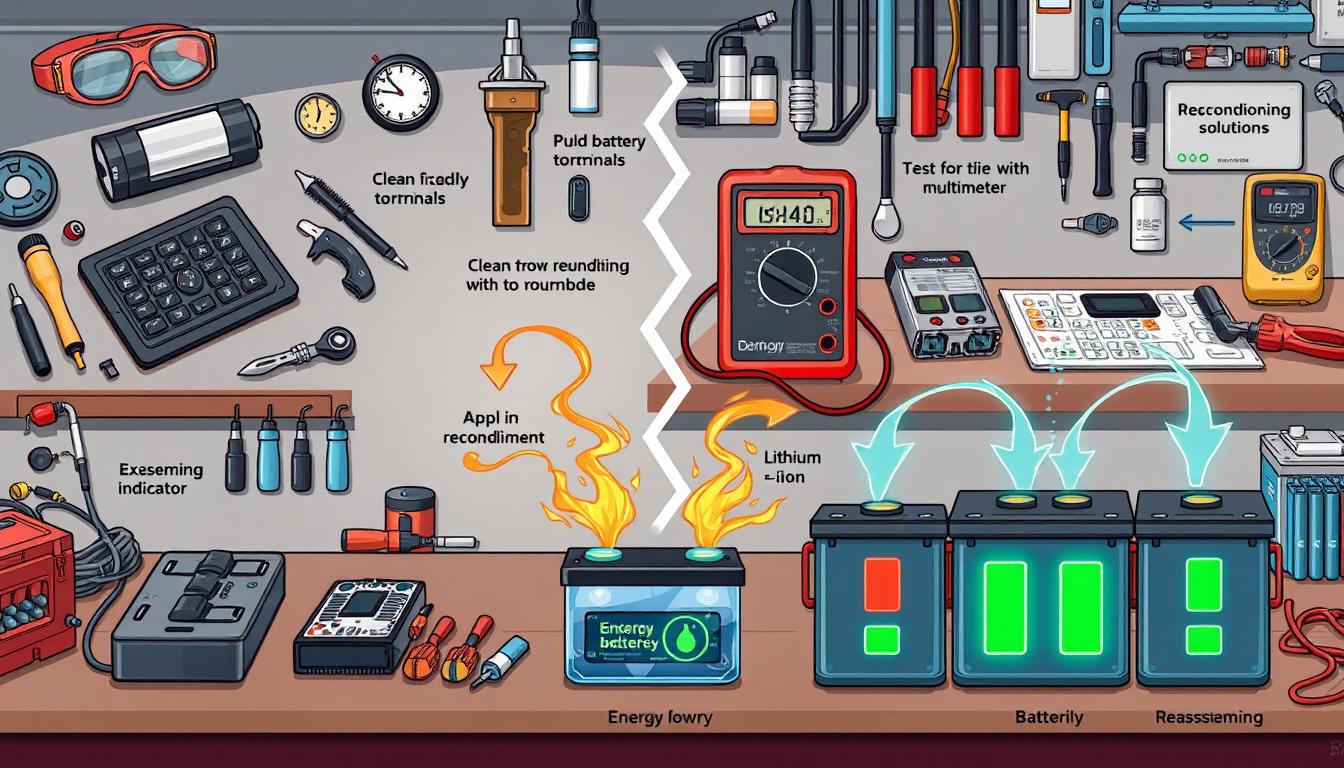
Battery reconditioning can save you money over time by extending battery life and reducing the need for costly replacements, while also benefiting the environment by decreasing resource use and waste. Although it requires some technical knowledge, patience, and effort upfront, the long-term benefits—cost savings and eco-friendliness—often outweigh the work involved. If you’d like to discover how to maximize these benefits and minimize effort, there’s more to explore below.
Key Takeaways
- Battery reconditioning offers significant long-term cost savings by extending battery life and reducing replacement expenses.
- The process requires technical skills, patience, and initial time investment, which may be challenging for some users.
- Environmentally, reconditioning decreases demand for raw materials and reduces hazardous waste, supporting sustainability.
- Not all batteries are suitable for reconditioning; some may be too damaged to restore effectively, limiting benefits.
- Overall, the effort involved is justified by financial savings and ecological benefits, making it a cost-effective and eco-friendly option.
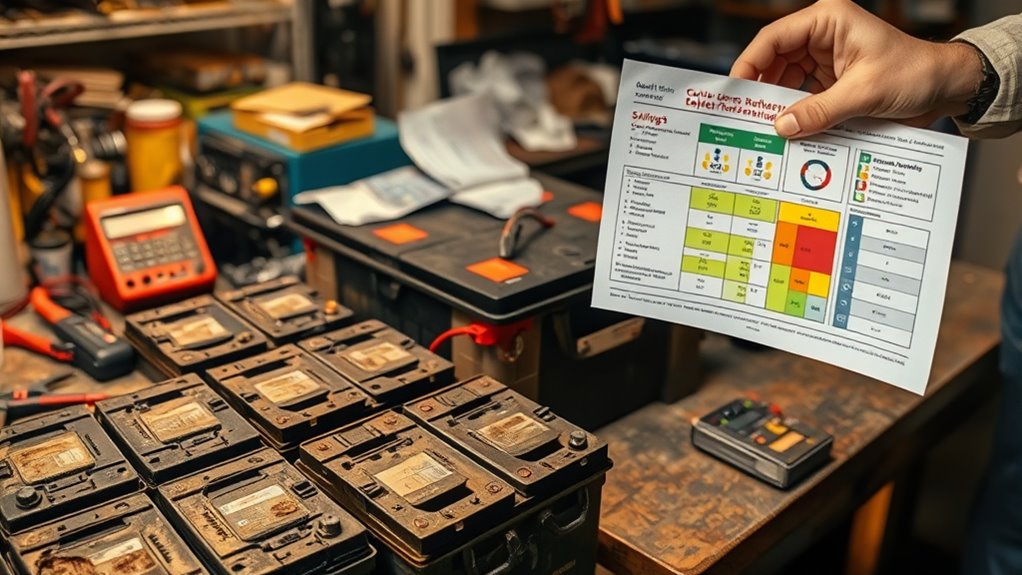
Battery reconditioning offers a cost-effective alternative to replacing batteries entirely, saving you money in the long run. When you choose to recondition your batteries instead of discarding them, you’re extending their battery lifespan considerably. This process involves restoring the battery’s capacity to hold a charge, which means you won’t need to buy new ones as often. Over time, this not only cuts down on your expenses but also reduces the frequency of battery purchases, making it a smart financial decision. Plus, with longer-lasting batteries, you’ll minimize the need for constant replacements, which can add up quickly.
Reconditioning batteries saves money by extending their lifespan and reducing replacement costs over time.
Beyond your wallet, reconditioning batteries has a positive effect on the environment. Producing new batteries demands raw materials, such as lithium, lead, and other metals, which are finite resources. By reusing and restoring old batteries, you’re decreasing the demand for these materials, which helps conserve natural resources. This reduced demand translates into less mining, less energy consumption during manufacturing, and ultimately, a lower environmental impact. Properly reconditioned batteries also produce less hazardous waste, as fewer batteries end up in landfills prematurely. This helps prevent soil and water contamination caused by battery chemicals and heavy metals, making battery reconditioning an eco-friendly choice. Additionally, understanding proper safety protocols is essential when working with batteries to prevent accidents and ensure effective reconditioning.
However, it’s important to weigh the effort involved in reconditioning against the benefits. The process requires some technical know-how, patience, and the right tools. You might need to learn specific techniques, such as using a battery reconditioning kit or following detailed instructions, which can take time initially. Additionally, not all batteries are suitable for reconditioning—some may be too damaged or degraded to restore effectively. So, you’ll need to assess each battery’s condition carefully before attempting to recondition it. Despite this effort, many find that the savings on replacement costs and the positive environmental impact outweigh the initial work involved.
In the end, reconditioning batteries offers a compelling balance between financial savings and environmental responsibility. While it demands some effort upfront, the extended battery lifespan and reduced environmental footprint make it a worthwhile pursuit. By choosing reconditioning, you’re not only saving money but also contributing to a more sustainable future, making it an excellent option for both your wallet and the planet. Whether you’re looking to cut costs or minimize your ecological footprint, reconditioning batteries provides a practical solution that benefits everyone in the long run.
Frequently Asked Questions
How Long Does a Typical Battery Reconditioning Process Take?
A typical battery reconditioning process takes about 1 to 3 hours, depending on the battery’s condition and the tools you use. You’ll need reconditioning tools like a charger and a desulfator to restore the battery’s capacity, ultimately extending its lifespan. The time varies based on the battery type and how thoroughly you follow the steps, but patience pays off with better performance and savings in the long run.
Are There Safety Risks Involved in Battery Reconditioning?
Battery reconditioning can feel like walking a tightrope, with safety risks lurking. You face chemical hazards from acids and fumes, and fire risks if batteries aren’t handled properly. Always wear protective gear, work in well-ventilated areas, and follow instructions carefully. By staying cautious, you can avoid accidents and safely breathe new life into your batteries without risking harm or damage.
What Types of Batteries Can Be Reconditioned at Home?
You can recondition various battery types at home, including lead-acid car batteries, NiMH, NiCd, and lithium-ion batteries. For effective home reconditioning, guarantee you follow safety guidelines and use proper tools. Always wear protective gear and work in a well-ventilated area. While reconditioning can extend battery life and save money, it’s essential to understand each battery type’s specific process and risks involved for successful results.
How Many Times Can a Battery Be Successfully Reconditioned?
You can typically recondition a battery multiple times—usually between 3 to 5 cycles—before its performance declines. Each reconditioning extends the battery’s lifespan, but keep in mind, the number of successful cycles varies based on battery type and condition. As you approach the limit, you might notice reduced efficiency, so monitor performance closely. With proper care, you can maximize each reconditioning, squeezing more life out of your batteries.
Does Reconditioning Affect a Battery’s Warranty or Resale Value?
Reconditioning a battery can impact warranty implications and resale value. If you recondition it yourself, manufacturers might void the warranty, so check your warranty terms first. As for resale, a reconditioned battery could either boost value if it performs well or lower it if buyers worry about its longevity. Be honest about reconditioning when selling, and keep records to reassure buyers about the battery’s condition.
Conclusion
Think of battery reconditioning as tending a garden. With some effort, you pull out the weeds, water the plants, and nurture what’s already there. In return, your garden blooms again, saving you from costly replacements. The effort might seem small, but the reward is a vibrant, thriving space that keeps growing. Similarly, reconditioning batteries requires effort, but the savings and extended life make it a worthwhile dance of patience and reward.