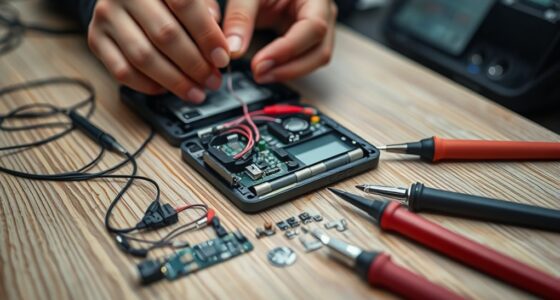
If you notice physical damage like swelling, leaks, or cracks, or your battery can’t hold a charge despite multiple tries, it’s beyond saving. Internal resistance might be too high, or there’s severe corrosion or safety risks. When reconditioning efforts fail or the damage is obvious, replacing is the safest choice. Continuing to attempt reconditioning could cause further harm or hazards, so think carefully before proceeding—more important signs await if you keep exploring.
Key Takeaways
- Visible physical damage such as cracks, bulges, or leaks indicates the battery is beyond safe reconditioning.
- When the battery cannot accept or hold a charge despite reconditioning efforts, it’s likely beyond saving.
- High internal resistance and corrosion suggest internal damage that reconditioning cannot repair.
- Swelling, bulging, or leaking casings pose safety hazards, making replacement the safer choice.
- When multiple failure signs—like capacity loss, rapid drain, and physical damage—occur together, reconditioning is not advisable.

A battery that’s beyond saving will often show clear signs before it completely fails. If you’re trying to determine whether to attempt reconditioning or to replace it altogether, understanding these signs is essential. Batteries have a limited lifespan, and knowing when they’ve reached the end helps you avoid wasting time and effort on futile repairs. Many people fall for reconditioning myths, believing that all batteries can be revived regardless of their condition. However, this isn’t true. Sometimes, the damage is too severe, and reconditioning just isn’t worth it or even possible.
One of the most obvious indicators is a significant decrease in performance. If your device or vehicle is struggling to start or run smoothly, and you’ve already replaced the battery recently, it might be a sign that the battery has aged beyond its prime. Batteries naturally lose capacity over time, and when their lifespan is nearly exhausted, they can’t hold a charge as well as they used to. If reconditioning attempts don’t restore the battery’s original performance or if it quickly loses charge again, it’s a strong sign that it’s time for a replacement.
Significant performance decline indicates it’s time to replace your battery.
Another sign is physical damage. Swelling, corrosion, leaks, or cracks indicate severe internal issues. These physical problems compromise the battery’s integrity and pose safety risks. Attempting to recondition a damaged battery can be dangerous and is generally not recommended. If you notice any of these signs, it’s best to discard the battery safely and replace it.
Additionally, if a battery no longer accepts a charge or drains very quickly, it’s a clear sign that it’s reached the end of its life. While some reconditioning myths suggest that deep cycling or certain cleaning methods can revive old batteries, these are often temporary fixes. If the battery consistently fails to hold a charge after multiple reconditioning attempts, it means the internal chemistry has deteriorated beyond repair.
Furthermore, the presence of high internal resistance is a critical factor indicating that a battery is no longer viable. When internal resistance increases significantly, it hampers the battery’s ability to deliver power efficiently, making reconditioning ineffective. Keep in mind that reconditioning isn’t a universal solution. It works best for batteries with minor issues or those nearing the end of their lifespan, but it’s not a magic fix for all problems. When the signs are pointing toward total failure—such as physical damage, rapid capacity loss, or persistent inability to hold a charge—trying to recondition is futile. In these cases, replacing the battery is not only more practical but also safer. Recognizing these signs helps you make smarter decisions and saves you from risking further damage or safety hazards.
Frequently Asked Questions
Can a Damaged Battery Ever Be Safely Reconditioned?
You might wonder if a damaged battery can be safely reconditioned. If it shows signs like a battery explosion risk or chemical leakage, it’s unsafe to attempt reconditioning. Damaged batteries can release harmful chemicals or cause dangerous explosions, risking injury or property damage. Always prioritize safety—if a battery is visibly compromised or leaking, it’s best to dispose of it properly rather than risk reconditioning.
How Long Does a Typical Battery Reconditioning Process Take?
The battery reconditioning process typically takes between 1 to 3 hours, depending on its condition and the reconditioning tools you use. You’ll need patience as you carefully restore the battery’s capacity, which can extend its lifespan considerably. Using proper reconditioning tools guarantees safety and efficiency, helping you avoid damaging the battery further. Keep in mind, a well-reconditioned battery can perform like new, saving you money and prolonging its useful life.
Is Reconditioning Cost-Effective Compared to Replacement?
Reconditioning often proves cost-effective compared to replacement because it offers a favorable cost comparison, saving you money while extending your battery’s life. Plus, it reduces environmental impact by decreasing waste and the need for new batteries. You’ll benefit from lower expenses and a greener approach, making reconditioning a smart choice if your battery shows signs of potential recovery. Just verify it’s still in a salvageable condition before proceeding.
Can Extreme Weather Affect a Battery’s Reconditioning Potential?
Did you know that extreme weather can cause up to 40% of battery failures? Weather damage critically impacts a battery’s reconditioning potential, as freezing temperatures can cause internal cracks and overheating can deteriorate components. These conditions often lead to reconditioning limitations, making it less effective or even impossible to restore the battery’s performance. In severe weather, it’s essential to assess the damage carefully before attempting any reconditioning process.
What Are the Risks of Attempting to Recondition a Compromised Battery?
Attempting to recondition a compromised battery can be risky because it may release hazardous chemicals, posing health and environmental dangers. You also face an explosion risk if the battery’s internal structure is severely damaged or faulty. If you notice swelling, leaks, or corrosion, it’s safest to avoid reconditioning. Instead, dispose of the battery properly to prevent accidents and protect yourself from potential harm.
Conclusion
If your battery shows persistent swelling, leaks, or fails to hold a charge despite multiple attempts, it’s time to accept it’s beyond saving. For example, imagine trying to recondition a car battery that keeps overheating and emitting a strange smell—continuing to fix it could be dangerous. When these clear signs appear, don’t risk safety or further damage. Instead, replace the battery to guarantee reliable performance and peace of mind.