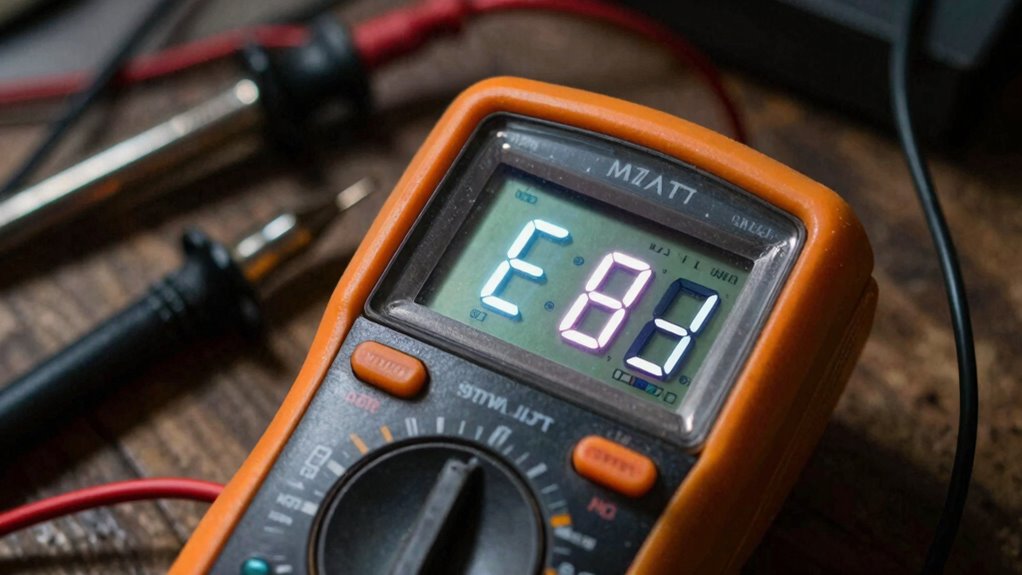
Voltage can be a trustworthy indicator of a battery’s health when you consider factors like battery chemistry, measurement conditions, and load state. It’s accurate if you use a calibrated multimeter, guarantee proper contact, and measure under consistent conditions. However, it can be misleading if taken immediately after charging, under heavy load, or without accounting for temperature effects. Keep these points in mind, and you’ll better understand when voltage truly reflects performance. To learn more, continue exploring these critical influences.

Get backup power and energy gear delivered free with Prime
- Fast, free delivery on millions of items
- Prime Video, Amazon Music and more included
- Member-only deals all year
Key Takeaways
- Voltage readings are most accurate when taken with proper contact, calibration, and under stable, no-load conditions.
- Chemistry-specific voltage profiles determine whether a given reading accurately reflects battery health.
- Measurements immediately after charging or under load may not represent the true resting voltage.
- Environmental factors like temperature can distort voltage readings, making them unreliable without context.
- Fluctuations or inconsistent readings indicate the need for multiple measurements and understanding of operating conditions.
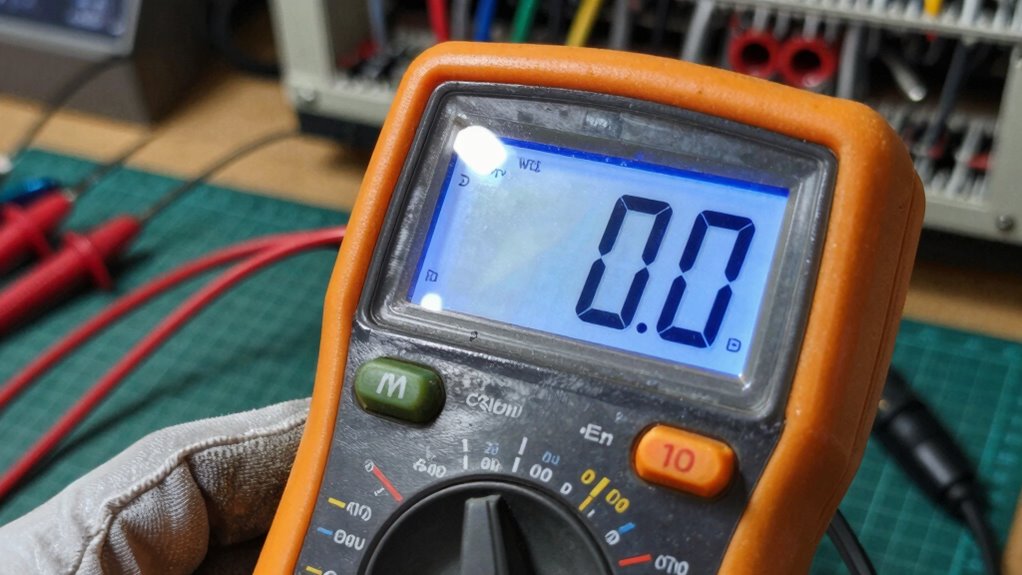
Understanding when voltage readings are accurate is essential for troubleshooting electrical systems effectively. When you measure voltage, you’re trying to get a true picture of the system’s state, but various factors can influence the accuracy of those readings. One key aspect often overlooked is how battery chemistry impacts voltage measurements. Different types of batteries, like lead-acid, lithium-ion, or nickel-metal hydride, have unique voltage profiles influenced by their chemical composition. For example, a lead-acid battery might show a slightly higher voltage when fully charged, but as it discharges, the voltage drops predictably. If you don’t consider the battery chemistry, you might misinterpret the voltage reading—thinking the battery is healthier or more drained than it actually is. Knowing the specific chemistry helps you set realistic expectations and avoid false conclusions about the system’s condition.
Measurement errors are another common cause of inaccurate voltage readings. These errors can stem from several sources, such as poor contact with the terminals, using a faulty or uncalibrated multimeter, or measuring under inappropriate conditions. For instance, taking a reading while the circuit is still under load can give a lower voltage than the true open-circuit voltage, leading you to believe the battery or system is weaker than it truly is. Similarly, if your probe isn’t making solid contact or if the leads are damaged, your readings could be skewed. Environmental factors like temperature also play a role—batteries and electrical components often behave differently in cold or hot conditions, affecting voltage readings. To guarantee accuracy, you should always verify your measurement tools are calibrated, use proper contact techniques, and be aware of the system’s operating conditions. Additionally, understanding the impact of temperature on electrical components can help you interpret readings more accurately. It’s also important to consider the discharge state of the battery, as this can significantly influence the measured voltage and lead to proper assessment of its health. Recognizing the voltage variation during different operating conditions ensures you interpret the readings in context, avoiding unnecessary concerns or misdiagnoses. Moreover, consistent measurement practices can help identify patterns in voltage fluctuations, aiding in more reliable diagnostics.
Another important factor is the state of the battery or electrical component during measurement. If you’re measuring a battery’s voltage while it’s under heavy load, the reading might be lower than its true resting voltage, leading you to underestimate its capacity. Conversely, measuring right after a charge can give a higher-than-normal reading, which might not reflect its typical performance. Understanding these nuances helps you interpret readings correctly rather than jumping to conclusions based solely on a snapshot measurement.
digital multimeter for battery testing
As an affiliate, we earn on qualifying purchases.
As an affiliate, we earn on qualifying purchases.
Frequently Asked Questions
How Do Temperature Changes Affect Voltage Readings?
Temperature fluctuations can considerably impact voltage readings, causing them to vary unexpectedly. As temperatures rise or fall, voltage stability can be compromised because electrical components, like resistors and semiconductors, change their behavior. You might see inaccurate readings if you don’t account for these changes. To guarantee accurate measurements, keep your equipment within a stable temperature range, or calibrate your devices regularly to account for temperature effects.
Can Old or Damaged Meters Give False Voltage Readings?
Yes, old or damaged meters can give false voltage readings. Calibration issues often cause inaccuracies, making the readings unreliable. Additionally, battery degradation can lead to weak power supply within the meter, resulting in incorrect measurements. You should regularly check your meter’s calibration and replace batteries as needed. If the meter shows inconsistent readings despite these measures, it’s time to replace or repair it to guarantee accurate voltage measurements.
What Role Does Grounding Play in Accurate Voltage Measurement?
Grounding plays a vital role in accurate voltage measurement because grounding issues can cause false readings or measurement errors. To guarantee accuracy, you should use proper measurement techniques, such as connecting your meter’s ground lead securely to a known, stable ground point. Poor grounding can introduce noise or voltage fluctuations, so double-check your connections and minimize grounding problems to get reliable, precise readings every time.
How Does Electromagnetic Interference Impact Voltage Accuracy?
Electromagnetic interference can totally sabotage your voltage readings, causing wild fluctuations and false readings that seem almost impossible to trust. It disrupts voltage stability by introducing noise and signals from nearby devices, making your measurements wildly inaccurate. You might think your equipment’s fine, but interference’s sneaky influence can distort the truth, leading you astray. To keep voltage readings reliable, minimize electromagnetic interference and protect your measurement setup.
Are There Specific Conditions That Make Voltage Readings Unreliable?
Yes, certain conditions can make voltage readings unreliable. If your equipment has calibration issues, the measurements may be off, leading to inaccurate readings. Power supply fluctuations also cause instability, making voltage readings inconsistent or misleading. You should regularly calibrate your devices and verify a stable power source to improve accuracy. These steps help guarantee that your voltage measurements truly reflect the actual electrical conditions.
Conclusion
So next time you trust that perfect voltage reading, remember—it’s only as honest as your tools and techniques. Sometimes, the meter’s whisper is true; other times, it’s just noise in the static. Like a fortune teller with a crystal ball, it’s tempting to believe what you see, but beware: what looks like certainty might just be a clever illusion. In the end, even the most accurate readings can deceive if you’re not careful.
Halloween Picks
halloween
As an affiliate, we earn on qualifying purchases.