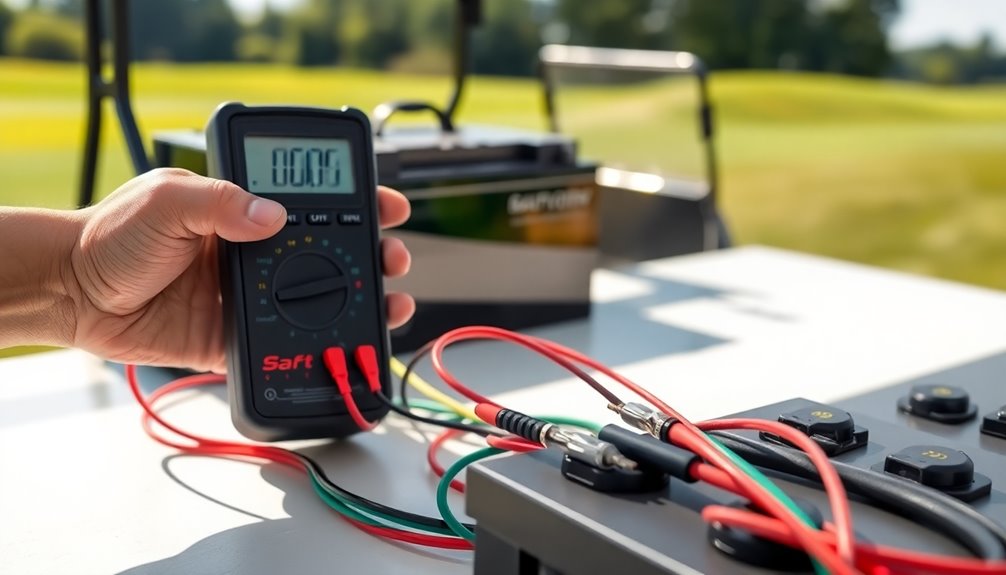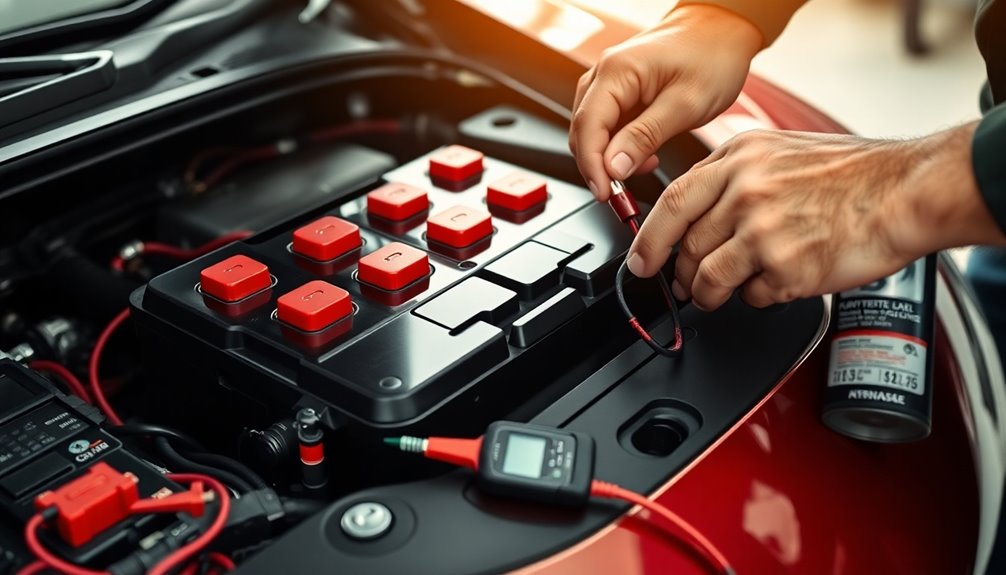
To manage battery temperature in hot weather, guarantee proper cooling with fans or liquid systems, avoid direct sunlight, and keep vents clear. In cold weather, pre-warm the battery with heaters or insulate it, and store devices in warmer environments to maintain performance. Always use controlled, slower charging during extremes, and avoid prolonged exposure to high or low temperatures. Following these strategies keeps your battery healthy—continue exploring for more tips on ideal thermal management.
Key Takeaways
- Use active cooling systems like fans or liquid cooling to prevent overheating in hot weather.
- Pre-warm batteries with heaters or insulation to maintain performance during cold conditions.
- Avoid exposing batteries to direct sunlight and ensure proper ventilation to manage heat buildup.
- Charge batteries slowly in cold weather and pre-warm them to reduce stress and improve efficiency.
- Implement thermal management strategies such as insulation, heating, and controlled ventilation for optimal temperature regulation.
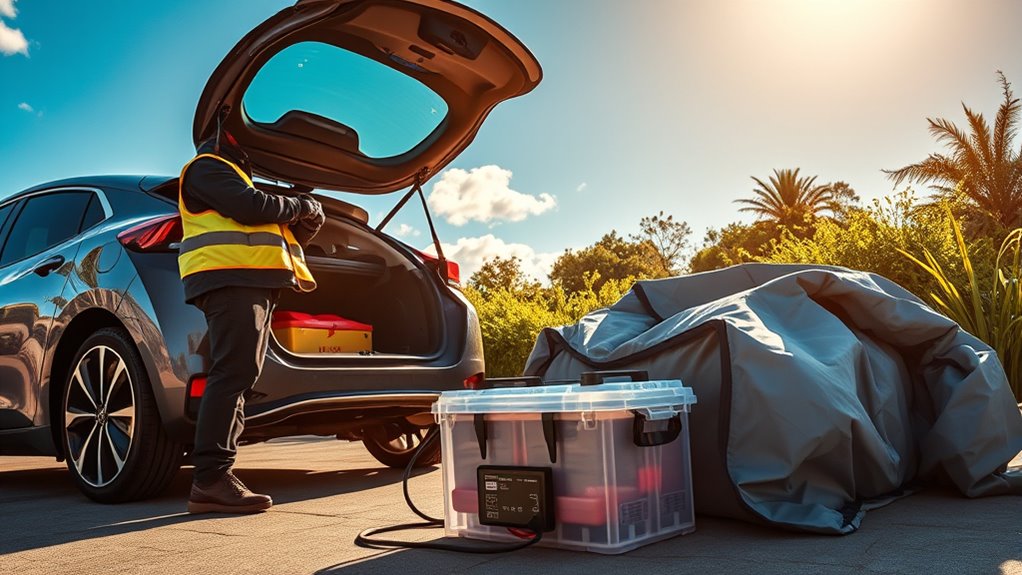
Maintaining ideal battery temperature is crucial for ensuring its performance and longevity. When temperatures are too high or too low, your battery can suffer from reduced efficiency, faster degradation, or even failure. That’s why effective thermal management is essential, especially during extreme weather conditions. In hot weather, battery cooling becomes a critical part of maintaining peak performance. Excessive heat can cause the internal components to overheat, which accelerates chemical reactions inside the battery, leading to faster wear and potential safety hazards. To combat this, modern batteries often incorporate cooling systems, such as liquid cooling or air circulation, to dissipate heat quickly. If you’re driving an electric vehicle or using a device with a high-capacity battery, keeping the battery cool involves ensuring vents aren’t blocked and avoiding prolonged exposure to direct sunlight. Some vehicles are equipped with active cooling systems that automatically monitor temperature and activate fans or liquid coolants as needed. These measures help maintain a steady, safe temperature, preventing overheating during demanding tasks or hot days. Additionally, proper ventilation can assist in preventing heat buildup around the battery.
Conversely, cold weather presents its own set of challenges. When temperatures drop too low, the chemical reactions within the battery slow down, leading to reduced capacity and shorter range. You might notice your device or vehicle struggling to start, or that it takes longer to charge. To manage cold conditions, you should consider pre-warming your battery if possible, especially before heavy use. Many electric vehicles feature thermal management systems that include heaters designed to keep the battery within a safe operating temperature. If your device doesn’t have such features, keeping it in a warmer environment or using a battery warmer pad can help. Insulating the battery compartment or parking in a garage can also keep temperatures more stable, reducing the chance of performance loss. Remember, rapid charging in cold weather isn’t ideal, as it can cause additional stress on the battery. Instead, plan for slower, more controlled charging sessions to keep the battery healthier.
In both hot and cold conditions, understanding how to manage temperature effectively can prolong your battery’s life and enhance its reliability. By paying attention to thermal management and implementing proper battery cooling strategies, you help prevent damage caused by temperature extremes. Whether it’s using active cooling systems during hot days or pre-warming your battery in cold weather, these steps keep your battery operating at its best. Ultimately, maintaining a stable temperature ensures you get the most out of your battery, avoiding costly replacements and enjoying consistent performance over time.
Frequently Asked Questions
How Does Battery Temperature Affect Overall Lifespan?
Your battery’s lifespan decreases when it experiences extreme temperatures because thermal regulation becomes less effective. Hot weather accelerates battery degradation, causing faster capacity loss, while cold temperatures can temporarily reduce performance and harm internal components. By maintaining proper thermal regulation, you help prevent accelerated degradation, ensuring your battery lasts longer. Proper temperature management is essential for preserving battery health and extending its overall lifespan, especially in extreme weather conditions.
Can Battery Temperature Management Improve Vehicle Performance?
Yes, managing battery temperature can improve vehicle performance. By using thermal insulation, you help maintain ideal battery temperatures, preventing overheating or freezing, which can reduce efficiency. Battery cooling systems actively regulate temperature, ensuring consistent power delivery and preventing thermal stress. These strategies keep your battery operating at its best, enhancing overall vehicle performance, extending battery life, and providing smoother, more reliable driving experience regardless of weather conditions.
What Are the Signs of Temperature-Related Battery Damage?
You’ll notice your battery struggles like a tired traveler—slow charging, rapid draining, or erratic performance. Thermal sensors pick up these signs, while damaged insulation leaves the battery vulnerable to temperature swings. Watch for swelling, unusual heat, or a drop in range; these are the silent alarms of temperature-related damage. Address them promptly to keep your vehicle cruising smoothly and prevent further harm to your battery.
Are There Specific Accessories to Help Regulate Battery Temperature?
Yes, you can use accessories like battery insulation and cooling accessories to help regulate temperature. Battery insulation keeps your battery warmer in cold weather, preventing performance drops, while cooling accessories like fans or liquid cooling systems reduce heat buildup in hot conditions. These tools actively protect your battery from extreme temperatures, extending its lifespan and maintaining ideal performance. Investing in these accessories ensures your battery stays within safe temperature ranges year-round.
How Often Should I Check My Battery’s Temperature in Extreme Weather?
You should check your battery’s temperature at least once every few hours during extreme weather—ironic, isn’t it? While battery insulation helps, relying solely on it isn’t enough. Thermal monitoring systems are your heroes here, giving real-time updates. Keep an eye on these readings regularly, especially during heatwaves or cold snaps, to prevent damage. So, stay vigilant—your battery’s health depends on it.
Conclusion
By actively managing your battery temperature, you can extend its lifespan and guarantee ideal performance. For example, during winter, parking your electric vehicle in a garage or using pre-conditioning can keep the battery warm and ready to go. Similarly, in hot weather, parking in the shade or using cooling features helps prevent overheating. Taking these simple steps lets you enjoy reliable battery performance year-round, avoiding costly replacements and maintaining your vehicle’s efficiency.