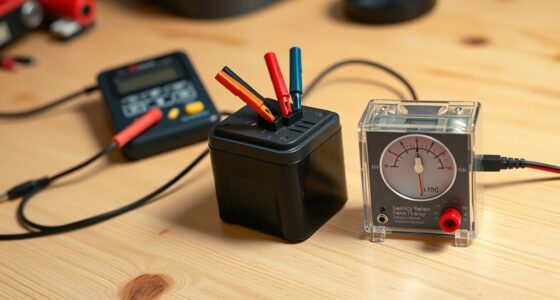
To prevent rapid discharge in lithium-ion batteries, avoid letting the battery drop below 20%, and don’t fully charge it to 100% all the time. Use quality chargers, and disconnect once fully charged. Keep your device at moderate temperatures, and turn off unused features like Bluetooth or Wi-Fi. Regularly monitor app activity to limit background drain. If you want to discover more effective tips, explore how proper maintenance can extend your battery’s lifespan.
Key Takeaways
- Use original or reputable chargers to ensure proper voltage and prevent battery stress.
- Avoid frequent deep discharges; keep battery levels between 20% and 80%.
- Store devices in cool, dry environments at around 50% charge for long-term preservation.
- Enable power-saving modes and turn off unused features to reduce unnecessary power drain.
- Keep devices at moderate temperatures and avoid exposure to extreme heat or cold.
Lithium-ion batteries are vital for powering our devices, but rapid discharge can markedly reduce their lifespan and reliability. When your batteries drain too quickly, it’s often a sign that you need to pay closer attention to proper battery maintenance and effective charging techniques. By adopting good habits, you can extend your battery’s life and guarantee it performs at its best over time.
First, focus on battery maintenance. Avoid letting your device’s battery completely drain before recharging. Lithium-ion batteries don’t like to be fully depleted regularly, as this can cause unnecessary stress and shorten their lifespan. Instead, aim to keep your battery level between 20% and 80%, which helps reduce the wear and tear that comes from deep discharges. Also, try to keep your device at a moderate temperature; extreme heat or cold can accelerate battery degradation and lead to rapid discharge. When storing your device for an extended period, guarantee the battery is around 50% charged and store it in a cool, dry place to prevent capacity loss. Regularly checking your device’s air quality can also help identify environmental factors that might affect battery performance.
Next, your charging techniques play a vital role in preventing rapid discharge. Always use the charger supplied by your device manufacturer or a reputable, compatible charging cable. Avoid cheap or incompatible chargers, as they may deliver inconsistent voltage, which can damage the battery or cause rapid drain. Try to avoid frequent top-ups from very low battery levels; instead, charge your device in small, frequent sessions to maintain a steady charge level. When possible, disconnect your device once it reaches 100%, as keeping it plugged in at full charge can stress the battery and hasten capacity loss. Additionally, don’t overcharge or leave your device charging overnight regularly, as this can contribute to overheating and battery stress.
Another effective tip is to enable any built-in battery-saving features your device offers. These settings can optimize power consumption, reduce background activity, and prevent unnecessary battery drain. Turning off unused features like Bluetooth, Wi-Fi, or location services when they’re not needed also helps conserve energy and prevents rapid discharge. Be mindful of your app usage; background apps can draw power even when you’re not actively using your device. Regularly closing unnecessary apps and monitoring which ones consume the most power can make a significant difference.
Frequently Asked Questions
Can Temperature Fluctuations Cause Rapid Battery Discharge?
Yes, temperature fluctuations can cause rapid battery discharge. When temperatures vary, it affects thermal management and voltage stability, making the battery work harder to maintain ideal performance. Extreme heat accelerates chemical reactions, draining the battery faster, while cold temperatures reduce capacity. To prevent this, keep your device within recommended temperature ranges, guarantee proper thermal management, and avoid exposing your battery to sudden temperature changes that can destabilize voltage and speed up discharge.
How Does Storage Humidity Affect Battery Lifespan?
Ever wondered how storage humidity impacts your battery’s lifespan? Too much humidity can accelerate corrosion and degrade internal components, shortening battery life. To prevent this, practice humidity control by storing batteries in a dry, cool environment. This helps preserve performance and prevents corrosion. By maintaining proper humidity levels, you ensure your lithium-ion batteries stay healthier longer, maximizing their efficiency and reducing the need for early replacements.
Are There Specific Charging Routines to Prevent Rapid Discharge?
You can prevent rapid discharge by optimizing your charging cycle and using battery calibration techniques. Avoid frequent partial charges; instead, aim for full, balanced charging cycles to maintain capacity. Regularly calibrate your battery by fully charging and then discharging it to reset the device’s power indicator. These practices help stabilize voltage levels, extend battery life, and prevent unnecessary rapid discharge, ensuring your lithium-ion battery performs reliably over time.
Does Using Third-Party Chargers Impact Battery Health?
Like a trusted friend, a third-party charger can be reliable if it matches your device’s needs. Using compatible chargers that provide proper voltage stability guarantees your battery stays healthy and lasts longer. However, incompatible chargers may cause damage, similar to a misstep in a dance. Always check charger compatibility and opt for quality, reputable options to protect your battery’s lifespan and maintain peak performance.
What Are the Signs of Imminent Battery Failure?
You’ll notice signs of imminent battery failure when your device’s battery capacity drops markedly faster than usual, and voltage stability becomes inconsistent. If your device suddenly shuts down at high charge levels or experiences rapid power drain, it’s a warning. Pay attention to swelling, overheating, or strange odors, as these also indicate trouble. Catching these signs early helps you replace or service the battery before complete failure occurs.
Conclusion
By following these simple tips, you can considerably extend your lithium-ion battery’s life. But beware—ignoring these precautions might lead to unexpected performance drops when you need your device most. Will your battery hold up in that critical moment? Stay vigilant, practice good habits, and keep your battery safe. The secret to avoiding rapid discharge is within your control—are you ready to access its full potential? The choice is yours.