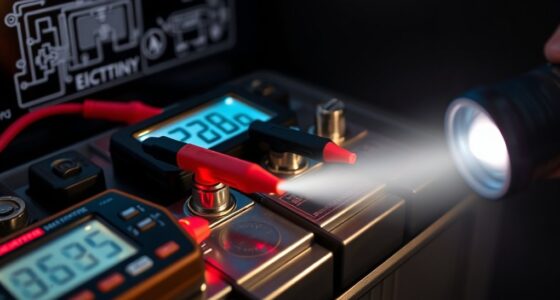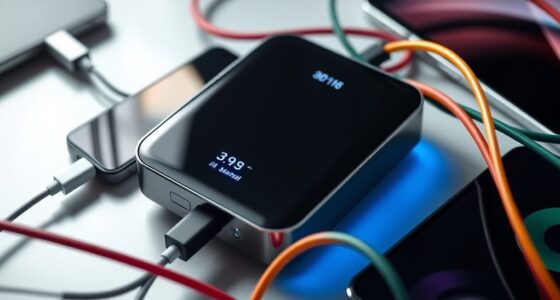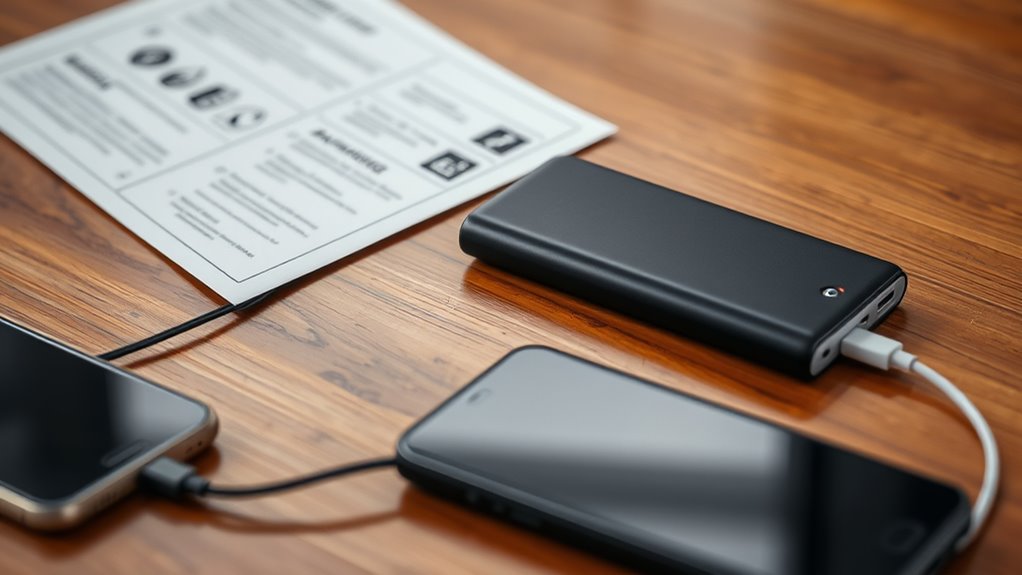
To use portable power banks safely, always buy from reputable brands that meet safety standards. Avoid counterfeit or damaged units, and keep the power bank in a cool, dry place away from flammable materials. Don’t overcharge devices or leave them unattended while charging. Inspect your power bank regularly for damage, and dispose of it properly if it shows signs of wear. Following these tips helps prevent hazards—continue to explore more tips for safe usage.
Key Takeaways
- Purchase power banks from reputable brands that meet safety standards to ensure reliable protection against hazards.
- Avoid using damaged, swollen, or leaking power banks, and dispose of them properly to prevent fire risks.
- Do not overcharge devices; unplug once fully charged and prevent covering devices during charging to avoid overheating.
- Store power banks in cool, dry places away from heat, sunlight, and flammable materials to reduce safety risks.
- Regularly inspect for damage, use compatible cables, and follow manufacturer instructions to maintain safe operation.

Portable power banks have become indispensable for keeping your devices charged on the go, but using them safely requires awareness of proper guidelines and potential hazards. One of the most critical aspects to consider is fire safety. Power banks contain lithium-ion batteries, which, if damaged, improperly handled, or exposed to extreme heat, can overheat or catch fire. To minimize this risk, always buy from reputable brands that comply with safety standards. Avoid using counterfeit or low-quality power banks, as they often lack proper safety mechanisms. When charging your power bank, keep it in a cool, dry place away from flammable materials, and never leave it unattended while charging. If you notice any swelling, leakage, or unusual odors, stop using the device immediately and dispose of it properly. Proper storage and handling are essential for fire safety, especially when you’re traveling or at home. Implementing proper maintenance practices can further reduce the risk of accidents and prolong the lifespan of your device. Device compatibility is another key factor to guarantee safe and efficient use. Not all power banks are compatible with every device, and using an incompatible one can lead to damage or reduced performance. Before connecting your device, check the power bank’s output voltage and current ratings, ensuring they match your device’s requirements. Using a power bank with a lower output may result in slower charging, while too high an output could damage sensitive electronics. Many modern power banks feature multiple ports with different power outputs, so choose the right port for your device. Additionally, confirm that your device’s charging cable is in good condition; frayed or damaged cables pose safety risks and can cause shorts or fires. Using the correct cable and ensuring compatibility helps prevent issues such as overheating, short circuits, or device malfunctions. It’s also wise to read the user manual and follow the manufacturer’s instructions for safe use. Many issues arise from neglecting these guidelines, which can lead to accidents or damage. Avoid overcharging your devices or leaving them plugged in for extended periods after they’re fully charged. Overcharging can degrade the battery over time and increase the risk of overheating. When you’re finished using the power bank, unplug it from your devices and store it in a cool, dry place, away from direct sunlight. Regularly inspect the power bank for any signs of damage or wear, and replace it if necessary. By adhering to these safety tips—paying attention to fire safety concerns and device compatibility—you can enjoy the convenience of portable power banks without risking damage or accidents. Proper handling ensures your devices stay powered safely and efficiently, giving you peace of mind during your daily activities or travels.
Frequently Asked Questions
Can I Use a Damaged Power Bank Safely?
No, you should not use a damaged power bank. A damaged one can leak battery fluid, which is dangerous, and it increases overheating risks. Using it might cause it to short circuit or even catch fire. Always inspect your power bank for signs of damage, such as swelling, cracks, or leaks. If you notice any issues, dispose of it properly and replace it to guarantee safe charging.
Are There Specific Brands Recommended for Safety?
You should look for brand recommendations that prioritize safety certifications like UL, CE, or FCC. Reputable brands such as Anker, RAVPower, and Aukey are known for adhering to strict safety standards. These certifications guarantee the power bank has undergone rigorous testing, reducing risks like overheating or short circuits. Always choose trusted brands with positive reviews to ensure safe usage and reliability for your devices.
How Do I Dispose of Old or Damaged Power Banks?
You might hesitate to dispose of old power banks, but proper disposal is essential. First, avoid throwing them in regular trash to prevent hazards. Instead, find a local battery recycling program or designated e-waste facility for proper disposal. This guarantees the batteries are safely recycled or disposed of, reducing environmental impact and potential safety risks. Always follow manufacturer instructions and local regulations for battery recycling and proper disposal.
Do Power Banks Interfere With Medical Devices?
Power banks can interfere with medical devices if they emit electromagnetic signals, so you should always prioritize power bank safety. To minimize medical device interference, keep your power bank at a safe distance from your device, especially during medical procedures. Always use certified power banks and avoid charging near sensitive medical equipment. If you’re unsure, consult your medical device’s guidelines to ensure compatibility and safety.
Is It Safe to Leave a Power Bank Charging Overnight?
Leaving a power bank charging overnight is like opening a door to unnecessary risks. It’s generally not recommended, even with safety precautions. Overcharging can cause overheating or fire hazards, so it’s best to unplug once fully charged. For safety, always follow manufacturer instructions, avoid using damaged cables, and don’t leave it unattended during overnight charging. Your vigilance keeps your devices and home safe from avoidable mishaps.
Conclusion
By following these guidelines, you guarantee safe and effective use of your portable power bank. For instance, if you ignore warnings and overcharge it, it could overheat and cause a fire, risking injury or property damage. Always use certified chargers, avoid extreme temperatures, and monitor your device during charging. Staying cautious not only prolongs your power bank’s lifespan but also keeps you safe—so prioritize safety every time you plug in.