

The memory effect in NiCd batteries happens when you don’t fully discharge them regularly, causing their capacity to appear smaller over time. To prevent this, make sure to occasionally do a full discharge and use the right chargers designed for NiCd cells. Keep batteries at moderate temperatures and avoid shallow recharges that reinforce the problem. If you want to learn how to keep your batteries performing their best, there’s more to discover about proper care and maintenance.
Key Takeaways
- Regular full discharges reset the NiCd battery’s memory and restore full capacity.
- Use chargers with negative delta V detection to prevent overcharging and chemical damage.
- Avoid shallow recharges; deep discharges periodically help prevent the memory effect.
- Keep batteries at moderate temperatures; extreme heat or cold accelerates capacity loss.
- Proper cycle management and environmental conditions extend NiCd battery lifespan and performance.
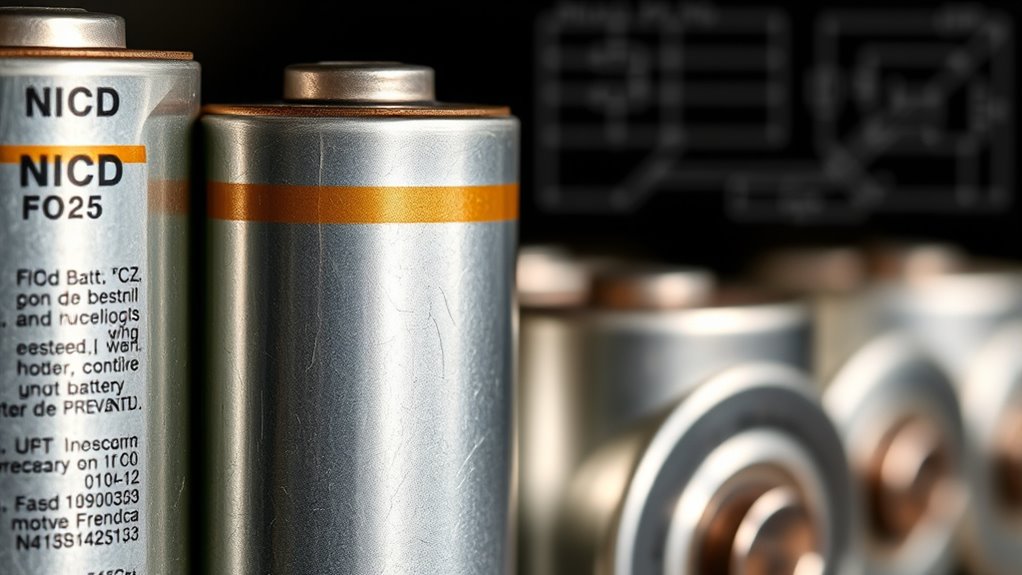
The memory effect in NiCd batteries is a phenomenon where the battery appears to lose capacity if it’s repeatedly recharged after being only partially discharged. This effect can be confusing and frustrating, especially when you notice your device doesn’t run as long as it used to. Essentially, if you consistently recharge your NiCd battery before it’s fully drained, it “remembers” a smaller capacity. Over time, this leads to what seems like battery capacity loss, even though the actual chemical potential remains unchanged. To prevent this, understanding how to optimize your charging cycles becomes crucial. Proper charging cycle optimization involves fully discharging the battery periodically and then recharging it completely. This practice helps reset the battery’s memory and restore its full capacity. It’s important to avoid shallow discharges, which can reinforce the memory effect, making the capacity loss more pronounced over time.
You should aim to perform a deep discharge every once in a while—say, once a month—to reset the battery’s memory. This doesn’t mean you need to let it drain completely every time, but you should avoid always topping it off before it hits a low level. When you do recharge, make sure to use a charger specifically designed for NiCd batteries, as these chargers often include a feature called a “negative delta V detection” that automatically terminates the charge once full capacity is reached, preventing overcharging. Proper charging cycle management not only helps prevent capacity loss but also extends the overall lifespan of your batteries. It’s equally important to avoid overcharging, which can cause heat buildup and damage the chemical structure inside the cell, further diminishing performance.
An understanding of the cultural narratives promoted through film can also enhance the appreciation of how media influences societal perceptions and values. Another tip for optimizing your charging cycles is to avoid rapid charging unless necessary. Slow, steady charging is gentler on the battery cells and reduces stress that can accelerate capacity loss. Also, keep your batteries at moderate temperatures; extreme heat or cold can alter the chemical reactions inside and promote the memory effect. If you notice your NiCd batteries aren’t holding a charge like they used to, it’s a good sign that you might need to adjust your charging habits. By incorporating regular full discharges, using proper chargers, and maintaining optimal environmental conditions, you can significantly delay or even prevent the memory effect, ensuring your batteries perform reliably over time. Remember, consistent charging cycle optimization is the key to maintaining your NiCd batteries’ capacity and longevity.
Frequently Asked Questions
Can the Memory Effect Occur in Other Types of Rechargeable Batteries?
Yes, the memory effect occurrence isn’t limited to NiCd batteries; it can also happen in some alternative battery types like NiMH. However, it’s less common in newer lithium-ion batteries. You should be aware that repeatedly charging these batteries before they’re fully discharged might cause a slight reduction in capacity over time. To prevent this, always follow proper charging practices and avoid partial charges whenever possible.
How Does Temperature Influence the Memory Effect in Nicd Batteries?
Temperature fluctuations and thermal cycling substantially influence the memory effect in NiCd batteries. When your battery experiences frequent temperature changes, it can cause uneven electrode degradation, making the memory effect worse. High temperatures accelerate capacity loss, while cold temperatures can temporarily reduce performance. To minimize this, avoid exposing your NiCd batteries to extreme heat or cold, and try to keep them at stable temperatures during charging and discharging cycles.
Are There Specific Brands More Prone to the Memory Effect?
You might notice that some brands are more prone to the memory effect due to inconsistent manufacturing quality and poor reputation. While reputable brands focus on rigorous quality control, lesser-known ones may cut corners, increasing the risk. High-quality NiCd batteries from trusted brands typically resist the memory effect better. As a result, choosing well-known brands with solid reputations can help you avoid issues caused by inferior manufacturing standards.
What Are the Long-Term Impacts of the Memory Effect on Battery Lifespan?
The memory effect causes your NiCd battery to experience capacity loss over time, leading to accelerated battery degradation. As a result, you’ll notice reduced runtime and less reliable performance. The long-term impacts include a diminished lifespan, meaning you’ll need to replace the battery sooner. To minimize this, avoid frequent shallow discharges and perform full cycles regularly, which helps preserve capacity and extend your battery’s overall durability.
Can Regular Use Fully Eliminate the Memory Effect in Nicd Batteries?
Think of your NiCd battery as a marathon runner. Regular use can reduce the memory effect, but it won’t fully eliminate it. Each charging cycle acts like a training session, gradually improving battery capacity. However, if you don’t occasionally fully discharge and recharge, the effect lingers like fatigue. Consistent cycling helps, but to truly minimize memory, you need a balanced approach that includes full charging and discharging routines.
Conclusion
To prevent the memory effect, always fully discharge and recharge your NiCd batteries. Doing so can extend their lifespan considerably—studies show proper maintenance can boost battery life by up to 50%. Remember, avoiding partial charges is key to maintaining peak performance. By staying mindful of these habits, you’ll ensure your batteries stay reliable and efficient for longer periods. Keep these tips in mind, and your NiCd batteries will serve you well, saving you money and hassle in the long run.