
The real reason your inverter trips off is often related to faulty or improperly installed cables. Poor connections, damaged wires, or incompatible cables can cause voltage drops, short circuits, and overheating, all leading to shutdowns. Ensuring your cables match your inverter’s specifications, are well-maintained, and properly connected can prevent these issues. If you want to understand more about preventing these trips, there’s helpful information ahead to guide you through safe cable management.
Key Takeaways
- Damaged or loose cables cause voltage drops and short circuits, triggering inverter shutdowns.
- Incompatible or improperly rated cables can overheat, leading to system trips.
- Poor cable connections increase resistance, stressing the inverter and causing faults.
- Faulty cables may create voltage fluctuations, destabilizing the system and causing shutdowns.
- Proper cable management and matching specifications prevent overloads and ensure reliable inverter operation.
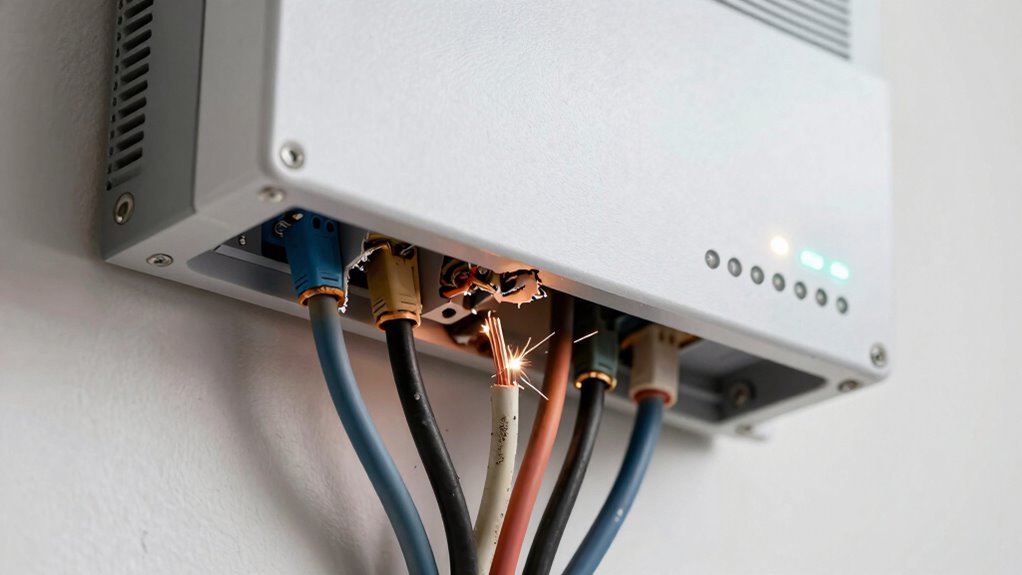
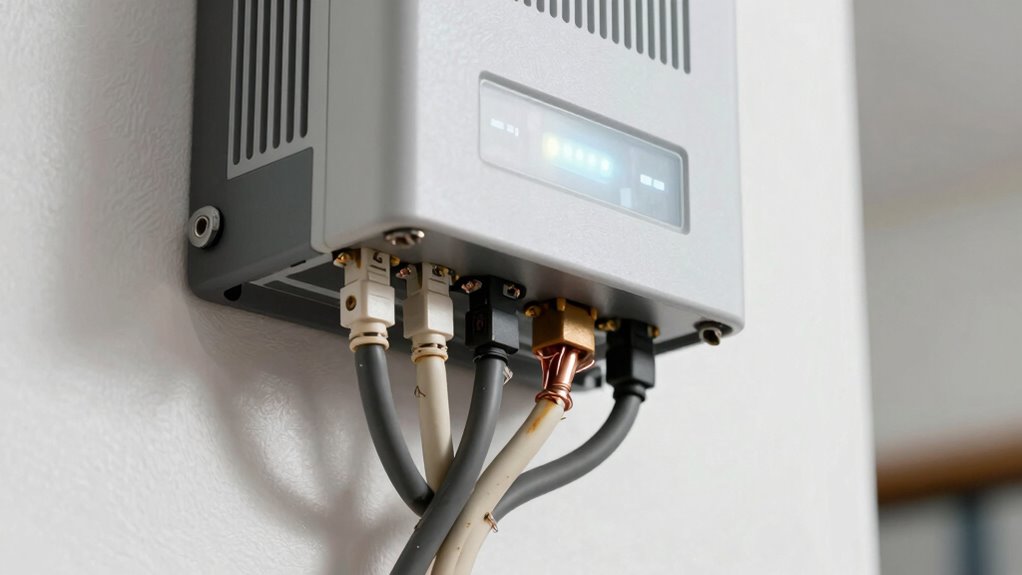
If your inverter keeps tripping off unexpectedly, the culprit is often faulty or improperly installed cables. Cables play a essential role in guaranteeing your inverter functions smoothly, and if they’re not up to par, it can lead to frequent shutdowns. Proper cable management and installation are crucial for inverter performance and longevity. When troubleshooting, start by inspecting the cables connecting your battery to the inverter. Damaged or loose connections can cause voltage drops or short circuits, prompting the inverter to trip as a safety measure. Confirming that your cables are of high quality and correctly rated for your system’s current load is necessary. Using cables that aren’t compatible with your inverter can cause overheating or electrical faults, which again lead to shutdowns. Always verify that your cables are compatible with your inverter’s specifications and that they are installed following the manufacturer’s guidelines.
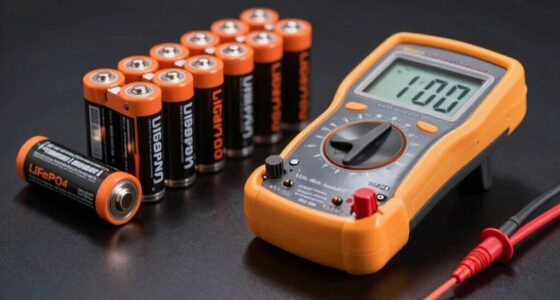
Battery maintenance also ties into this issue. If your batteries are not well-maintained, their internal resistance may increase, causing fluctuations in voltage. These fluctuations can stress the cables and inverter, resulting in trips. Regularly checking your batteries’ health, ensuring they are charged properly, and replacing aging batteries can prevent unnecessary trips caused by inconsistent power delivery. Poor battery maintenance often masks itself as cable or inverter problems, but the root cause could be the battery itself. Maintaining clean, corrosion-free terminals and ensuring the correct electrolyte levels in lead-acid batteries helps keep the entire system stable.
Another factor to think about is inverter compatibility. If you’ve recently upgraded or changed your inverter, confirm that all cables and batteries are compatible with the new device. An inverter designed for a certain voltage, wattage, or type of battery won’t perform efficiently if mismatched. Incompatibility can cause overloads or surges, leading to trips. Always cross-reference your system components with the inverter manufacturer’s specifications. Using incompatible cables or batteries can not only cause trips but might also damage your equipment over time.
In essence, if your inverter trips off unexpectedly, it’s worth revisiting your cable setup. Faulty, incompatible, or improperly installed cables are common culprits. Taking the time to ensure your cables match your inverter’s requirements, maintaining your batteries properly, and confirming system compatibility can save you from ongoing frustrations and extend the lifespan of your entire power setup. Remember, a well-maintained, correctly configured system minimizes trips and keeps your power reliable.
Frequently Asked Questions
Can Using Cheaper Cables Cause Inverter Trips?
Yes, using cheaper cables can cause inverter trips. Low-quality cables often have inferior cable material and poor insulation, which can lead to overheating or short circuits. Additionally, installation quality matters; poorly installed cables increase resistance and risk of faults. When these issues occur, your inverter detects the problem and trips to protect itself. To prevent this, always choose high-quality cables and ensure proper installation practices.
How Long Do Inverter Cables Typically Last?
Your inverter cables can last anywhere from 5 to 15 years, but neglect can turn them into time bombs faster than you’d believe. Proper cable insulation keeps moisture out, while avoiding connector corrosion maintains a strong connection. Regular inspections and replacements when needed guarantee your system stays safe and efficient. Don’t wait until failure strikes—think of your cables as the lifelines that keep your inverter running smoothly for years to come.
Are Certain Cable Types More Prone to Causing Trips?
Yes, certain cable types are more prone to causing trips. You should choose cables with durable cable material, like copper or high-quality aluminum, to handle the current safely. Additionally, installation quality plays a big role; poorly installed cables can cause overheating or short circuits, leading to trips. Always make sure you use the right cable type for your inverter and have it installed properly to prevent issues.
What Is the Best Way to Inspect Cables for Damage?
Think of your cables like a knight’s armor—inspect their cable insulation for tears or cracks, and check connectors for corrosion, which is like rust weakening armor. To do this, carefully run your fingers along the insulation, looking for any signs of damage, and use a brush or cloth to remove corrosion from connectors. A thorough visual inspection plus gentle cleaning keeps your cables strong and your inverter safe from trips.
Do Cable Connections Affect Inverter Performance?
Yes, cable connections considerably affect inverter performance. Poor-quality cables or loose, corroded connections can cause instability, leading to frequent trips or reduced efficiency. Ensuring you use high-quality cables and checking that all connections are secure and free from damage helps maintain connection stability. This prevents power interruptions and maximizes inverter lifespan, keeping your system running smoothly. Regular inspections of cable quality and connections are essential for ideal inverter performance.
Conclusion
Think of your inverter as a delicate dancer on a tightrope, perfectly balanced but easily thrown off by a shaky step. When cables are faulty or loose, it’s like a misstep that causes the whole performance to halt. By ensuring your cables are in top shape, you keep your system smoothly dancing along. Don’t let a small slip-up bring your energy flow to a sudden stop—fix the cables and keep the show going.