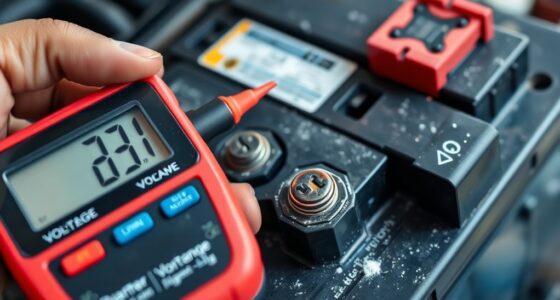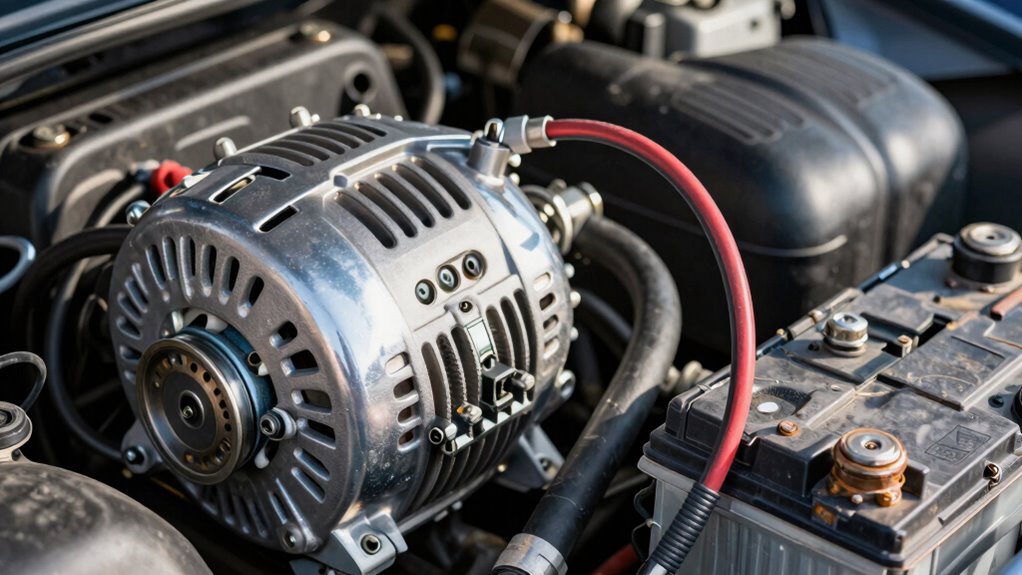

A passing alternator test doesn’t mean your charging system is working perfectly. Wiring issues, loose connections, or corroded terminals can still cause your battery to drain or fail. Faulty voltage regulators or hidden wiring problems might also be behind the issue, even if the alternator appears fine. Since many factors can hide underlying troubles, understanding how to diagnose beyond basic tests can help you solve persistent battery problems. Keep exploring to learn more.
Key Takeaways
- A passing alternator test doesn’t guarantee proper wiring, connections, or voltage regulation, which are crucial for effective charging.
- Hidden wiring faults, corrosion, or loose terminals can cause battery drain despite a good alternator reading.
- Batteries may appear healthy in tests but still fail under real-world conditions due to internal damage or age.
- Parasitic electrical drains or wiring issues can deplete the battery independently of alternator performance.
- Comprehensive diagnostics beyond basic alternator tests are necessary to identify underlying electrical system problems.
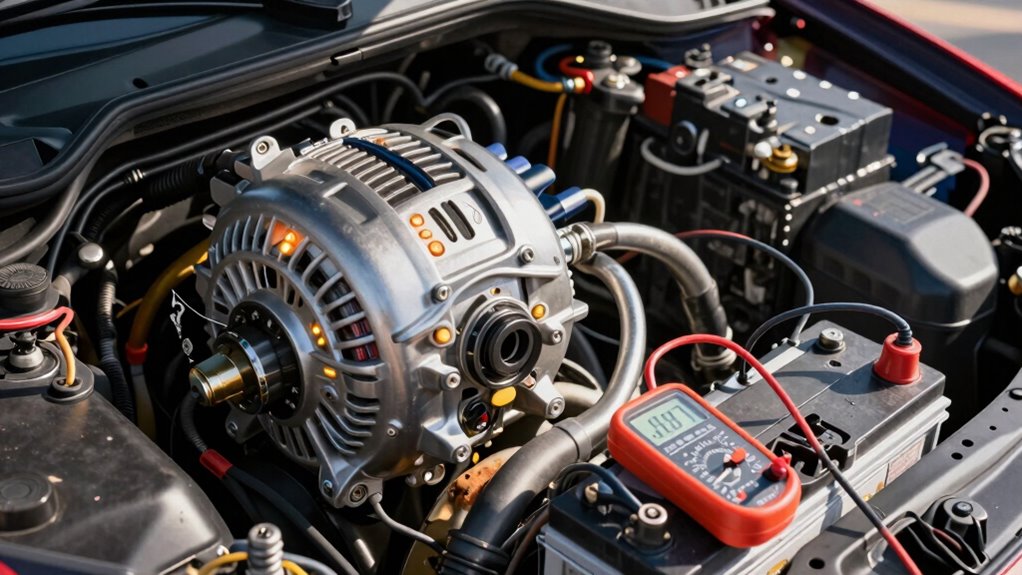
Ever wonder why your car’s battery keeps dying or why the electrical system seems weak? It can be frustrating, especially when an alternator test keeps passing, leading you to believe everything is fine. But the truth is, a healthy-looking alternator doesn’t always mean your charging system is functioning correctly. Your car’s electrical system relies heavily on more than just the alternator; it depends on proper wiring, good connections, and the overall integrity of the charging system. When these components are compromised, your battery can drain even if the alternator appears to be working during tests.
Understanding why your battery keeps dying despite passing an alternator test requires an in-depth examination of electrical diagnostics. Sometimes, the issue isn’t with the alternator itself but with the way the system is delivering power or how the battery is being charged. For example, a faulty voltage regulator or corroded connections can cause inconsistent charging, which may not be immediately evident during a standard alternator test. That’s why thorough electrical diagnostics are vital—they help identify hidden problems that simple tests might miss. These diagnostics examine the entire charging system, including wiring, fuses, and sensors, to verify every part is functioning as it should.
You might also be dealing with a failing battery that, despite appearing healthy, struggles to hold a charge. Batteries can sometimes pass a load test but still fail under real-world conditions, especially if they’re old or have internal damage. This is why it’s important to check the battery’s health thoroughly. Additionally, parasitic drains—when electrical components draw power even when the vehicle is off—can also cause your battery to drain overnight, making it seem like the alternator isn’t doing its job. These issues often go unnoticed during a quick test but can be uncovered through detailed electrical diagnostics.
Another common mistake is relying solely on the alternator’s output voltage readings. While a proper voltage range might suggest the alternator is working, it doesn’t guarantee it’s providing consistent current or that the system’s wiring is intact. Sometimes, the problem lies in the connections or the wiring harness, which can cause intermittent charging or poor power delivery. If your battery keeps dying, it’s essential to perform a thorough inspection of the entire charging system. This includes testing the alternator, inspecting wiring and connections, and evaluating the health of the battery itself. Only then can you pinpoint the real cause behind the recurring battery issues, rather than just trusting a passing alternator test.
Frequently Asked Questions
Can a Bad Alternator Still Produce a Passing Test Result?
Yes, a bad alternator can still produce a passing test result. When you check your charging system, diagnostic techniques might not reveal subtle alternator issues, especially if it’s still generating some power. The alternator could temporarily meet voltage requirements, but its overall efficiency or ability to maintain consistent charge may be compromised. This means your battery continues to drain despite a seemingly good alternator reading, highlighting the importance of extensive diagnostic testing.
How Does Parasitic Drain Affect My Battery Life?
Like Icarus flying too close to the sun, parasitic drain can cause your battery’s downfall. It’s often caused by wiring faults or corrosion that create unintended power leaks, draining your battery even when your car’s off. This constant drain weakens your battery over time, leading to frequent dead starts. Check for corrosion around terminals and inspect wiring connections regularly to prevent parasitic drain from stealing your vehicle’s energy.
Are There Specific Signs That Indicate a Failing Alternator?
You’ll notice signs like strange alternator noise, which suggests a failing component, and a persistent battery warning light on your dashboard. If your vehicle stalls or the headlights dim unexpectedly, these are also clues. A failing alternator can’t keep your battery charged, even if it initially tests fine. Regularly check for these signs to catch issues early, preventing your battery from dying unexpectedly and ensuring your car stays reliable.
Can a Faulty Voltage Regulator Cause Battery Issues?
Yes, a faulty voltage regulator can cause battery issues by disrupting voltage regulation and electrical consistency. When the regulator malfunctions, it may overcharge or undercharge your battery, leading to early battery failure or draining. You’ll notice problems like dimming lights or frequent battery replacements. Addressing the voltage regulation problem promptly helps maintain proper electrical flow, ensuring your battery stays charged and your vehicle runs smoothly.
How Often Should I Test My Vehicle’s Electrical System?
Think of your vehicle’s electrical system as the heartbeat of your car. You should test it every 6 to 12 months to keep that pulse steady. Regular battery maintenance and electrical diagnostics reveal hidden issues before they grow. Ignoring this can leave you stranded, so stay proactive—inspect connections, check the charging system, and make certain your battery stays healthy. This way, your car remains reliable and ready to go.
Conclusion
So, next time your alternator test keeps passing, but your battery still dies like a vintage radio from the 1920s, remember that a simple test isn’t always the full story. Sometimes, it’s the subtle signs—like corrosion or a loose belt—that cause the issue. Think of it like a knight’s armor; just because the shield looks fine doesn’t mean the sword is sharp. Stay vigilant, and don’t let your car be the unknighted knight in shining armor.