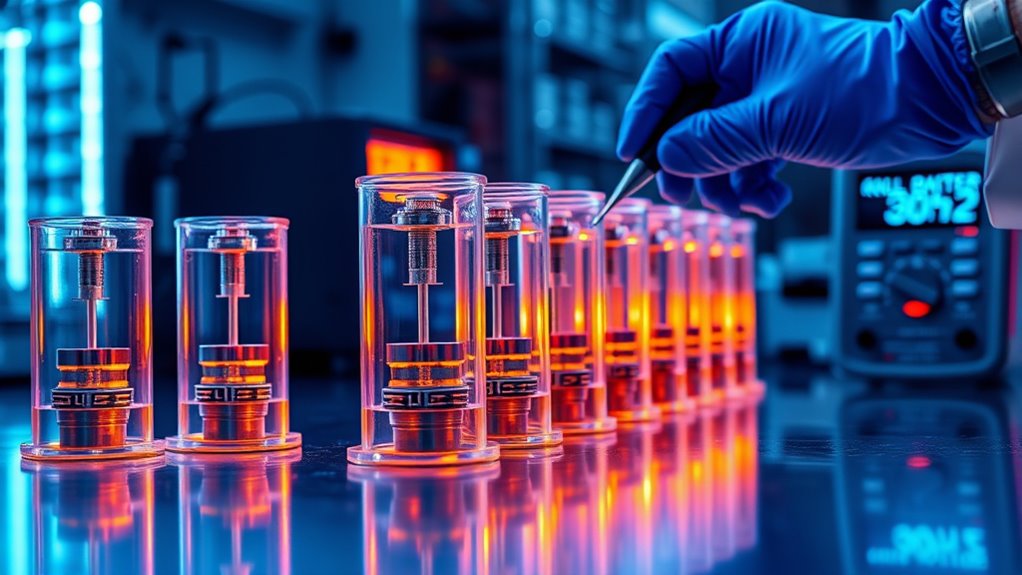

Sodium-ion batteries hold significant market potential as an affordable, sustainable alternative to lithium-ion technology. Recent advancements in electrolytes boost their performance, safety, and lifespan, making them suitable for large-scale energy storage. However, roadblocks like limited recycling infrastructure and material recovery challenges slow their widespread adoption. If you want to understand how ongoing innovations address these hurdles and shape the future of sodium-ion batteries, there’s more to explore below.
Key Takeaways
- Sodium-ion batteries offer cost-effective and abundant alternatives to lithium, boosting market potential for large-scale energy storage.
- Advancements in electrolyte stability and performance enhance battery reliability, supporting broader commercial adoption.
- Recycling infrastructure remains underdeveloped, posing environmental and economic challenges for widespread deployment.
- Material composition complexities and limited commercialization progress act as roadblocks to market growth.
- Developing standardized, cost-effective recycling methods is essential to ensure sustainability and address environmental concerns.

Sodium-ion batteries are emerging as a promising alternative to lithium-ion technology, offering a cost-effective and abundant solution for energy storage. As you explore this technology, you’ll find that recent advancements in electrolytes are key to improving performance. Researchers are developing new electrolyte formulations that enhance ionic conductivity, stability, and safety, addressing some of the initial limitations of sodium-based systems. These advancements help sodium-ion batteries operate efficiently at various temperatures and extend their lifespan, making them more viable for large-scale applications.
However, as you explore further, you’ll notice that recycling challenges pose a significant hurdle. Unlike lithium-ion batteries, sodium-ion batteries are still in the early stages of commercialization, and their recycling infrastructure is underdeveloped. This creates concerns about environmental impact and sustainability, especially as the demand for energy storage grows. Recycling sodium-ion batteries isn’t as straightforward because the materials used are often less established and more difficult to recover economically. Developing effective recycling processes will be vital to ensuring these batteries remain an environmentally friendly option in the long run.
Electrolyte advancements not only improve battery performance but also influence recycling methods. Better electrolytes reduce degradation and extend battery life, which can lessen the frequency of replacements and waste. Still, the composition of sodium-ion electrolytes often includes materials that require specialized recycling techniques, adding complexity to waste management. Addressing these issues involves research into compatible recycling processes that can recover valuable materials without damaging the environment. Understanding electrolyte composition can help guide the development of more recyclable sodium-ion batteries.
Furthermore, you’ll find that the recycling challenges are intertwined with the broader supply chain considerations. As sodium-ion batteries gain popularity, establishing standardized recycling protocols becomes essential for sustainable growth. This includes designing batteries with recyclability in mind and developing cost-effective recycling technologies. Without these steps, the environmental benefits of sodium-ion batteries could be compromised, limiting their appeal as a green energy solution.
Frequently Asked Questions
What Are the Environmental Impacts of Sodium-Ion Battery Production?
You might find that sodium-ion battery production has lower environmental impacts than other batteries, but it still faces challenges. Recycling sodium-ion batteries can be tricky because of limited processes for recovery, and raw material sourcing can strain local ecosystems if not managed carefully. By improving recycling methods and sourcing responsibly, you can reduce environmental harm and make sodium-ion batteries a more sustainable energy storage option.
How Do Sodium-Ion Batteries Perform in Extreme Temperatures?
Think of sodium-ion batteries as adaptable performers on a stage, handling extreme temperatures with surprising grace. You’ll find their thermal stability and temperature resilience shine brightest in harsh conditions, maintaining performance where others falter. Though they might not beat lithium-ion in every scenario, their ability to endure wide temperature ranges makes them reliable under the sun’s scorching glare or winter’s icy grip, proving they’re tough enough for the challenge.
What Are the Safety Concerns Associated With Sodium-Ion Batteries?
You should be aware that sodium-ion batteries generally offer good thermal stability, reducing fire hazards compared to some other battery types. However, like all rechargeable batteries, they can pose safety concerns if damaged or improperly handled, potentially leading to overheating or short circuits. Proper safety measures, such as avoiding punctures and ensuring proper temperature control, are essential to mitigate fire hazards and ensure safe usage of sodium-ion batteries.
How Does the Lifecycle Cost of Sodium-Ion Batteries Compare to Lithium-Ion?
Think of sodium-ion batteries as the underdog in a race — they’re catching up fast. Their lifecycle cost is generally lower than lithium-ion, thanks to cheaper materials and recyclability benefits. You’ll find they have less expensive manufacturing and disposal costs, making them a more economical choice over time. This cost comparison suggests sodium-ion batteries could offer a budget-friendly, sustainable alternative, especially as technology advances and economies of scale improve.
What Are the Potential Applications Beyond Energy Storage?
You can use sodium-ion batteries in portable electronics, offering a sustainable, cost-effective alternative to lithium-ion options. They also hold promise for grid stabilization, helping balance supply and demand with their abundant sodium resources. While still developing, these applications could expand into electric vehicles and large-scale energy storage, reducing reliance on scarce materials and supporting a greener, more resilient energy infrastructure.
Conclusion
While sodium-ion batteries promise affordability and abundance, their current limitations challenge widespread adoption. You stand at a crossroads where the untapped potential of sustainable energy storage clashes with technical hurdles like lower energy density. This juxtaposition reminds you that innovation often requires patience; progress may be slow, but the pursuit of greener alternatives keeps the future within reach. Ultimately, overcoming these obstacles will determine whether sodium-ion batteries become a game-changer or just another fleeting hope.