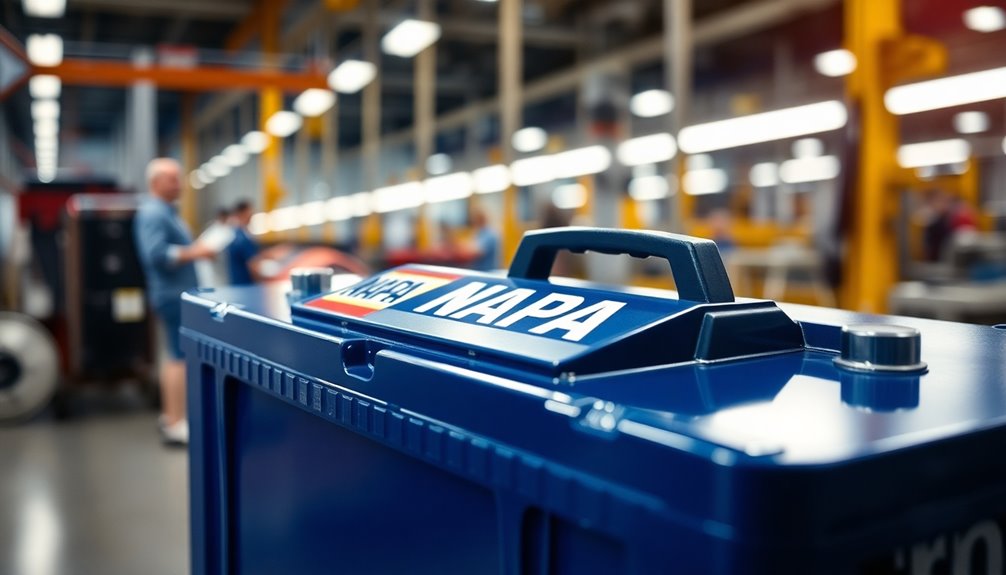
If you look at the global battery race, you’ll see China leading through control of raw materials, integrated supply chains, and cost advantages. Europe focuses on sustainability, ethical sourcing, and innovation to build a resilient industry. The U.S. emphasizes developing advanced technologies and domestic production to guarantee independence. Understanding these strategies reveals how each region aims for long-term dominance—stay tuned if you want to learn more about their evolving approaches.
Key Takeaways
- China leads through integrated supply chains, raw material control, and cost-effective production, aiming for global dominance.
- Europe focuses on sustainability, ethical sourcing, and innovation to build a resilient, transparent battery industry.
- The U.S. emphasizes domestic manufacturing, advanced chemistries, and raw material security to achieve technological independence.
- Each region’s strategy reflects broader economic goals: China’s supply chain control, Europe’s sustainability, and U.S. innovation.
- The global race centers on long-term industry leadership, with each region prioritizing different aspects of the battery value chain.
As the global demand for electric vehicles and renewable energy storage soars, regional leaders are racing to dominate the battery industry. If you’re paying attention, you’ll notice that China, Europe, and the U.S**. are aggressively expanding their battery manufacturing capabilities to stay ahead. China, in particular, has become the dominant force by investing heavily in both battery production and securing raw material sourcing. They control a significant portion of the supply chain, from mining lithium and cobalt to refining these materials for battery use. You’ll see Chinese companies establishing integrated supply chains, which give them a competitive edge by reducing costs and ensuring a stable flow of raw materials. This vertical integration helps China maintain lower battery manufacturing costs and meet the rising global demand more efficiently. Their strategy emphasizes securing raw materials early on, often through long-term contracts or investments in mining operations abroad, ensuring that supply chain disruptions are minimized. Additionally, China’s focus on raw material control** underscores their intent to dominate the entire supply chain and reduce reliance on external sources.
Meanwhile, Europe is stepping up its game with a different approach. European nations are focusing on building a resilient, sustainable battery ecosystem. They’re investing heavily in research, innovation, and establishing gigafactories across the continent. The emphasis here is on ethical and environmentally friendly raw material sourcing, with initiatives to reduce reliance on imports from regions with questionable mining practices. Europe aims to develop a more transparent and sustainable supply chain, which can appeal to consumers and companies prioritizing ethical considerations. The continent is also fostering collaboration between automakers, battery manufacturers, and raw material suppliers to create a more integrated and resilient industry. By doing so, Europe hopes to reduce dependency on external sources and build a competitive local supply chain that emphasizes quality and sustainability.
The U.S. is pursuing a different strategy altogether. With a focus on innovation and technological leadership, it’s heavily investing in domestic battery manufacturing and securing critical raw materials through strategic partnerships and domestic mining efforts. U.S. companies are working to develop advanced battery chemistries and manufacturing processes that can outperform global counterparts. They’re also prioritizing raw material sourcing within North America to shield themselves from geopolitical risks and supply chain disruptions. The U.S. government supports this push through policies and funding aimed at expanding domestic production capacity and refining raw materials on American soil. This approach aims to create a self-sufficient industry that can meet the soaring demand for electric vehicles and energy storage solutions, while also fostering technological leadership. In this fierce competition, your understanding of these regional strategies reveals how the global battery landscape is shaping up. Each region’s focus on battery manufacturing and raw material sourcing reflects their broader economic and strategic priorities. The race is not just about producing more batteries but also about controlling the entire supply chain to ensure long-term dominance in the fast-growing clean energy economy.
Frequently Asked Questions
How Do Regional Policies Influence Battery Technology Innovation?
Your regional policies, like policy incentives, directly boost battery technology innovation by funding research and encouraging startups. These policies shape innovation ecosystems, attracting talent and fostering collaboration among academia, industry, and government. When regions prioritize clean energy and sustainable transportation, they create a supportive environment that accelerates advancements. By aligning policies with technological goals, you can profoundly influence the pace and direction of battery innovation, giving your region a competitive edge.
What Are the Environmental Impacts of Regional Battery Manufacturing?
You’ll find that regional battery manufacturing impacts the environment considerably. It often involves resource extraction, which can harm ecosystems if not sustainably sourced, and generates pollution. However, regions implementing strict pollution control measures and promoting sustainable sourcing of materials reduce these impacts. This way, you can support cleaner production practices, minimizing environmental harm while advancing battery technology. Prioritizing sustainability helps balance innovation with ecological responsibility.
How Does Regional Competition Affect Global Supply Chain Stability?
Imagine a delicate web of interconnected threads—you’re at the center, feeling the tension when regional competition heats up. It can challenge supply chain resilience, causing disruptions and delays. Geopolitical risks increase, as nations prioritize their own interests, risking instability. While healthy competition fuels innovation, it’s essential you stay vigilant, fostering collaboration and diversification to safeguard the global supply chain’s stability amidst these regional dynamics.
What Role Do Startups Play in Regional Battery Advancements?
Startups play a vital role in regional battery advancements through startup innovation, pushing the boundaries of technology and efficiency. They often leverage local funding ecosystems to accelerate research and development, bringing fresh ideas to market faster. Your involvement as a startup can drive competitive edge in the regional battery landscape, fostering collaboration and spurring larger industry players to innovate. This dynamic fuels regional leadership and strengthens global supply chain resilience.
How Are Regional Leaders Addressing Battery Recycling Challenges?
You can see regional leaders addressing battery recycling challenges by investing in recycling infrastructure and promoting battery reuse initiatives. They’re establishing advanced facilities to efficiently process used batteries and recover valuable materials, reducing environmental impact. Policies encourage reuse and recycling, which helps extend battery lifespans. These efforts aim to create a sustainable battery ecosystem, ensuring responsible disposal and material recovery, ultimately supporting their leadership in the global battery industry.
Conclusion
As you follow the global battery race, remember that China leads with over 70% of the world’s lithium-ion battery production, giving it a significant edge. Europe is investing heavily to catch up, aiming for 30% of the market by 2030. The U.S. is also ramping up, with new factories increasing capacity by 50% in the last year alone. This fierce competition shows how vital batteries are for the future of clean energy and transportation.