Your battery’s quality control begins at the cell level because each cell’s condition directly impacts overall safety, performance, and lifespan. If even one cell has defects, it can cause issues like capacity loss, safety hazards, or uneven power distribution. Ensuring proper manufacturing, material purity, and thorough testing at this stage prevents problems before final assembly. Keep exploring to discover how this foundation influences the entire battery and its long-term reliability.

Get backup power and energy gear delivered free with Prime
- Fast, free delivery on millions of items
- Prime Video, Amazon Music and more included
- Member-only deals all year
Key Takeaways
- Cell-level control ensures early detection of defects, preventing larger issues in the entire battery pack.
- Maintaining uniformity at the cell level guarantees consistent performance and safety across the battery system.
- High-quality cells reduce risks of overheating, fires, and capacity loss, enhancing overall battery safety.
- Controlling material purity and manufacturing processes at the cell stage minimizes variability and enhances longevity.
- Rigorous cell testing and inspection uphold high standards before assembly, ensuring reliable battery performance.
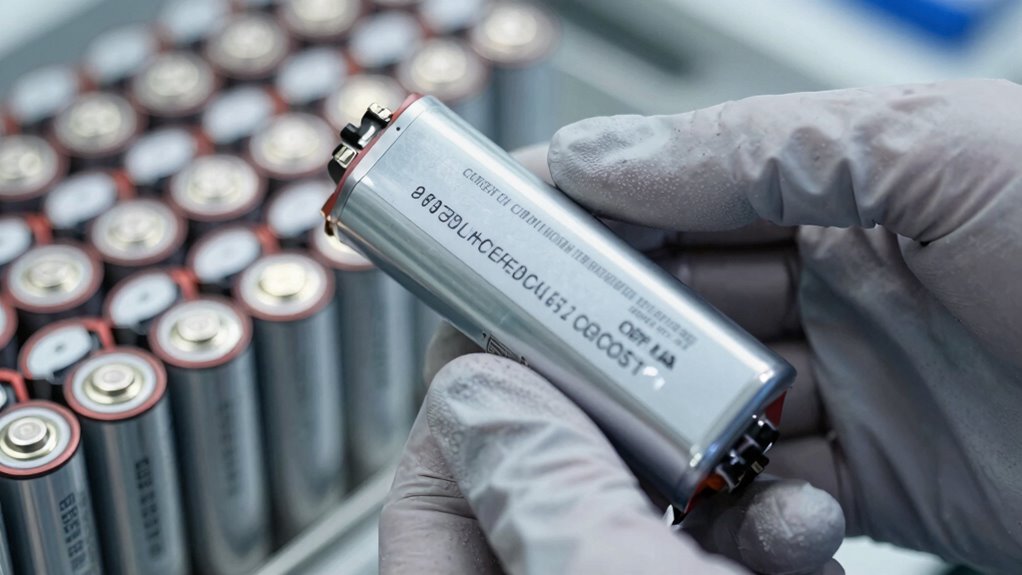
Ensuring the quality of batteries at the cell level is essential for achieving peak performance, safety, and longevity. When you focus on the individual cell, you’re addressing the foundation of the entire battery pack. Variations at this level can cascade into larger issues, such as reduced capacity, uneven power delivery, or even safety hazards like overheating or fires. That’s why rigorous quality control begins with scrutinizing each cell during manufacturing. Consistent inspection and testing help identify potential defects early, preventing downstream problems.
One of the key factors to consider is manufacturing consistency. Every cell must be produced under strict, repeatable conditions to guarantee uniformity across the entire batch. Inconsistent manufacturing processes can lead to cells with varying internal structures, electrode thicknesses, or electrolyte compositions. These discrepancies can cause cells to perform differently, which compromises the overall battery’s reliability. By maintaining tight control over manufacturing processes, you minimize the risk of defects and ensure each cell meets the same high standards. This consistency is vital for applications where reliability is non-negotiable, such as electric vehicles or energy storage systems. Manufacturing control is fundamental to maintaining high-quality standards. Additionally, implementing robust quality assurance measures throughout production helps catch deviations early and maintain process integrity.
Material purity also plays a critical role in cell quality. Impurities in the raw materials—like lithium, cobalt, nickel, or electrolytes—can introduce defects at the microscopic level. These impurities may cause unwanted side reactions, reduce the efficiency of ion transport, or accelerate degradation over time. When you prioritize material purity, you’re essentially reducing the chances of early cell failure and extending the lifespan of the battery. High-purity materials lead to more stable electrochemical reactions, better capacity retention, and improved safety. Consequently, sourcing and verifying pure materials isn’t just an initial step; it’s an ongoing process that ensures each cell performs at its best throughout its lifecycle. Prioritizing material purity is crucial for maintaining consistent cell performance and safety standards. Additionally, ongoing quality assurance measures are necessary to sustain these standards throughout the manufacturing process. By implementing thorough testing protocols, manufacturers can further ensure each cell adheres to the highest standards before integration into larger packs.
high quality lithium-ion battery cells
As an affiliate, we earn on qualifying purchases.
As an affiliate, we earn on qualifying purchases.
Frequently Asked Questions
How Does Cell-Level Quality Control Affect Overall Battery Lifespan?
Cell-level quality control directly impacts your battery’s lifespan by ensuring consistent cell chemistry and manufacturing quality. When each cell is carefully tested and matched, the overall battery performs reliably, reducing risks of early failure or capacity loss. By maintaining strict standards at this level, you prevent weak or defective cells from affecting the entire pack, ultimately extending your battery’s longevity and ensuring safer, longer-lasting performance.
What Testing Methods Are Used at the Cell Level?
You use various testing methods at the cell level, including electrochemical analysis to assess voltage, capacity, and internal resistance, ensuring ideal performance. Thermal imaging helps detect hot spots and temperature inconsistencies that could indicate defects or potential failures. These techniques enable you to identify issues early, maintain quality, and extend battery lifespan, ultimately ensuring that each cell meets strict standards before assembly into larger battery packs.
How Are Defective Cells Identified During Quality Control?
Ever wonder how defective cells are caught during quality control? You conduct thorough cell inspection and defect detection by measuring parameters like voltage, capacity, and internal resistance. Automated systems flag cells that deviate from standards, while visual inspections catch physical flaws. This meticulous process guarantees only high-quality cells move forward, preventing potential failures in the final battery. Identifying defects early saves time and guarantees top performance.
Can Cell-Level Issues Cause Safety Hazards?
Cell-level issues can definitely cause safety hazards, especially if manufacturing defects or battery chemistry flaws go unnoticed. These problems might lead to overheating, swelling, or even fires. When defective cells are integrated into a larger battery pack, you risk compromising the entire system’s safety. That’s why identifying and addressing cell-level issues early is vital to prevent potential hazards and guarantee your batteries operate safely and reliably.
How Does Cell Uniformity Impact Battery Performance?
When it comes to battery performance, you really can’t judge a book by its cover. Cell uniformity guarantees electrode consistency and electrolyte stability, which are vital for efficient operation. If cells vary, the battery’s capacity, lifespan, and safety could all suffer. Maintaining uniformity helps prevent uneven wear and heat buildup, allowing your battery to perform at its best and last longer—keeping you ahead of the game.
Conclusion
You now see why quality control begins at the cell level—you can’t build a reliable battery on shaky foundations. By catching issues early, you prevent bigger problems down the line, saving time and money. Think of it as putting your best foot forward; it sets the tone for the entire battery’s performance. When you get the details right from the start, you’re not just cutting corners—you’re laying the groundwork for long-lasting, high-quality energy storage.
Fall Picks
fall essentials
As an affiliate, we earn on qualifying purchases.