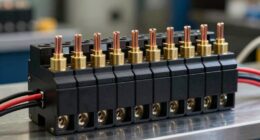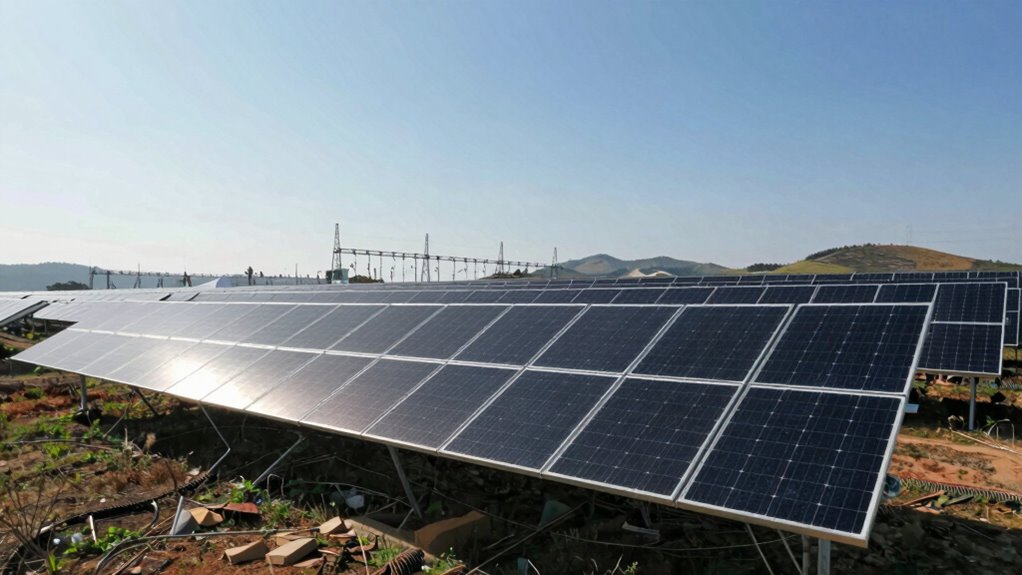

48V solar banks are becoming the go-to choice because they strike a perfect balance between safety, compatibility, and ease of expansion. They offer reliable, scalable systems that work well for both small and large setups. Plus, their standardized voltage simplifies integrating components and upgrading over time. However, setting up and maintaining these systems can be complex without proper knowledge. Stay with us to discover the key benefits and one common challenge with 48V solar banks.
Key Takeaways
- 48V solar banks offer safer, scalable energy solutions compatible with existing systems and easy to expand.
- They balance performance and safety, reducing electrical hazards compared to higher-voltage systems.
- Standardization simplifies component selection and system integration, lowering costs and complexity.
- Modular design allows incremental upgrades for diverse applications, from small setups to large installations.
- The main downside is the initial setup complexity and the need for technical expertise to ensure optimal performance.

If you’re looking to boost your solar power system’s efficiency, 48V solar banks offer a reliable and scalable solution. These systems are gaining popularity because they strike an excellent balance between performance, safety, and ease of use. One key reason for their rise is how well they integrate with existing battery management systems. Proper battery management ensures your batteries operate within safe parameters, extending their lifespan and maximizing energy output. With 48V systems, it’s easier to implement advanced battery management features, like balancing cells and monitoring voltage and temperature, which helps prevent overcharging or deep discharging. This seamless system integration makes maintenance simpler and reduces the risk of system failures, giving you peace of mind. Additionally, standardized voltage makes system design and component compatibility more straightforward, further enhancing reliability.
48V solar banks enhance efficiency with seamless battery management and safer, scalable system integration.
Moreover, 48V solar banks are highly scalable, making them ideal for various applications—from small off-grid setups to large commercial installations. As your energy needs grow, you can expand the bank by adding more batteries without overhauling your entire system. This flexibility allows you to start small and upgrade gradually, saving costs and effort in the long run. The modular nature of 48V systems makes system integration straightforward, especially since many compatible components are designed to work seamlessly together. Whether you’re connecting inverters, charge controllers, or monitoring devices, the standardized voltage makes sure everything fits and functions harmoniously.
Another advantage is safety. Operating at 48 volts greatly reduces the risk of electrical shocks compared to higher-voltage systems. This lower voltage makes installation and maintenance safer for technicians and even DIY enthusiasts, encouraging more people to adopt solar power solutions. Plus, because these systems are standardized, you’ll find a broad selection of compatible components, which boosts competition and drives down costs.
However, despite these benefits, there’s a downside worth noting. While 48V systems are versatile and scalable, they can sometimes be more complex to initially set up, especially when it comes to proper battery management and system integration. Achieving ideal performance requires understanding how different components interact and ensuring your system is configured correctly. If not managed properly, this could lead to inefficiencies or reduced battery life. So, while the technology is user-friendly once set up, the initial installation may demand some technical know-how or professional assistance to ensure everything works together smoothly.
Frequently Asked Questions
How Do 48V Solar Banks Compare in Cost to Traditional Systems?
You’ll find that 48V solar banks often have a higher upfront cost compared to traditional 12V systems, but their cost comparison can vary based on size and quality. While the initial investment might seem steeper, they can lead to better efficiency and lower maintenance costs over time. Consider the budget implications carefully, as a higher upfront cost could pay off with improved performance and longevity in the long run.
What Maintenance Is Required for 48V Solar Banks?
You’ll need to perform regular cleaning procedures to keep your 48V solar bank functioning ideally. Check for dust, dirt, or debris on the batteries and panels, and clean them gently with a damp cloth. Monitoring battery longevity is essential; replace batteries as needed to maintain system efficiency. Consistent maintenance ensures your solar bank stays reliable, extends its lifespan, and continues to deliver maximum energy output without unexpected issues.
Are 48V Solar Banks Suitable for Off-Grid Applications?
Are 48V solar banks right for your off-grid needs? Absolutely, they’re highly suitable because their battery chemistry offers efficient energy storage, and inverter compatibility guarantees smooth power conversion. You’ll benefit from their modular design and reliable performance in remote locations. Just make sure your inverter supports 48V systems, and you’ll enjoy dependable, scalable power for your off-grid adventures. Isn’t that what you’re looking for in a solar setup?
How Scalable Are 48V Solar Bank Systems?
You can easily scale 48V solar bank systems, but be aware of scalability challenges that may arise during system expansion. As your energy needs grow, adding more batteries or panels requires careful planning to maintain proper voltage and capacity. Ensuring compatible components and managing wiring complexity are essential. With proper design, a 48V system allows for flexible expansion, making it suitable for both small and larger off-grid setups.
What Safety Precautions Are Necessary for 48V Systems?
They say safety first, and with 48V systems, that’s vital. You should always guarantee proper battery insulation to prevent shorts and shocks. Regularly check connections and use insulated tools. Have emergency protocols in place, like disconnecting power quickly and knowing how to handle electrical fires. Wearing protective gear and following manufacturer guidelines protect you. Staying vigilant keeps your system safe and your energy flowing smoothly.
Conclusion
As you consider upgrading your solar setup, 48V banks are becoming harder to ignore. They promise efficiency, safety, and cost savings — but what’s the catch? As technology advances, one essential detail might just change everything. Are you prepared for what’s coming next? Stay tuned, because the real game-changer could be just around the corner, waiting to reshape how you harness solar power. The future of solar energy might be closer than you think.