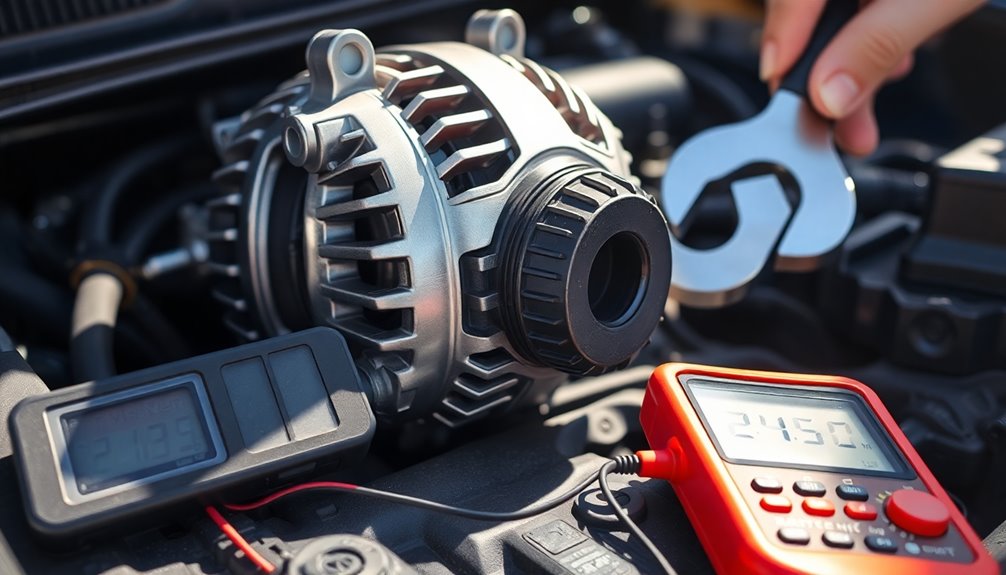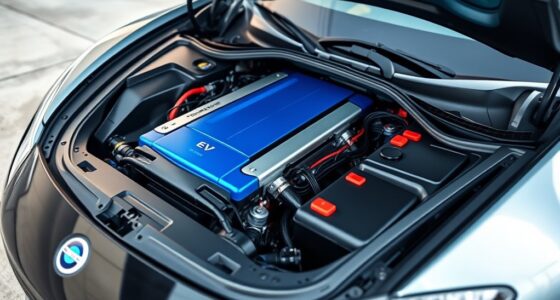
Recalibrating your BMS in some EV cases is essential because it guarantees your battery’s health and performance remain accurate. Over time, cell degradation can cause the BMS to misjudge the battery’s true state, risking unexpected range drops and faster wear. By recalibrating regularly, you help your vehicle better detect early issues, optimize performance, and extend the battery’s lifespan. If you keep these practices in mind, you’ll better understand why proper BMS calibration really matters.

Get backup power and energy gear delivered free with Prime
- Fast, free delivery on millions of items
- Prime Video, Amazon Music and more included
- Member-only deals all year
Key Takeaways
- Recalibration corrects inaccurate state of charge readings caused by battery aging and cell degradation.
- It enhances overall system accuracy, enabling better decision-making by the vehicle’s management system.
- Regular recalibration helps detect early signs of battery health issues, preventing unexpected range loss.
- Proper BMS calibration extends battery lifespan and maintains consistent vehicle performance.
- It ensures reliable range estimates, leading to a safer and less stressful driving experience.
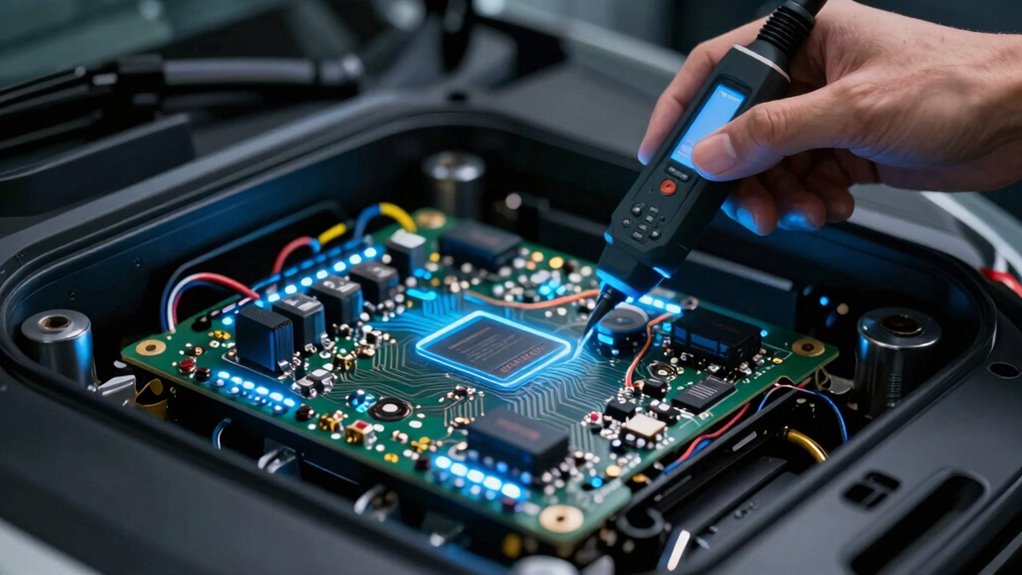
Battery aging is a natural process that affects all EV batteries. As cells degrade, their capacity diminishes, but the BMS might not immediately recognize these changes. If the system isn’t recalibrated periodically, it could misjudge the battery’s true state of charge, causing you to run out of range sooner than expected or to overcharge, which accelerates degradation. Recalibration aligns the BMS’s internal parameters with the actual battery condition, providing a more precise understanding of how much energy remains. This adjustment is critical for maintaining your vehicle’s reliability and ensuring your driving experience remains consistent. Regular recalibration also helps detect battery degradation, allowing for timely maintenance or replacement before significant issues arise. Additionally, understanding battery health can help optimize your EV’s performance and extend its lifespan. Proper BMS calibration ensures the system accurately reflects the battery’s performance, ultimately supporting safer and more efficient driving. Implementing regular recalibration can also improve overall system accuracy**, leading to better decision-making by the vehicle’s management systems. Proper calibration can also improve the accuracy of range estimates**, making your driving experience more predictable and less stressful.
As an affiliate, we earn on qualifying purchases.
Frequently Asked Questions
How Often Should BMS Recalibration Be Performed?
You should perform BMS recalibration during regular maintenance or if you notice battery diagnostics indicating inconsistent readings. Typically, recalibration involves specific calibration procedures that guarantee precise monitoring of your EV’s battery health. How often you do this depends on your driving habits and manufacturer recommendations. Generally, every 1-2 years or after significant battery service is advisable to maintain accurate data, securing peak performance and safety.
Can BMS Recalibration Improve EV Battery Lifespan?
Think of your EV battery like a finely tuned instrument; calibration techniques help keep it playing smoothly. BMS recalibration can indeed improve battery lifespan by ensuring battery accuracy, preventing overuse or underuse of cells. When you recalibrate, you’re fundamentally fine-tuning the system, which can prolong overall battery health. Regular recalibration helps catch issues early, maintaining performance and extending your EV’s longevity.
Is BMS Recalibration Necessary After Battery Replacement?
Yes, BMS recalibration is necessary after replacing your EV battery. You need to run battery diagnostics to guarantee the new pack functions correctly, and calibration procedures help the BMS accurately monitor battery health and performance. Skipping recalibration may lead to incorrect state-of-charge readings and reduced efficiency. So, to keep your EV running smoothly and maximize battery lifespan, always have the BMS recalibrated after a battery replacement.
What Are Signs Indicating BMS Recalibration Is Needed?
Imagine your EV’s dashboard turning into a wild roller coaster, signaling chaos! That’s a sign your BMS recalibration might be needed. If you notice inconsistent battery accuracy, sudden drops in range, or the charging process feels abnormal, it’s time for calibration. Keep an eye on calibration frequency too; if it’s been a while since the last reset, a recalibration could restore your battery’s true performance and reliability.
Does Recalibration Affect EV Warranty Coverage?
Recalibration can affect your EV’s warranty coverage, especially if improper calibration leads to battery issues. Warranty implications depend on whether the recalibration was performed correctly using proper calibration procedures. If a manufacturer or authorized technician handles it, your warranty typically remains intact. However, if unapproved methods are used, it might void parts of your warranty. Always verify calibration procedures follow manufacturer guidelines to protect your coverage.
Conclusion
Think of BMS recalibration like tuning a finely crafted instrument—you guarantee every note hits perfectly. When your EV’s BMS is recalibrated, it’s like resetting the compass, guiding you with accurate battery data. This simple step keeps your battery healthy, extends its lifespan, and maintains peak performance. Don’t overlook it; like a trusted map in uncharted territory, proper recalibration keeps your EV running smoothly and reliably for miles to come.
Fall Picks
fall essentials
As an affiliate, we earn on qualifying purchases.