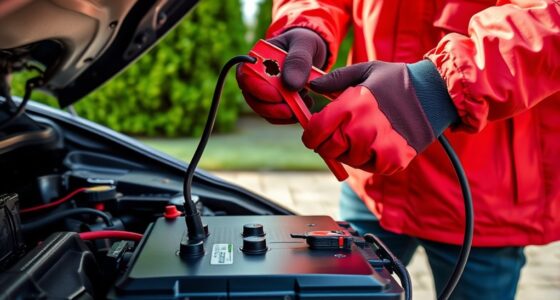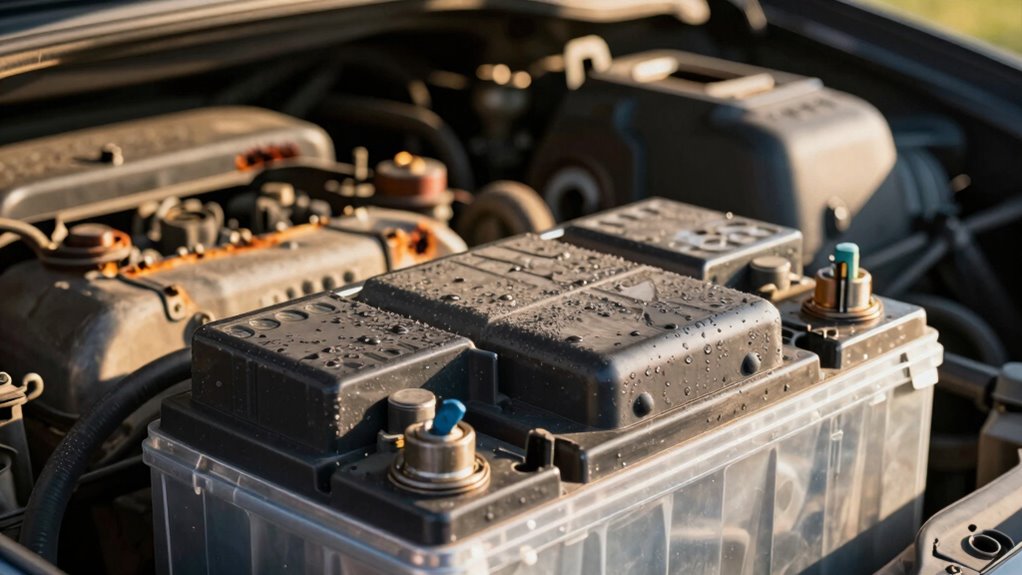

In summer, high temperatures do more damage to your car battery than winter cold. Heat accelerates chemical reactions inside the battery, causing it to deteriorate faster and increasing the risk of failure. Excessive heat can also lead to corrosion, electrolyte loss, and reduced battery lifespan. Thankfully, proper maintenance and keeping an eye on your battery can help prevent these problems. If you want to understand exactly how heat impacts your battery, there’s more to discover below.
Key Takeaways
- High summer temperatures accelerate chemical reactions inside the battery, increasing wear and reducing lifespan.
- Heat causes electrolyte evaporation and corrosion, impairing the battery’s ability to hold a charge.
- Excessive engine and interior heat stress the battery more than winter cold does.
- Sun exposure and hot parking environments raise vehicle temperatures, hastening battery deterioration.
- Proper maintenance and cooling system care mitigate heat-related battery damage during summer.
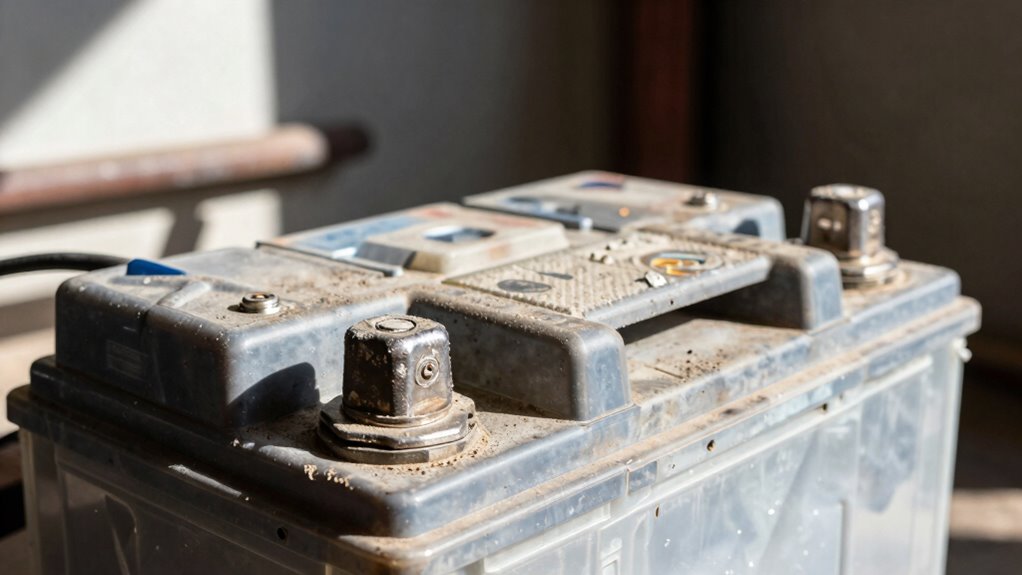
Summer’s scorching heat can catch you off guard, but it’s not just about feeling uncomfortable; it also poses a serious threat to your car’s battery. High temperatures accelerate the chemical reactions inside your battery, increasing the risk of capacity loss and eventual failure. Unlike winter, when cold weather can weaken a battery’s ability to start your car, summer heat actively speeds up the deterioration process. This makes proper battery maintenance essential during the hotter months. You need to keep an eye on your battery’s age, clean its terminals regularly, and verify it’s securely mounted to prevent vibrations that can cause internal damage. A well-maintained battery is less likely to succumb prematurely to the heat.
Summer heat speeds up battery deterioration; regular maintenance prevents failure and keeps your car running smoothly.
One of the biggest threats during summer isn’t just the heat itself but what it can trigger—engine overheating. When your engine runs too hot, it puts extra stress on your battery and electrical system, increasing the likelihood of failure. Overheating can cause your battery’s electrolyte levels to drop or lead to the buildup of corrosive deposits, both of which impair its ability to hold a charge. Plus, an overheated engine forces your cooling system to work overtime, drawing more energy from the battery to power fans and sensors. If your cooling system isn’t functioning properly, the risk of engine overheating skyrockets, which in turn accelerates battery wear. That’s why regular maintenance of your cooling system is just as vital as battery maintenance itself.
During summer, you also have to think about external factors like leaving your car in direct sunlight or in hot parking lots. These conditions can cause your vehicle’s temperature to climb even higher, stressing your battery further. Keep your windows cracked or use a sunshade to help regulate the interior temperature, reducing the heat stress on your engine and battery. Also, avoid leaving your car in extremely hot environments for extended periods, especially if your battery is already a few years old or showing signs of weakness.
In essence, summer’s heat isn’t just uncomfortable—it’s a silent killer for your car’s electrical system. Proper battery maintenance, along with proactive cooling system checks, can help you avoid the inconvenience and cost of a dead battery when you need your car the most. Remember, taking small steps now can save you from bigger headaches later, especially when the temperatures soar.
Frequently Asked Questions
Can Summer Heat Cause My Car Battery to Swell?
Yes, summer heat can cause your car battery to swell. The high temperatures lead to excessive heat buildup inside the battery, causing the electrolyte to expand. This expansion results in battery swelling, which can damage the case and internal components. To prevent this, make sure your battery is properly maintained, check for signs of swelling, and keep your vehicle in shaded areas during hot days.
Does High Humidity Affect Battery Lifespan During Summer?
High humidity can shorten your battery lifespan because it accelerates corrosion inside the terminals and plates. Studies show that batteries exposed to humid conditions can lose up to 20% of their capacity faster. Humidity effects make it harder for your battery to perform efficiently, especially during summer. To protect it, keep terminals clean, check for corrosion, and consider using a battery terminal protector. This helps extend your battery’s life despite the humid weather.
Are Certain Car Models More Prone to Summer Battery Failure?
Some car models are more prone to summer battery failure due to model susceptibility and battery durability issues. You might notice that older or economy models with less advanced electrical systems tend to struggle more in high temperatures. If your vehicle’s design doesn’t prioritize robust battery protection, it’s at greater risk in summer heat. To prevent unexpected failures, consider regular battery checks and upgrading to models with enhanced battery durability features.
How Does Frequent Short-Distance Driving Impact Battery Life in Summer?
Like running in place, frequent short-distance driving keeps your battery from fully charging. This affects your battery maintenance because the alternator doesn’t have enough time to replenish the battery’s power. Hot summer temperatures accelerate this process, causing your battery to weaken faster. To extend your battery’s life, try to limit short trips, and give your car longer drives to fully recharge the battery and prevent early failure.
Can Using Air Conditioning Drain the Battery Faster in Summer?
Yes, using the cooling system, like air conditioning, can drain your battery faster in summer. When you turn on the AC, your car’s cooling systems work harder, putting extra strain on the battery. Over time, this can lead to battery corrosion and reduce its lifespan. To avoid issues, limit AC use when possible and have your battery checked regularly to guarantee it stays in good condition.
Conclusion
So, next summer, keep an eye on your car’s battery. Did you know that extreme heat can cause your battery’s lifespan to drop by up to 50%? That’s a huge hit! By taking simple steps like checking your battery’s health and avoiding leaving your car in direct sunlight, you can prevent unexpected breakdowns. Don’t let the summer heat catch you off guard—stay proactive and keep your battery running strong all season long.