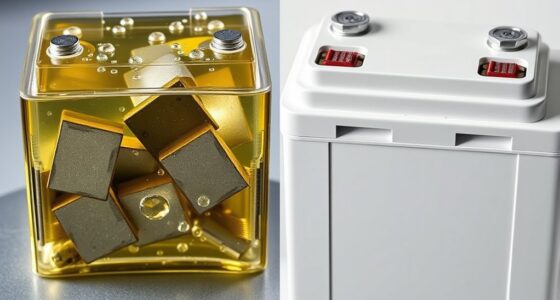
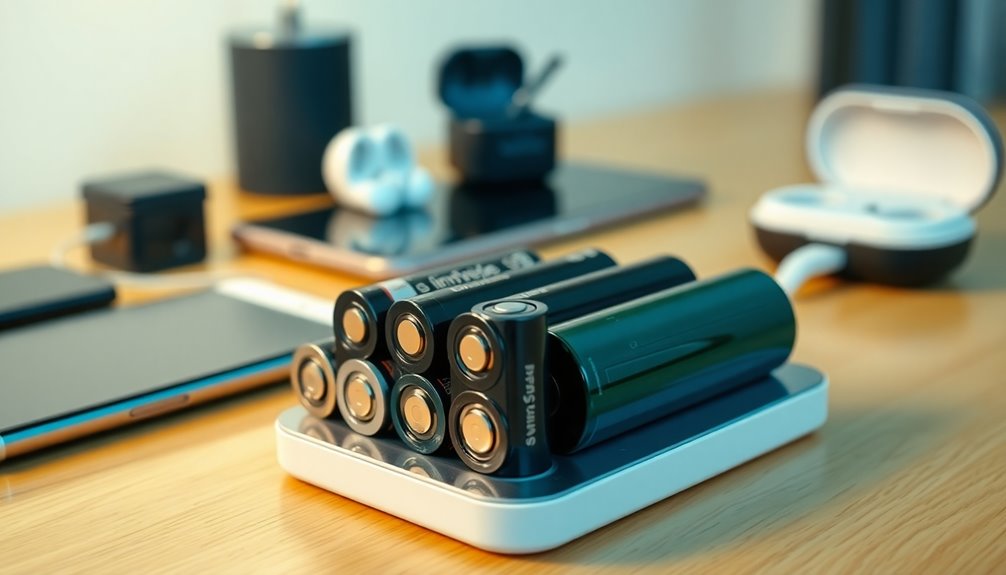
Nickel-Cadmium batteries use electrochemical reactions between nickel and cadmium, making them reliable and durable power sources. They perform well in high-drain devices like power tools and emergency systems, thanks to their robustness. However, they have lower energy density compared to newer batteries and suffer from the memory effect, which can reduce capacity. Plus, their environmental impact raises concerns due to toxic cadmium. If you want to explore how these factors influence their use, continue below.
Key Takeaways
- Ni-Cd batteries use electrochemical reactions between nickel oxyhydroxide and cadmium, offering high performance and durability.
- They are known for robustness and suitability for high-drain applications like power tools and emergency systems.
- Key drawbacks include the memory effect and lower energy density compared to lithium-ion batteries.
- Contain toxic cadmium, requiring proper recycling to prevent environmental contamination.
- Despite environmental concerns, Ni-Cd batteries remain valued for reliability in demanding industrial uses.
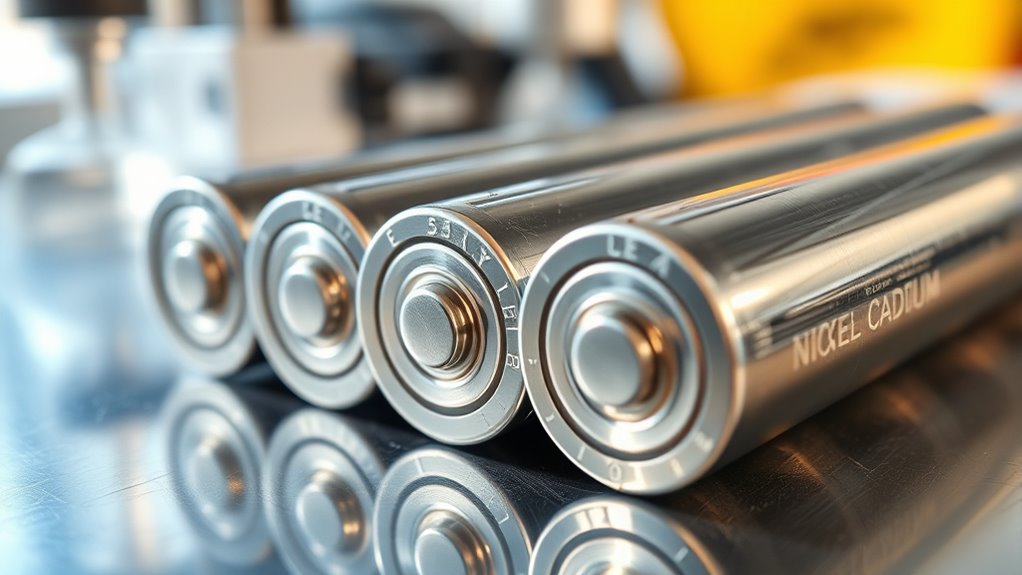
Have you ever wondered how rechargeable batteries power your everyday devices? It’s fascinating to realize that beneath the convenience lies a complex chemistry that keeps your gadgets running. Nickel-cadmium (Ni-Cd) batteries have been around for decades, known for their reliability and ability to deliver consistent power. But with their widespread use comes important considerations about their environmental impact and recycling processes. When these batteries reach the end of their lifespan, proper disposal and recycling become essential to minimize harm to our planet. Cadmium is a toxic heavy metal, and if not handled correctly, it can leach into soil and water, posing risks to wildlife and humans. Recycling processes for Ni-Cd batteries involve carefully extracting cadmium and nickel to prevent environmental contamination and recover valuable materials. While these processes are effective, they require specialized facilities and strict regulations, which not all regions have in place. That’s why understanding the environmental impact of Ni-Cd batteries is crucial when considering their use. Recycling not only diminishes the amount of hazardous waste but also reduces the demand for mining new materials, decreasing the ecological footprint. You should also be aware that improper disposal, such as throwing Ni-Cd batteries in regular trash, can lead to toxic substances leaking into ecosystems, which is why many countries enforce regulations on battery disposal. Despite their durability and ability to perform well in high-drain applications, these batteries do have some drawbacks. They tend to suffer from “memory effect,” where incomplete discharges can reduce their capacity over time, leading to decreased performance. Furthermore, Ni-Cd batteries are less energy-dense compared to newer lithium-ion alternatives, meaning they store less power relative to their size and weight. This limits their appeal for portable electronics but still makes them suitable for specific industrial applications like power tools, emergency systems, and aviation equipment. You should also consider that their longevity is generally good if maintained properly, but they do require regular cycling and proper charging practices. The fact remains that, while Ni-Cd batteries are dependable and robust, their environmental considerations and recycling processes should influence your choice and disposal habits. Being responsible about how you handle used batteries guarantees you’re contributing to a safer, cleaner environment. As technology advances, alternatives with fewer environmental concerns are emerging, but Ni-Cd batteries continue to play a crucial role where their unique qualities are needed. Understanding the chemistry, benefits, and drawbacks helps you make informed decisions, ultimately supporting sustainability efforts and reducing ecological harm.

Tenergy 2200mAh Sub C NiCd Battery for Power Tools, 1.2V Flat Top Rechargeable Sub-C Cell Batteries with Tabs, 15-Pack
- Reliable Power Supply: Provides consistent performance for tools
- High Capacity: 2200mAh for extended use
- Flat Top with Tabs: Designed for easy soldering and installation
As an affiliate, we earn on qualifying purchases.
As an affiliate, we earn on qualifying purchases.
Frequently Asked Questions
How Do Nickel-Cadmium Batteries Compare to Newer Lithium-Ion Options?
You’ll find that nickel-cadmium batteries generally have lower energy density compared to newer lithium-ion options, meaning they store less power for their size. While they often offer better battery longevity and can handle more charge cycles, lithium-ion batteries are more lightweight and efficient. So, if you want longer-lasting, higher-capacity batteries, lithium-ion is usually the better choice, but nickel-cadmium can still be useful in specific applications.
What Environmental Regulations Affect Nickel-Cadmium Battery Disposal?
You need to follow strict environmental regulations for nickel-cadmium battery disposal. Regulatory compliance requires proper waste management practices to prevent toxic cadmium from contaminating the environment. You should recycle these batteries at certified facilities and avoid dumping them in regular trash. Keep in mind that laws vary by region, so staying informed about local regulations helps guarantee you’re handling nickel-cadmium waste responsibly and legally.
Are There Specific Industries That Prefer Nickel-Cadmium Batteries?
You’ll find that aerospace industries prefer nickel-cadmium batteries because they offer reliable performance at high temperatures. These batteries are also popular in emergency backup systems, providing robust, long-lasting power even after many charge cycles. With over 50 years of proven durability, they remain essential in critical applications where dependability outweighs concerns about environmental impact. Their stability and safety make them a top choice for demanding sectors needing consistent power sources.
How Does Temperature Impact Nickel-Cadmium Battery Performance?
Temperature greatly affects your nickel-cadmium battery’s performance through thermal effects. When it’s too hot, the battery’s capacity and lifespan decrease, risking overheating and damage. Cold temperatures, on the other hand, reduce its ability to deliver power efficiently. To maintain ideal performance, proper temperature management is essential; keep the battery within recommended temperature ranges, and avoid exposing it to extreme heat or cold to ensure longevity and reliable operation.
What Advancements Are Being Made to Improve Nickel-Cadmium Battery Lifespan?
Did you know recent advancements have extended nickel-cadmium battery lifespans by up to 30%? You can benefit from these improvements through advanced electrode designs and electrolyte innovations. These innovations reduce electrode degradation and improve overall stability, making your batteries last longer and perform better over time. By adopting these new technologies, you guarantee your batteries remain reliable, cost-effective, and environmentally friendly, meeting the demands of modern applications.
Conclusion
In summary, nickel-cadmium batteries bring benefits and burdens alike. They boast durability and dependable discharge, but battle against bulky build and toxic traits. By understanding both the advantages and the annoyances, you can decide whether these batteries are the best fit for your needs. Remember, weighing the wins with the woes helps you make smarter, safer, and more sustainable choices. So, consider carefully, and choose conscientiously to charge your devices confidently.