If a battery fire occurs, your liability depends on whether you followed safety standards, proper handling, and installation protocols. Manufacturers are responsible for defects, while users and property owners are liable for misuse or inadequate safety measures. Insurance can cover damages, but policies vary. Ensuring compliance with safety practices and having appropriate insurance reduces legal risks. To better understand how to protect yourself and manage these risks effectively, keep exploring key safety and legal insights.
Key Takeaways
- Manufacturers are liable if battery fires result from design flaws or safety standard violations.
- Users and property owners hold responsibility if fires stem from improper handling or maintenance.
- Proper safety training and inspections reduce liability risks and prevent fire-related legal claims.
- Insurance coverage varies; specialized policies can protect against property damage, injuries, and legal costs.
- Adhering to safety standards and implementing preventive measures minimizes legal exposure and financial liabilities.
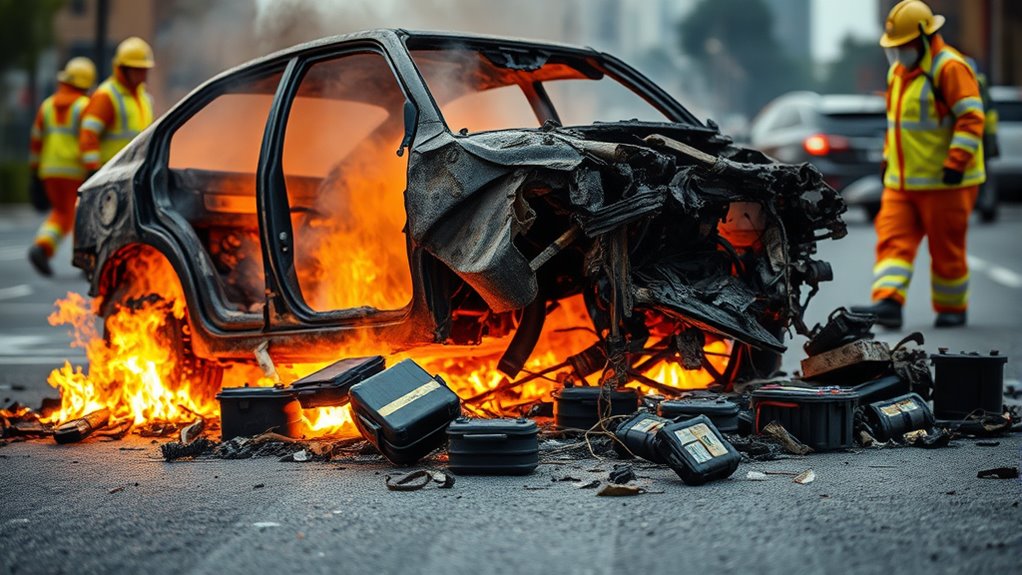
Have you ever wondered who bears the legal responsibility when a battery fire causes property damage or personal injury? Understanding liability in these situations starts with recognizing the significance of battery fire prevention. Manufacturers, users, and property owners all play roles in minimizing risks. Manufacturers are responsible for ensuring their batteries meet safety standards, including proper design, manufacturing quality, and clear safety warnings. Users, whether individuals or organizations, must follow proper handling, storage, and maintenance procedures to prevent accidents. Property owners should install fire suppression systems and maintain safe environments, especially when batteries are stored or charged in large quantities. Neglecting these responsibilities can lead to serious consequences, including legal action and financial liabilities.
When a battery fire occurs despite preventative measures, determining liability can become complex. If the fire results from a manufacturing defect, the manufacturer might be held legally responsible. Conversely, if improper usage or mishandling caused the fire, the user or property owner could be liable. This underscores the need for everyone involved to understand and implement best practices for battery fire prevention. Proper training, regular inspections, and adherence to safety protocols are essential steps in reducing the risk of fires and subsequent legal claims.
Insurance coverage options become a critical part of managing the financial impact of battery fires. Many commercial policies now include clauses related to fire damage caused by batteries, but coverage can vary widely. It’s important to review your policy carefully to understand what is covered and what exclusions might apply. Some insurers offer specialized coverage for high-risk environments, like industrial facilities or electric vehicle charging stations. You might also consider additional coverage options, such as equipment breakdown insurance or specific fire liability policies, to protect against potential damages and legal claims. Having comprehensive insurance can help mitigate financial burdens if a battery fire leads to property destruction, personal injury, or even legal disputes.
Proper safety measures and understanding your insurance coverage are essential to manage liability effectively. Despite all precautions, accidents can still happen, but being proactive with safety practices and insurance can significantly reduce risks. Staying informed about safety standards, maintaining good handling practices, and securing appropriate insurance coverage all contribute to safeguarding your property and interests. When you prioritize battery fire prevention and understand your insurance options, you’re taking necessary steps to protect yourself from the legal and financial fallout that can accompany battery-related incidents. Additionally, staying updated on battery safety standards can further enhance your prevention strategies.

FEROSTICKER Small Automatic Fire Extinguisher
- Automatic activation at 170°C: Activates automatically at 170°C ±10°C
- No electricity or wiring needed: Operates without batteries or cables
- Easy installation, no tools required: Quickly sticks in place for protection
As an affiliate, we earn on qualifying purchases.
As an affiliate, we earn on qualifying purchases.
Frequently Asked Questions
How Can Manufacturers Minimize Legal Risks From Battery Fires?
To minimize legal risks from battery fires, you should prioritize battery safety and strictly follow manufacturing standards. Implement rigorous quality control processes, conduct thorough testing, and use high-quality materials to reduce fire hazards. Staying compliant with industry regulations shows your commitment to safety, which can help limit liability. Also, provide clear, detailed safety instructions and warnings to consumers, demonstrating your proactive approach to preventing incidents and safeguarding your reputation.
What Are the Key Insurance Policy Exclusions for Battery Fire Claims?
You should be aware that your insurance policy may have battery exclusion clauses, which specifically exclude coverage for damages caused by battery fires. Additionally, policy limitations might restrict coverage for incidents involving lithium-ion or other rechargeable batteries. These exclusions can leave you financially vulnerable, so it’s essential to review your policy carefully and consider supplemental coverage options to guarantee you’re protected against potential battery fire claims.
Who Is Liable in Multi-Party Battery Fire Incidents?
In multi-party battery fire incidents, liability allocation depends on factors like product accountability and fault. You’re responsible if you manufactured or sold a defective battery, but if misuse or external factors caused the fire, liability may shift to other parties. Insurance claims often hinge on establishing product accountability, with manufacturers potentially bearing the brunt, while users or third parties might be held liable if their actions contributed to the incident.
How Do International Regulations Affect Battery Fire Liability?
Imagine your battery fire turning into an international incident—like a fireworks show gone rogue. International regulations shape liability by enforcing cross border standards and demanding international compliance, making companies navigate a maze of rules. If you slip up, you might find yourself tangled in legal webs across multiple countries. So, you better follow global standards, or your fiery mishap could ignite costly cross-border disputes and hefty penalties.
Can Consumers Claim Insurance for Damages Caused by Battery Fires?
You can generally claim insurance for damages caused by battery fires if your policy covers such incidents. Make certain you understand your battery safety measures and check the specifics of your consumer claims coverage. Keep detailed records of the damage and the fire’s cause, as insurers may require proof. Remember, proper battery handling and safety precautions can help prevent such incidents and support your claim process if needed.
Conclusion
As you navigate the rising use of batteries, remember that nearly 60% of fire claims involve lithium-ion batteries, highlighting significant legal and insurance risks. If a fire occurs, liability can quickly become complex, leading to costly lawsuits and coverage disputes. Staying informed and proactive can help you mitigate these risks, protect your assets, and guarantee safety. Don’t underestimate the potential impact—being prepared now could save you from costly surprises down the road.