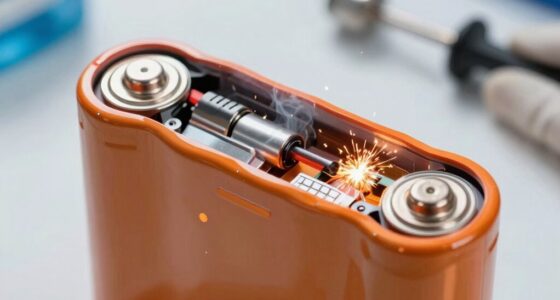

If you encounter a battery fire, assess if it’s spreading or contained, and identify involved batteries. Use a Class D fire extinguisher or a suitable suppression method designed for electrical or lithium fires—dry chemical works well. Evacuate if proper equipment isn’t available and call emergency services immediately. Protect yourself from toxic fumes and heat, carefully isolate or vent damaged batteries, and dispose of them following hazardous waste guidelines. To learn more about managing battery fires effectively, keep exploring the essential safety steps.
Key Takeaways
- Assess fire severity, involved batteries, and hazards; determine if self-suppression or emergency services are needed.
- Use appropriate fire suppression methods like Class D extinguishers or specialized systems; avoid water on lithium fires.
- Evacuate the area if proper suppression tools are unavailable and call emergency services immediately.
- Ventilate the area, isolate damaged batteries, and handle them carefully to prevent re-ignition and chemical exposure.
- Follow post-fire procedures: dispose of batteries per regulations, monitor residual heat, and ensure area is safe before re-entry.
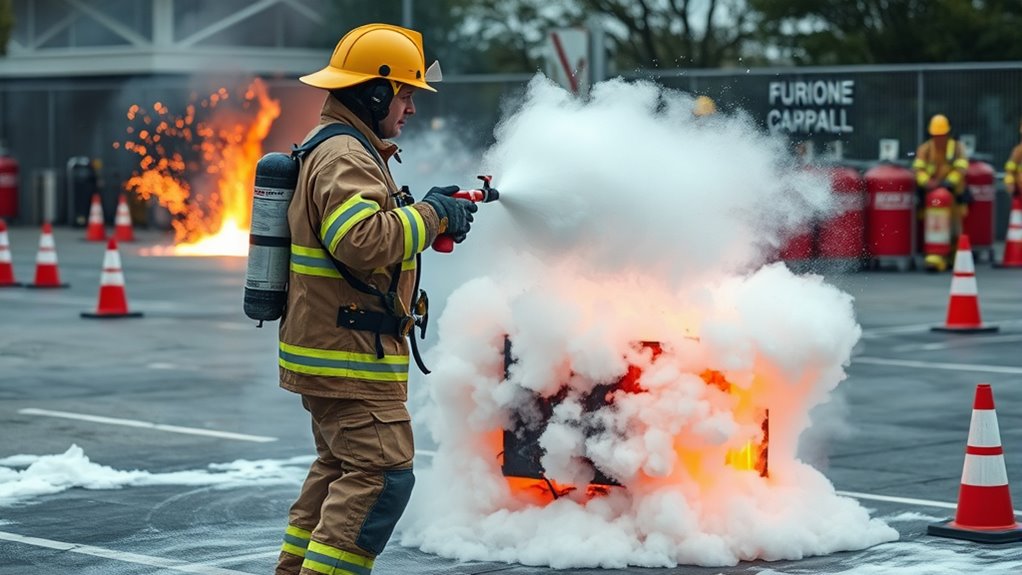
Battery fires can escalate quickly and pose serious safety risks if not handled properly. When you encounter a battery fire, your first priority is to perform an immediate hazard assessment. This step helps you understand the severity of the fire, identify potential hazards such as toxic fumes, exploding cells, or the risk of spreading flames, and determine the appropriate response. Assess the situation quickly: is the fire contained or spreading? Are there multiple batteries involved? Is there any risk of electrical shock or chemical exposure? By evaluating these factors, you can decide whether to attempt suppression yourself or call professional help. Remember, safety comes first, and a thorough hazard assessment ensures you don’t underestimate the danger or take unnecessary risks.
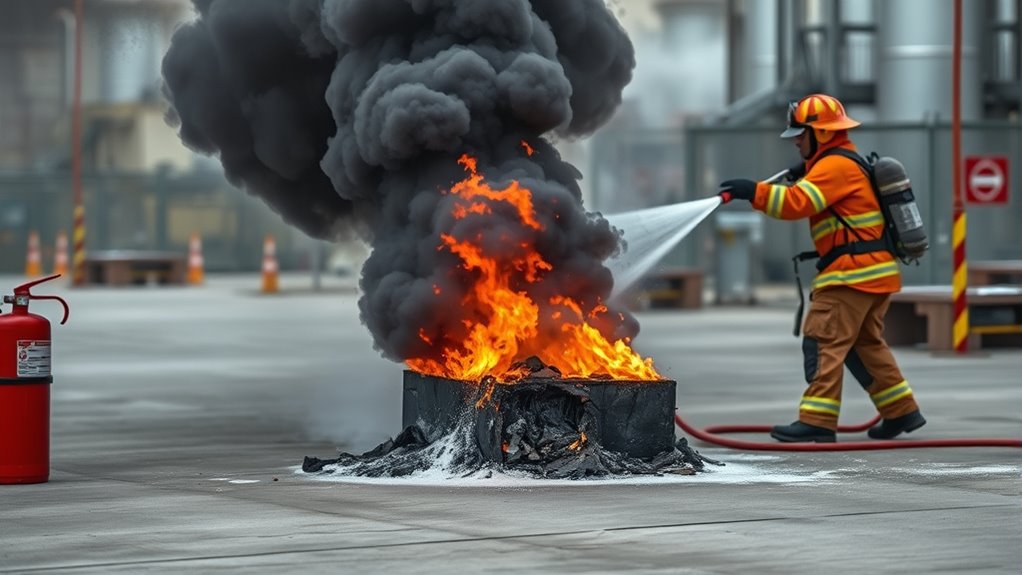
Once you’ve gauged the situation, your next step is to choose the right fire suppression method. For battery fires, especially lithium-ion types, standard fire extinguishers like water are usually ineffective and can even make the fire worse. Instead, you should use a Class D fire extinguisher designed specifically for combustible metals or a fire suppression system suitable for electrical fires. If those aren’t available, a dry chemical extinguisher can be effective. It’s essential to act swiftly—do not attempt to smother the fire with cloth or attempt to carry away burning batteries, as this could cause spills or shocks. If you don’t have proper fire suppression tools, evacuate the area immediately and call emergency services. Always remember that battery fires can generate toxic fumes and intense heat, so using the correct fire suppression method minimizes the risk of reignition and exposure to harmful substances.
Additionally, once the fire is under control, you should carefully isolate the burned batteries and ventilate the area to clear toxic fumes. Proper disposal of damaged batteries is indispensable to prevent re-ignition or chemical leaks. Follow local regulations for hazardous waste disposal, and avoid handling damaged batteries with bare hands. Keep in mind that even after the fire appears to be out, residual heat and chemical reactions can cause re-ignition, so continuous monitoring is necessary. Your actions during the initial hazard assessment and fire suppression efforts are essential to ensuring safety, preventing injury, and minimizing damage. Being aware of the materials used in batteries and their properties can help you better understand the risks involved. Staying informed about proper procedures, using the correct equipment, and knowing when to evacuate are critical steps in effectively managing battery fires. Always prioritize your safety and don’t hesitate to seek professional assistance if the situation exceeds your capacity to control safely.

FCL-X 1 Liter Lithium-ion Battery Fire Extinguisher
- Designed for Lithium-ion Fires: Neutralizes complex chemical reactions
- Protects Lithium Surfaces: Creates armor for lithium-containing materials
- Reduces Explosion Risk: Mitigates lithium oxidation and hydrogen generation
As an affiliate, we earn on qualifying purchases.
As an affiliate, we earn on qualifying purchases.
Frequently Asked Questions
How Do I Identify a Battery Fire Versus Other Types of Fires?
You can identify a battery fire by watching for distinct visual cues like bright, intense flames often accompanied by thick, acrid smoke with a chemical or metallic smell. Unlike typical fires, battery fires may produce sparks or a bubbling, swelling battery. The smoke’s color and smell can help differentiate it from other fires, making it clear that it’s a battery fire requiring specific safety measures.
Are There Specific Fire Extinguishers Recommended for Battery Fires?
You should use specialized extinguishers designed for lithium-ion battery fires because regular extinguishers might not be effective. These extinguishers, often containing Class D agents or foam, target the specific chemistry of lithium-ion fires and prevent re-ignition. Don’t try to use water, as it can worsen the fire. Always make certain your safety first, and call emergency services if the fire isn’t easily controlled.
What Are the Long-Term Health Risks After a Battery Fire?
After a battery fire, you might face long-term health risks from exposure to battery toxins. These toxins can cause respiratory issues, skin irritation, or more severe conditions if inhaled or ingested over time. To protect yourself, make certain proper ventilation and avoid direct contact with residue. Consulting a healthcare professional is essential if you experience symptoms. Staying informed about battery toxins helps you reduce potential health risks in the future.
Can I Safely Attempt to Extinguish a Small Battery Fire Myself?
Think of a small battery fire like a tiny, mischievous dragon. You shouldn’t try to tame it alone. Instead, use proper fire suppression methods like a class D extinguisher or baking soda, and always follow personal safety precautions—wear protective gear and keep a safe distance. If you’re unsure, it’s best to call emergency services. Safety first keeps you out of harm’s way.
How Should I Dispose of Damaged Batteries After a Fire?
You should never throw damaged batteries in regular trash. Instead, handle them carefully and take them to a designated battery recycling center. Damaged batteries are considered hazardous waste, and proper disposal prevents environmental harm and safety risks. Contact your local waste management or hazardous waste facility for instructions. Always wear protective gloves and eyewear when handling damaged batteries to avoid exposure to harmful chemicals.
Conclusion
Remember, when tackling a battery fire, you’re holding a fragile lantern in a storm. Your quick actions are the steady hand guiding the light through turbulent darkness. Stay calm, follow safety steps, and act swiftly to extinguish the flames. By doing so, you become the beacon of hope, shielding yourself and others from the storm’s fury. Your preparedness and calmness illuminate the path to safety, turning chaos into calm and danger into safety.