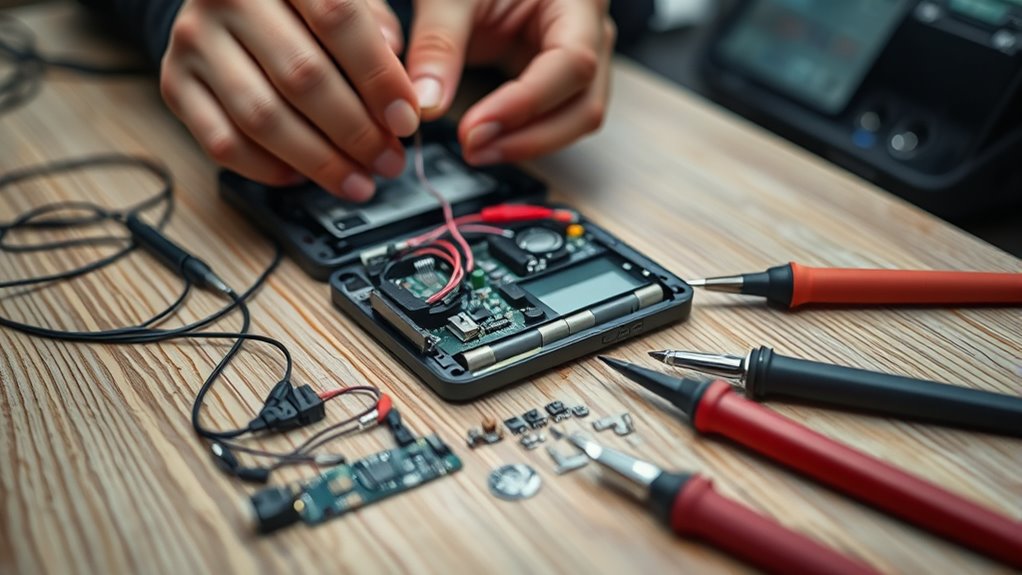

To recondition lithium-ion batteries, start by safely evaluating their condition for swelling, leaks, or damage. Fully discharge the battery and then recharge it slowly using a specialized charger. Perform cycling by repeatedly charging and discharging to help stabilize the cells and improve capacity. Remember, this process can extend your battery’s lifespan, but it’s not permanent. If you continue exploring, you’ll discover detailed steps to restore performance effectively and safely.
Key Takeaways
- Safely assess battery health for physical damage before attempting reconditioning.
- Fully discharge the battery, then recharge slowly to recalibrate cell capacity.
- Perform multiple charge-discharge cycles to stabilize battery performance.
- Recognize end-of-life signs to determine when reconditioning is no longer effective.
- Properly recycle batteries after reconditioning to protect the environment.
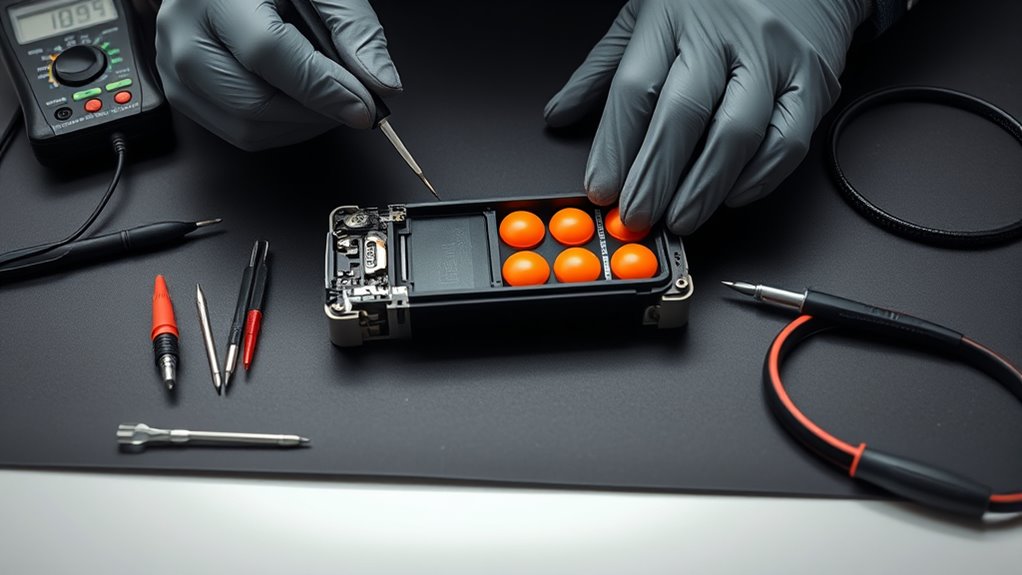
Lithium-ion batteries are indispensable for powering our daily devices, but over time, their performance doesn’t last as long as when they were new. You might notice your smartphone or laptop doesn’t hold a charge like it used to, which can be frustrating. The good news is that you can often extend the battery’s lifespan through reconditioning, saving you money and reducing waste. Understanding the basics of recycling techniques is essential because it helps you see how reconditioning fits into a broader effort to manage battery waste responsibly.
To start the reconditioning process, you need to assess the battery’s condition. If it’s swollen, leaking, or damaged, it’s safer to replace it rather than attempt to revive it. For batteries that still look intact but hold less charge, you can try restoring them. One effective method involves fully discharging the battery and then charging it slowly to recalibrate the cells. This process can sometimes improve the battery’s capacity temporarily, giving you more usable time between charges. It’s important to be cautious and avoid over-discharge, which can harm the cells further. Using a specialized charger with a slow charging mode ensures you don’t push the battery beyond safe limits.
Next, you can consider cycling the battery—repeatedly charging and discharging it—to help stabilize the cells and improve performance. This method can help recondition batteries that have developed memory effects or uneven charge levels. Keep in mind that this isn’t a permanent fix but can extend the overall usability. Regular reconditioning can delay the need for replacement, but eventually, the battery will reach the end of its natural lifespan. When that happens, proper recycling techniques become essential. Recycling lithium-ion batteries prevents hazardous materials from polluting the environment and recovers valuable components like lithium, cobalt, and nickel, which can be reused in new batteries. Additionally, understanding the recycling techniques involved can help you dispose of batteries responsibly and ethically.

NOCO GENIUS10: 10A 6V/12V Smart Battery Charger – Automatic Maintainer, Trickle Charger & Desulfator with Overcharge Protection & Temperature Compensation – for Lead-Acid & Lithium Batteries
- Compact and Powerful: 17% smaller, over 115% more power
- All-in-One Charging: Battery charger, maintainer, trickle charger, desulfator
- Versatile Battery Compatibility: Supports 6V/12V lead-acid and lithium batteries
As an affiliate, we earn on qualifying purchases.
As an affiliate, we earn on qualifying purchases.
Frequently Asked Questions
Is Reconditioning Safe for All Types of Lithium-Ion Batteries?
Reconditioning isn’t safe for all lithium-ion batteries because battery chemistry varies, and some types are more prone to damage or safety hazards. You should always follow safety precautions, like wearing gloves and working in a well-ventilated area. If you’re unsure about the specific battery chemistry or the reconditioning process, it’s best to consult an expert or avoid reconditioning to prevent potential risks.
How Long Does the Reconditioning Process Typically Take?
Reconditioning your lithium-ion battery usually takes about 1 to 3 hours, depending on its condition and the reconditioning tools you use. During this process, you’re working to restore the battery’s lifespan by carefully cycling and cleaning the cells. With the right tools, you can efficiently extend your battery’s performance, saving money and reducing waste. Just guarantee you follow safety guidelines to avoid any hazards.
Can Reconditioned Batteries Be Used in High-Drain Devices?
Reconditioned batteries can power high-drain devices, but their performance depends on your battery’s lifespan and charging cycles. Think of it like a marathon runner—after many races, they might still finish strong, but not as fast as before. If your reconditioned battery has undergone numerous charging cycles, it may struggle under high power demands. Always test thoroughly to guarantee it delivers the needed power without risking damage.
What Are the Signs Indicating a Battery Needs Reconditioning?
You’ll notice your battery needs reconditioning if its lifespan shortens substantially or if it struggles to hold a full charge. Changes in charging behavior, like taking longer to charge or discharging quickly, also signal issues. When these signs appear, reconditioning can restore performance, extending your battery’s life and ensuring it functions efficiently. Keep an eye on these indicators to maintain ideal battery health and avoid unnecessary replacements.
Does Reconditioning Affect the Battery’s Warranty or Resale Value?
Reconditioning your battery is like giving it a fresh coat of paint—it’s a way to refresh its performance. It generally doesn’t void your warranty if done properly, but some manufacturers might see it as a risk. As for resale value, reconditioning can boost it by showing the battery is well-maintained, making your device more appealing. Always check your warranty terms first to avoid potential implications.
Conclusion
By following these simple steps, you can breathe new life into your lithium-ion batteries and save money. Think of reconditioning as giving your batteries a second chance, much like spring flowers blooming anew. With patience and care, you’ll keep your devices running smoothly and extend their lifespan. Remember, a little effort now can turn into big savings later—so don’t toss that dead battery just yet; it might just surprise you!