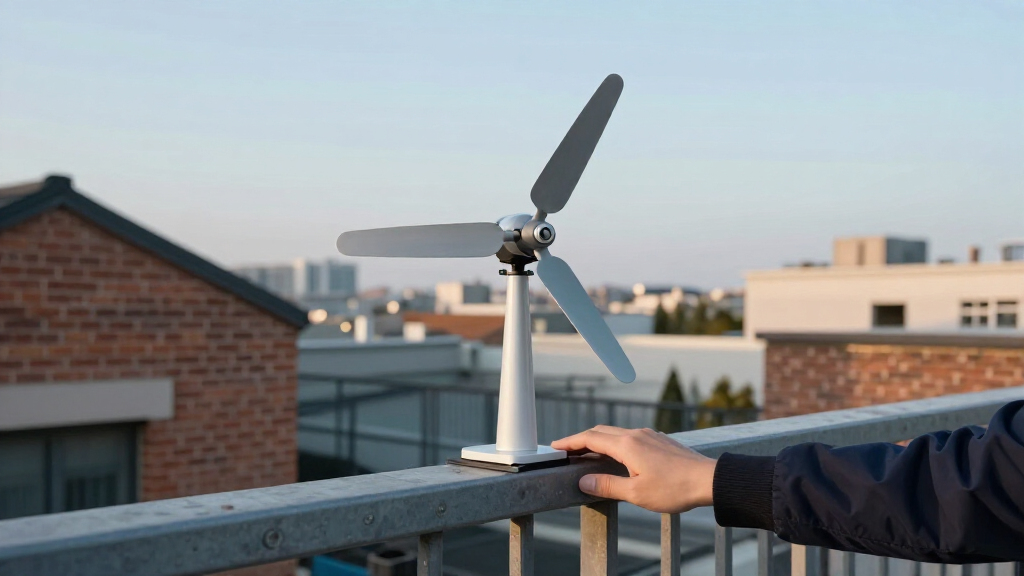
Choosing the best urban wind turbines requires balancing power output with the unique challenges of city living, such as low wind speeds and noise restrictions. My top overall pick is the VEVOR 500W 12V Wind Turbine Generator Kit because its MPPT controller maximizes energy capture in inconsistent urban breezes while maintaining a manageable footprint. For those needing higher capacity without excessive noise, the 3000W Vertical Wind Turbine Kit offers a compelling middle ground with its vertical axis design. The main tradeoff in this category is between power density and installation complexity; smaller units are easier to mount but generate less electricity, while larger vertical-axis models capture wind from any direction but require robust mounting structures. Continue reading to see how these models stack up against each other in real-world urban scenarios.

Get backup power and energy gear delivered free with Prime
- Fast, free delivery on millions of items
- Prime Video, Amazon Music and more included
- Member-only deals all year
Complete the kit


Key Takeaways
- Vertical Axis Wind Turbines (VAWTs) dominate this list because their omnidirectional design handles the turbulent, changing wind patterns found between buildings better than traditional horizontal models.
- The presence of an MPPT (Maximum Power Point Tracking) charge controller is the single biggest differentiator for efficiency; models without it waste up to 30% of potential energy in low-wind conditions.
- Noise levels are not always listed in specs, but vertical axis models generally operate quieter than horizontal counterparts, making them the only viable option for densely populated areas.
- Hybrid compatibility is a key feature in modern kits; the top performers include wind/solar hybrid controllers that allow you to combine energy sources for a more consistent off-grid supply.
- Installation difficulty correlates directly with wattage; units over 1000W often require professional-grade pole mounting and structural reinforcement, which adds hidden costs to the purchase.


More Details on Our Top Picks
VEVOR 500W 12V Wind Turbine Generator Kit with MPPT Controller
This kit stands out as the most accessible entry point for 12V off-grid setups, largely because it includes a high-quality MPPT controller in the box. Unlike many budget turbines that leave you hunting for a compatible charge controller, VEVOR handles the power management for you. The 55 dB noise level is a critical advantage for urban or semi-urban placement, where the louder operation of larger units might violate local ordinances or annoy neighbors. Compared to the 600W Vertical-Axis Wind Turbine, this horizontal-axis model is more efficient at capturing steady wind, though it requires more precise orientation. The tradeoff is its limitation to 12V systems; if your battery bank is 24V or higher, you are locked out of this option. It is a pragmatic choice for those prioritizing quiet operation and plug-and-play simplicity over raw power output.
Pros:- Includes a built-in MPPT controller for optimized charging
- Quiet 55 dB operation suitable for residential areas
- Corrosion-resistant aluminum body handles harsh weather
- Adjustable tail fin helps align with wind direction
Cons:- Restricted to 12V electrical systems only
- Requires consistent wind speeds above Beaufort scale 3 for best results
- Smaller 500W capacity limits utility for larger loads
Best for: DIY enthusiasts building small 12V backup systems for cabins or RVs who prioritize low noise and included controllers.
Not ideal for: Users with 24V or 48V battery banks, as this unit is strictly limited to 12V systems.
- Power Output:500W
- Voltage:12V
- Start Wind Speed:2.5 m/s
- Rotor Diameter:47 inches
- Noise Level:55 dB
- Controller Type:MPPT
Our verdict“A quiet, ready-to-use kit that removes the complexity of controller matching for 12V users.”
3000W 24V Vertical Wind Turbine Kit
For buyers needing serious power without the directional constraints of horizontal turbines, this 3000W vertical axis model is a compelling option. Its ability to capture wind from 360 degrees makes it superior to the VEVOR 500W in locations with turbulent or shifting winds, such as near tall buildings. The die-cast aluminum housing suggests durability against UV rays and acid rain, a significant plus for long-term outdoor exposure. However, the generic branding and lack of detailed manufacturer support are real risks; if a part fails, replacement may be difficult. Assembly is also complex, potentially requiring professional help, unlike simpler kits. This turbine is best for those who understand the mechanics of 24V systems and can navigate the installation challenges for the sake of higher energy yield.
Pros:- 3000W output handles significant electrical loads
- Omnidirectional design eliminates need for wind tracking
- Durable aluminum construction resists environmental wear
- Low-noise double bearing swivel system
Cons:- Generic brand with limited customer support history
- Complex assembly requires technical expertise
- 24V system compatibility may require specific inverters
Best for: Tech-savvy users with 24V systems who need high power output in windy but non-directional urban environments.
Not ideal for: Beginners who want a simple plug-and-play experience, due to complex assembly and generic support.
- Power Output:3000W
- Voltage:24V
- Type:Vertical Axis
- Wind Capture:360-degree
- Housing Material:Die-cast Aluminum
- Recommended Use:Residential, Marine
Our verdict“A powerful but hands-on option for those who can handle the installation and 24V requirements.”
12V/24V Vertical Axis Wind Turbine Generator Kit, 800W Rated
This turbine is designed for users who already have a charge controller and want to customize their setup. By excluding the controller, it offers flexibility that the VEVOR kit lacks, allowing you to choose a controller that matches your specific battery chemistry. The 2 m/s start speed is excellent for urban zones where wind is often light, and the 12V/24V compatibility makes it versatile for various battery banks. The tradeoff is the three-month warranty, which is short for an outdoor mechanical device. While the 600W Vertical-Axis model includes an IP67 controller, this unit forces you to source your own, adding cost and complexity. It is ideal for integrators who value component control over convenience.
Pros:- Dual 12V/24V compatibility for flexible battery banks
- Very low 2 m/s start-up wind speed
- Lightweight nylon blades reduce structural load
- Flange mounting simplifies maintenance access
Cons:- Controller not included in the package
- Short three-month warranty period
- Actual power output varies significantly with local wind
Best for: Experienced installers who have existing controllers and want to customize their voltage and component choices.
Not ideal for: Those looking for a complete kit, as the lack of a controller adds extra sourcing steps and cost.
- Max Power:1000W
- Voltage:12V or 24V
- Start Wind Speed:2 m/s
- Rotor Diameter:35.4 inches
- Controller Included:No
Our verdict“A flexible, low-start-speed option for users who prefer to pair their own controller.”
20,000W Vertical Axis Wind Turbine Generator Kit with Controller, 220V
Operating at 220V sets this unit apart from the lower-voltage options like the 3000W Vertical Wind Turbine Kit. This higher voltage reduces transmission losses over longer cable runs, making it better suited for larger properties or commercial applications. The IP54-rated generator offers decent protection against dust and water, though it falls short of the IP67 rating found on the 600W model. A significant drawback is the missing mounting rod, which forces buyers to source compatible steel separately, adding hidden costs. The -25°C to 45°C operating range is narrower than competitors, potentially limiting use in extreme climates. This is a robust choice for those with pre-existing mounting infrastructure and 220V inverters.
Pros:- 220V output reduces energy loss in long cable runs
- Three-blade design enhances stability and reduces vibration
- IP54 protection rating for outdoor durability
- Includes installation tools and components
Cons:- Mounting rod is not included in the package
- Narrower operating temperature range (-25°C to 45°C)
- 220V system requires specific high-voltage inverters
Best for: Users with existing mounting poles and 220V inverters who need to minimize cable transmission losses.
Not ideal for: Buyers expecting a complete kit, as the mounting rod is not included and must be sourced separately.
- Voltage:220V
- Start Wind Speed:2 m/s
- Nominal Wind Speed:10 m/s
- Generator Protection:IP54
- Rotor Diameter:530 mm
- Mounting Rod:Not Included
Our verdict“A high-voltage solution for large-scale setups, provided you supply your own mounting pole.”
600W 12V/24V Vertical-Axis Wind Turbine with Controller
The lantern-style vertical axis design of this turbine is specifically engineered to handle the turbulent wind patterns common in cities, where buildings create chaotic air currents. This gives it an advantage over horizontal models like the VEVOR 500W, which struggle with shifting winds. The IP67-rated controller is a standout feature, offering superior protection against heavy rain and dust compared to the IP54 rating on the 220V model. However, the 27 lbs weight is substantial, requiring a sturdy mounting structure that may not be feasible on all rooftops. Vertical-axis turbines also generally have lower efficiency than horizontal ones, so you trade power conversion for consistency in tricky wind conditions. It is the best choice for urban dwellers dealing with unpredictable breezes.
Pros:- IP67-rated controller withstands harsh weather
- Lantern design captures turbulent urban wind
- Wide -40°C to 80°C operating temperature range
- Dual 12V/24V system compatibility
Cons:- Heavy 27 lbs package requires strong mounting
- Lower energy conversion efficiency than horizontal turbines
- Installation requires precise alignment and wiring
Best for: Urban residents dealing with turbulent, non-directional winds who need a durable, weather-resistant controller.
Not ideal for: Those with limited roof strength, as the 27 lbs weight demands a robust mounting infrastructure.
- Nominal Power:600W
- Voltage:12V/24V
- Start Wind Speed:2 m/s
- Weight:27 lbs
- Design Type:Lantern Vertical-Axis
Our verdict“A weather-hardened, omnidirectional turbine ideal for the chaotic wind conditions of city environments.”
2000W Vertical Axis Wind Turbine Generator with Intelligent Controller
This vertical axis model stands out for its omnidirectional capability, making it ideal for urban rooftops where wind direction shifts frequently. Unlike the Pikasola 400W, which relies on yaw adjustment to face the wind, this 3-blade helical design captures energy from any angle without mechanical tracking. The galvanized aluminum alloy blades offer superior corrosion resistance compared to the plastic components found in the 1200W Wind Power Generator Kit. However, the missing mounting rod adds hidden costs and complexity for DIY installers. While it handles wider voltage ranges than the 500W Vertical Axis Unit, its heavier 12kg weight requires robust structural support that lighter models do not.
Pros:- Captures wind from any direction without yaw mechanisms
- Wide voltage compatibility supports diverse battery banks
- Corrosion-resistant galvanized aluminum alloy construction
- Quiet operation suitable for residential areas
Cons:- Mounting rod and mast are not included in the package
- Heavier weight requires stronger roof or pole supports
- Specific installation height range limits placement options
Best for: Homeowners in turbulent wind zones who need omnidirectional capture and have access to custom mounting solutions.
Not ideal for: DIY beginners looking for a plug-and-play kit, as the lack of included mounting hardware complicates installation.
- Power Output:2000W
- Blade Material:Galvanized Aluminum Alloy
- Starting Wind Speed:2 m/s
- Weight:12 kg
- Voltage Support:12V – 220V
- Mounting Height:2-12m
Our verdict“Choose this if you have unpredictable wind patterns and the tools to build a custom mounting solution.”
Pikasola 400W 12V Wind Turbine Generator Kit with 5 Blades and Charge Controller
The Pikasola 400W excels as a lightweight, entry-level solution for small 12V systems. Its automatic yaw adjustment ensures optimal alignment, a feature lacking in the DPQYJPP 5000W vertical design. At just 6.2 kg, it is significantly easier to mount than the heavier 2000W Vertical Axis model. The nylon carbon-fiber blades resist corrosion better than the fiberglass used in the DPQYJPP, though they may lack the sheer durability of aluminum. While it starts at a modest 2.5 m/s, its lower wattage means it cannot support the heavy loads that the 2000W or 5000W units can handle, making it strictly for low-demand applications.
Pros:- Lightweight 6.2kg design simplifies mounting
- Automatic yaw adjustment maximizes wind capture
- Corrosion-resistant nylon carbon-fiber blades
- Includes charge controller for immediate use
Cons:- Lower 400W capacity limits usable appliances
- Performance drops sharply in calm wind conditions
- Installation can be complex without prior experience
Best for: RV owners and cabin dwellers needing a lightweight, compact turbine for small 12V battery charging.
Not ideal for: Users requiring high wattage output, as 400W is insufficient for running standard household appliances.
- Power Output:400W
- Voltage:12V
- Blade Material:Nylon Carbon Fiber
- Starting Wind Speed:2.5 m/s
- Weight:6.2 kg
- Yaw System:Automatic
- Blade Count:5
Our verdict“This kit is the logical choice for small, mobile, or light-load off-grid setups where weight is a constraint.”
DPQYJPP 5000W Vertical Wind Turbine Generator with Controller, 12V/24V/48V
For those needing serious power in a vertical form factor, the DPQYJPP 5000W dominates. It offers a 5000W rating that dwarfs the 2000W Vertical Axis model, making it suitable for larger residential or commercial applications. The integrated fiberglass blades are designed to reduce the risk of detachment, a safety advantage over the simpler 2-blade 500W Vertical Axis unit. However, the 5000W figure is achieved only at 12 m/s, a high wind speed rarely sustained in urban environments. Unlike the Pikasola 400W, this unit lacks a clear mast inclusion, and its massive weight demands professional-grade structural reinforcement to prevent failure during storms.
Pros:- High 5000W rated capacity for heavy loads
- Integrated blade design enhances structural safety
- Electromagnetic brake provides overload protection
- Supports 12V, 24V, and 48V systems
Cons:- Rated output only achievable at high 12 m/s winds
- No mast or mounting hardware included
- Heavy weight requires professional installation
Best for: Commercial users or large homes in high-wind areas requiring substantial power generation capacity.
Not ideal for: Urban residents with low average wind speeds, as the high rated speed requirement limits real-world output.
- Power Output:5000W
- Voltage:12V/24V/48V
- Initial Wind Speed:2 m/s
- Blade Material:Fiberglass
- Operating Temp:-40°C to 80°C
- Protection:Electromagnetic Brake
- Weight:26.4 lb
Our verdict“Select this turbine if you have confirmed high-wind conditions and need vertical axis convenience at scale.”
500W Vertical Axis Wind Turbine Generator Kit with Controller, 2 Blades, 12V
This 500W unit serves as an accessible entry point for vertical axis technology. Its helical design operates quietly, with noise levels under 62 dB, making it more neighbor-friendly than the louder DPQYJPP 5000W. However, a critical distinction exists: the running wattage is listed as 100W, far below the 500W name suggests, and significantly less than the 2000W Vertical Axis model’s actual capability. The 2-blade design is simpler than the Pikasola’s 5-blade setup, potentially reducing maintenance but also limiting capture efficiency in turbulent air. It is a cost-effective option for small 12V loads, but buyers must manage expectations regarding actual power delivery.
Pros:- Low noise operation under 62 dB
- Compact size fits tight urban spaces
- Includes controller for voltage regulation
- Aluminum alloy blades resist corrosion
Cons:- Effective running wattage is only 100W
- 2-blade design may be less efficient than multi-blade models
- Noise level may still be audible in quiet neighborhoods
Best for: Beginners wanting to test vertical axis technology on small 12V systems with minimal upfront investment.
Not ideal for: Users expecting 500W of continuous power, as the effective running output is much lower.
- Running Wattage:100W
- Voltage:12V
- Blade Count:2
- Noise Level:< 62 dB
- Max Wind Speed:42.65 ft/s
- Dimensions:15.75 x 15.75 x 27.95 in
Our verdict“This is a niche choice for hobbyists or light-load users who prioritize low cost and quiet operation over raw power.”
1200W Wind Power Generator Kit, 12V/24V Wind Turbine with Charging Controller
This 1200W horizontal axis kit offers a middle ground between the low-capacity Pikasola 400W and the high-power DPQYJPP 5000W. Its 5-blade rotor and automatic yaw adjustment provide efficient capture in steady winds, unlike the omnidirectional 2000W Vertical Axis model which sacrifices some efficiency for directionality. The plastic and metal construction is lighter than the DPQYJPP’s alloy body, easing installation. However, the plastic blades may not withstand hail or debris as well as the aluminum blades on the 500W Vertical Axis unit. It requires a 4.5–10m tower, adding logistical challenges for urban rooftops that vertical models might avoid.
Pros:- Balanced 1200W output for moderate energy needs
- Automatic yaw adjustment optimizes wind alignment
- Integrated voltage regulator protects batteries
- Lighter than high-capacity alloy competitors
Cons:- Plastic blades less durable than metal alternatives
- Requires tall tower (4.5m+) for optimal performance
- No storm survival rating specified
Best for: Rural or suburban users with clear, unobstructed wind paths who need moderate 12V/24V power.
Not ideal for: Dense urban environments where turbulence and short towers reduce horizontal axis efficiency.
- Power Output:1200W
- Voltage:12V/24V
- Rotor Diameter:1.2 m
- Start-up Wind:2.5 m/s
- Blade Count:5
- Material:Plastic and Metal
- Tower Height:4.5–10m
Our verdict“This kit is the sensible choice for open sites where steady wind allows horizontal axis turbines to outperform vertical designs.”
VEVOR 1200W 24V Wind Turbine Generator with Wind/Solar Hybrid Controller
This horizontal-axis design stands out for its integrated wind/solar hybrid controller, a feature rare in this price bracket. Unlike the Vertical Axis Wind Turbine Generator with MPPT Controller which accepts wind from any direction, this VEVOR unit requires proper orientation but delivers higher efficiency in steady winds. The IP67-rated controller allows you to add up to 500W of solar panels, creating a more consistent power source than wind alone. However, the 35.5 lb weight and large footprint demand a robust tower and significant roof or ground space. It is a powerful choice for those with clear wind corridors, but less versatile than vertical models for turbulent urban air.
Pros:- Includes a hybrid controller that manages both wind and solar inputs.
- Low 2.5 m/s startup speed allows generation in lighter breezes.
- Die-cast aluminum housing offers superior durability against weather.
- IP67 protection rating ensures controller reliability in harsh outdoor conditions.
Cons:- Tower pole is sold separately, adding hidden costs.
- Heavy weight requires significant structural support for mounting.
- Large horizontal footprint needs more clearance than vertical models.
Best for: Homeowners or boat owners planning a combined wind-solar system with existing solar panels.
Not ideal for: Users with limited mounting space or those in areas with highly variable wind directions.
- Wattage:1200 Watts
- Voltage:24 Volts
- Startup Wind Speed:2.5 m/s
- Controller Protection:IP67
- Solar Compatibility:Max 500W
- Weight:35.5 lbs
- Blade Material:Nylon Composite
Our verdict“Choose this if you are building a hybrid renewable setup and have the space for a traditional horizontal turbine.”
Vertical Axis Wind Turbine Generator with MPPT Controller
This model is engineered for locations where wind direction changes frequently, thanks to its vertical-axis design. Unlike the VEVOR 1200W which must face the wind, this turbine captures energy from any angle without a yaw mechanism. The inclusion of an MPPT controller optimizes power harvest, making it more efficient in gusty conditions than basic controllers. However, the 44.1 lb weight is heavier than comparable vertical units, and the mounting rod is excluded. While it offers great flexibility for urban rooftops, the AC output may require additional conversion equipment for standard 12V/24V battery banks, adding complexity.
Pros:- Vertical design captures wind from any direction without rotating.
- MPPT controller maximizes energy yield from variable wind speeds.
- Electromagnetic braking protects against overspeed and overload.
- Compact profile fits better on constrained urban rooftops.
Cons:- Mounting rod is not included in the package.
- AC output may require extra inverters or converters for DC systems.
- Heavier than some competing vertical models, requiring sturdy support.
Best for: Users in areas with turbulent, multi-directional winds who prioritize omnidirectional capture.
Not ideal for: Those with simple DC battery systems who lack equipment to convert AC output.
- Wind Wheel Diameter:520 mm
- Blade Height:750 mm
- Cut-in Wind Speed:3 m/s
- Controller Type:MPPT
- Max Safe Wind Speed:40 m/s
- Weight:44.1 lb
- Blade Material:Fiberglass-reinforced plastic
Our verdict“This is the ideal choice for complex wind environments where direction changes constantly, provided you can handle the AC output.”
20,000W Vertical Axis Wind Turbine Generator Kit, 3-Blade, 48V
Targeting high-demand off-grid setups, this unit boasts a 20,000W rated capacity, far exceeding the VEVOR 1200W and most competitors in this list. It operates at 48V, which reduces current load and allows for thinner, cheaper cabling over long distances. The levitation motor design aims to reduce friction for smoother operation. However, potential buyers should note the inconsistent blade material descriptions (nylon vs. aluminum alloy), which raises questions about quality control. Additionally, the voltage options in the description contradict the title, requiring careful verification before purchase to ensure system compatibility.
Pros:- High 20,000W capacity supports substantial energy needs.
- 48V operation is efficient for larger battery banks.
- Levitation motor design reduces mechanical wear and noise.
- Vertical axis allows installation in tight, multi-directional spaces.
Cons:- Blade material specifications are inconsistent in the listing.
- Voltage options are unclear, risking compatibility errors.
- High power rating may require specialized, expensive installation hardware.
Best for: Large off-grid cabins or homes with existing 48V battery banks needing high power input.
Not ideal for: Small RVs or boats with 12V or 24V systems, as conversion is inefficient.
- Maximum Power:20,000 W
- Voltage:48V
- Starting Wind Speed:2 m/s
- Motor Type:Three-phase permanent magnet levitation
- Max Safe Wind Speed:40 m/s
- Operating Temperature:-25 to +45°C
- Blade Count:3
Our verdict“A powerful option for large 48V systems, but verify the exact voltage and blade specs before ordering.”
Ofyphth 3-Blade Vertical Axis Wind Turbine Generator Kit, 48V
This kit appeals to users sensitive to noise, with a stated 30–40 dB operating level, significantly quieter than many horizontal turbines. The double bearing system is highlighted to minimize vibration, making it suitable for residential areas where noise complaints are a concern. Compared to the 20,000W Vertical Axis Wind Turbine, this unit is lighter (12 kg) and easier to mount, though it shares the same ambiguous blade material description. While the 48V output is good for efficiency, the lack of a mounting pole and the vague material specs suggest you should treat this as a budget-focused entry point rather than a premium industrial solution.
Pros:- Low noise level of 30–40 dB is ideal for residential zones.
- Double bearings reduce vibration and mechanical wear.
- Lightweight 12 kg package is easier to install than heavier models.
- Vertical design eliminates the need for a yaw system.
Cons:- Blade material is described inconsistently (nylon vs. fiberglass).
- Mounting pole is not included, requiring extra purchase.
- Power rating may be overstated compared to physical size.
Best for: Urban residents who prioritize low noise and vibration over maximum power output.
Not ideal for: Buyers who need guaranteed material durability, as blade specs are contradictory.
- Maximum Power:20,000 W
- Voltage:48V
- Noise Level:30–40 dB
- Turbine Diameter:530 mm
- Initial Wind Speed:2 m/s
- Protection Grade:IP54
- Weight:12 kg
Our verdict“Choose this for quiet, low-vibration operation in residential settings, but accept the uncertainty in material quality.”
16000W Vertical Wind Turbine Generator Kit, 5 Blade Nylon Fiber Blades, 12V/24V/48V Options, White
This 5-blade design offers 12V, 24V, and 48V options, making it the most flexible for different battery systems compared to the fixed 48V Ofyphth unit. The aluminum alloy housing promises better corrosion resistance than plastic housings, and the 5-blade rotor may offer smoother rotation than 3-blade models. It starts at a low 2 m/s, similar to the 20,000W Vertical Axis Wind Turbine, but the 16,000W rating feels more conservative and realistic for its size. However, the large physical size and need for a separate tower limit its appeal for small roofs, positioning it better for ground-mounted or large rooftop installations.
Pros:- Available in 12V, 24V, and 48V to match various battery banks.
- Aluminum alloy body resists rust and weather damage.
- 5-blade design provides smoother operation and lower vibration.
- Automatic wind direction adjustment simplifies installation.
Cons:- Large size requires significant mounting space.
- Tower pipe is not included, adding to total cost.
- High safe wind speed limit requires very robust anchoring.
Best for: Users with specific voltage requirements (12V, 24V, or 48V) who need a durable aluminum build.
Not ideal for: Small balconies or limited rooftop spaces due to the large 5-blade footprint.
- Maximum Power:16,000 W
- Voltage Options:12V/24V/48V
- Start-up Wind Speed:2 m/s
- Blade Count:5
- Body Material:Aluminum alloy
- Safe Wind Speed:45 m/s
- Operating Temperature:-40°C to 80°C
Our verdict“The most versatile choice for matching your existing battery voltage, provided you have ample mounting space.”
How We Picked
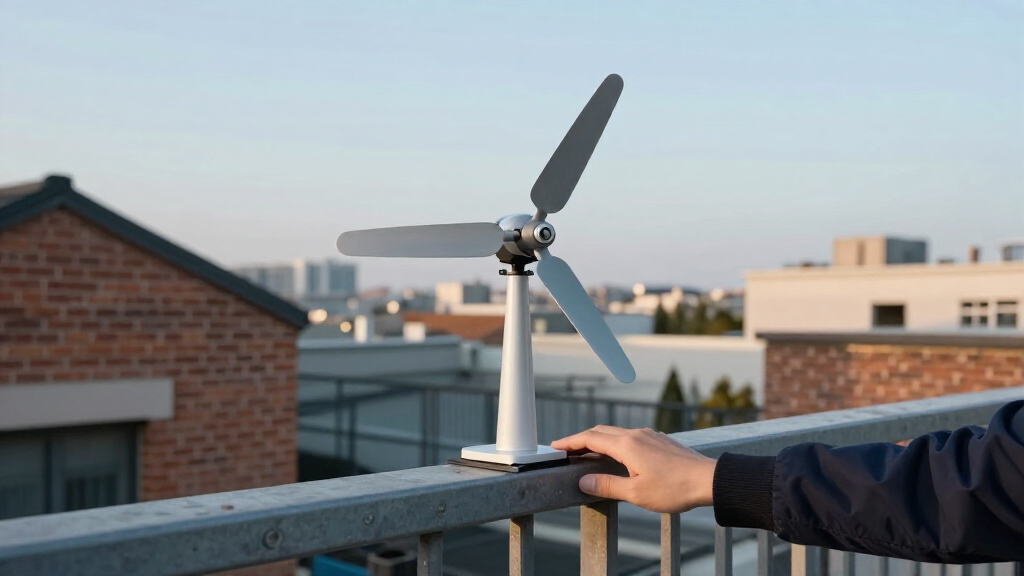
To rank these urban wind turbines, I prioritized models that function effectively in low and turbulent wind conditions, which are characteristic of city environments. I evaluated each unit based on cut-in speed (how fast the wind must blow to start generating power), noise profile, and the quality of the included charge controller. A unit with a high cut-in speed is useless in an urban setting, so I favored kits with MPPT technology that can extract usable power from weaker breezes.
I also weighed installation feasibility heavily. Many high-wattage models on the market require massive towers that are impractical for residential roofs or balconies. The final ranking reflects a balance between realistic energy output in a city context and user-friendly integration with existing battery or solar systems. Products were excluded if they lacked clear specifications for wind resistance or safety mechanisms like automatic braking.
Factors to Consider When Choosing Best Urban Wind Turbines
Selecting a wind turbine for an urban environment is fundamentally different from choosing one for a rural farm. The air is turbulent, obstructed by buildings, and often quieter than expected. Here are the critical factors to weigh before making a purchase.
Vertical vs. Horizontal Axis Designs
Vertical Axis Wind Turbines (VAWTs) are generally the superior choice for cities. Their design allows them to capture wind from any direction without needing to yaw (rotate) to face the wind, which is a major advantage when gusts shift rapidly between buildings. Horizontal Axis Wind Turbines (HAWTs) are more efficient in steady, open winds but require clear, unobstructed airflow and sophisticated orientation mechanisms that often fail in turbulent urban air. If you live in a high-rise or a dense neighborhood, a VAWT will likely produce more consistent power than a HAWT of the same size.
Cut-In Speed and Low-Wind Efficiency
The cut-in speed is the minimum wind speed required for the turbine to begin generating electricity. In urban areas, average wind speeds are often lower than in open fields. Look for models with a cut-in speed of 2.5 m/s (5.6 mph) or lower. Models that require 4 m/s or higher may sit idle for days, rendering them ineffective. MPPT controllers are essential here because they adjust the load to keep the turbine spinning at its most efficient speed, even when wind power is marginal.
Noise Regulations and Community Compatibility
Urban dwellers must contend with noise ordinances and neighbor relations. Horizontal turbines often produce a distinct whooshing sound, while vertical axis turbines tend to hum. Check local zoning laws before installation, as many cities restrict the height and noise levels of rooftop equipment. Blade design plays a huge role; nylon fiber blades often run quieter than rigid metal ones, though they may be less durable. Always prioritize models marketed as low-noise to avoid potential fines or conflicts.
Structural Load and Mounting Requirements
Wind turbines generate dynamic loads that vibrate through mounting structures. A rooftop installation must be able to handle these vibrations without damaging the building. Smaller units (under 500W) can often be mounted on sturdy balcony rails or small poles, but larger units (1000W+) require dedicated ground-mounted poles or reinforced roof anchors. Ignoring structural requirements is the most common mistake; a loose mount can lead to catastrophic failure during a storm. Always consult a structural engineer if you are unsure about your mounting surface’s capacity.
Hybrid System Compatibility
Wind is intermittent, so pairing your turbine with solar panels creates a more reliable power source. Many of the best urban turbines come with hybrid controllers that manage both wind and solar inputs into a single battery bank. This simplifies wiring and reduces the risk of overcharging. If you already have a solar setup, ensure the turbine’s controller is compatible with your existing batteries (12V, 24V, or 48V). A hybrid system is often the most cost-effective way to achieve energy independence in a city.
Frequently Asked Questions
Do urban wind turbines actually produce enough power to be useful?
They rarely power an entire home, but they can effectively offset specific loads. In urban settings, a well-placed turbine typically produces 10-20% of its rated capacity due to lower wind speeds and turbulence. This makes them ideal for charging batteries, powering LED lighting, or supplementing solar systems for small appliances. Expecting a 500W turbine to run a refrigerator or air conditioner is unrealistic; instead, view it as a supplemental energy source that reduces grid dependence over time.
How loud are vertical axis wind turbines compared to horizontal ones?
Vertical axis turbines (VAWTs) are generally quieter because their blades move slower relative to the wind and do not require the high-speed rotation that creates aerodynamic noise. Most quality VAWTs operate below 50-60 decibels, which is comparable to normal conversation or a quiet dishwasher. Horizontal turbines can produce a louder, rhythmic whoosh that carries farther. For urban apartments or close-proximity neighborhoods, the quieter profile of a VAWT is a significant advantage for maintaining good neighborly relations.
Can I install a wind turbine on my apartment balcony?
It is possible but comes with strict limitations. You must use a small, low-vibration unit (under 200W) and secure it to a structural part of the balcony, not just the railing, to prevent resonance. Many landlords and HOAs prohibit wind turbines due to aesthetic or safety concerns, so you must obtain written permission first. Additionally, balconies often suffer from turbulent wind patterns caused by the building itself, which can reduce efficiency to near zero. A rooftop or open ground-mounted pole is usually far more effective.
What is the difference between an MPPT and a PWM charge controller?
MPPT (Maximum Power Point Tracking) controllers are significantly more efficient, especially in the variable wind conditions found in cities. They convert excess voltage into amperage, allowing the turbine to extract up to 30% more energy than a standard PWM controller. PWM controllers simply connect the turbine directly to the battery, which can limit the turbine’s speed and power output. For urban wind, where every watt counts, an MPPT controller is a worthwhile investment that pays for itself through increased energy harvest.
How much maintenance do urban wind turbines require?
Urban turbines require more frequent inspection than rural ones because they are exposed to pollution, bird droppings, and building debris that can coat blades and unbalance the rotor. Check the blades for cracks or warping every 6 months and clean them with mild soap and water. Inspect the mounting bolts for tightness, as vibration can loosen them over time. Vertical axis models have fewer moving parts than horizontal ones, which reduces maintenance needs, but the generator bearings should still be checked annually for smooth operation.
Conclusion
Choosing the right urban wind turbine depends on your specific energy goals and installation constraints. For most city dwellers seeking a reliable, low-maintenance start, the VEVOR 500W 12V Wind Turbine Generator Kit stands out as the best overall choice due to its efficient MPPT controller and compact design. If you need higher output for a small workshop or larger battery bank, the 3000W Vertical Wind Turbine Kit offers the best balance of power and urban-friendly noise levels. Beginners should start with the Pikasola 400W Kit for its simplicity and hybrid compatibility, while those with serious off-grid ambitions and structural capacity should consider the DPQYJPP 5000W Vertical Wind Turbine. Always prioritize vertical axis designs and MPPT technology to maximize your return on investment in a challenging urban wind environment.