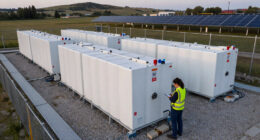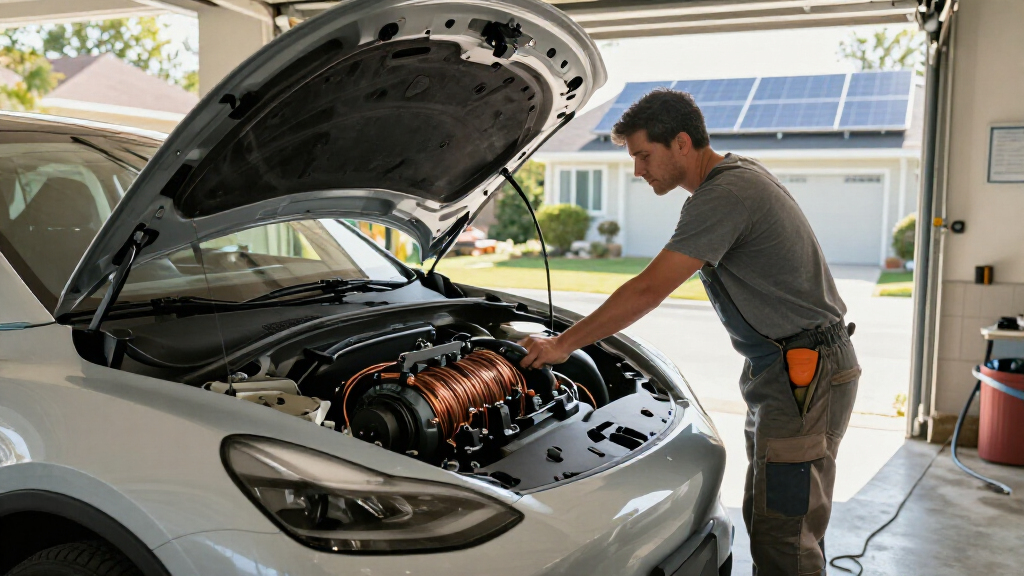
The best electric vehicle motors in this roundup span compact 48V and 60V options through high-output 72V kits. I rank the KR10E 72V 6500W kit as the best overall for builders seeking a motor-and-controller package, while the Kunray KR5V V2 5000W stands out for high-power builds and the PeiXWming MY1020 48V 2000W for simpler, lower-voltage projects. The main tradeoffs are power versus installation demands, and a motor’s advertised output versus its compatibility with your battery, controller, gearing, and vehicle. A differential or geared setup can also matter more than raw wattage when the chassis layout is fixed. Read on for the full breakdown and a guide to matching a motor to your build.

Get backup power and energy gear delivered free with Prime
- Fast, free delivery on millions of items
- Prime Video, Amazon Music and more included
- Member-only deals all year
Key Takeaways
- The KR10E leads for a kit-oriented build: its 72V, 6500W rating and included NS18 controller make it the most complete high-output option in this group, though the rest of the electrical system must match.
- The Kunray KR5V V2 is the strongest standalone alternative: at 5000W and 72V, it targets builders who want substantial output but do not need the KR10E’s included controller.
- Differential motors solve a layout problem, not just a power problem: the ICONSPORTSS and 3000W differential options may suit vehicles that need an integrated drive arrangement, but mounting and axle compatibility still need checking.
- Lower voltage can simplify a modest build: the PeiXWming MY1020’s 48V, 2000W specification is better aligned with restrained projects than the 5000W and 6500W options.
- Power ratings do not settle fit: shaft details, mounting dimensions, controller compatibility, gearing, and cooling can rule out a motor even when its voltage and wattage look right.
| KR10E 72V 6500W Brushless Motor Kit with NS18 Controller |  | Best for High-Power Off-Road Builds | Voltage: 72V | Peak power: 12,500W | Peak torque: 42N·m | VIEW LATEST PRICE | See Our Full Breakdown |
| 60V 2000W Brushless DC Mid-Drive Motor | 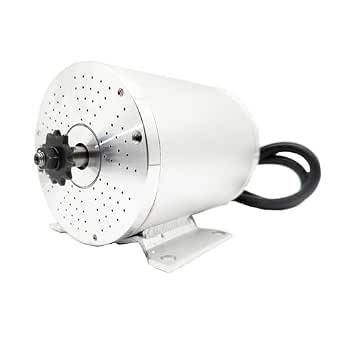 | Best for Straightforward DIY Builds | Voltage: 60V DC | Motor type: Brushless DC mid-drive | Power: 2,000W | VIEW LATEST PRICE | See Our Full Breakdown |
| ICONSPORTSS 72V 1500W Brushless DC Differential Motor |  | Best for Micro EVs and Heavy Tricycles | Voltage: 72V | Power: 1,500W | Motor type: Permanent magnet brushless DC | VIEW LATEST PRICE | See Our Full Breakdown |
| Kunray KR5V V2 72V 5000W Brushless DC Motor |  | Best Mid-Drive Balance | Voltage: 72V | Peak power: 10kW | Peak torque: 35N·m | VIEW LATEST PRICE | See Our Full Breakdown |
| ICONSPORTSS 60V 2500W Brushless Motor with Differential Gearbox |  | Best for Differential-Drive Utility Builds | Voltage: 60V | Power: 2,500W | Motor type: Brushless | VIEW LATEST PRICE | See Our Full Breakdown |
| 60V/72V 3000W Brushless DC Motor with Differential |  | Best for Differential-Equipped 60V/72V Builds | Motor type: Permanent magnet brushless DC | Voltage: 60V or 72V | Power: 3000W | VIEW LATEST PRICE | See Our Full Breakdown |
| PeiXWming 48V 2000W Brushless DC Motor, MY1020 |  | Best for Installation-Focused 48V Builds | Model: MY 1020 | Voltage: 48V | Power: 2000W | VIEW LATEST PRICE | See Our Full Breakdown |
| Atsoya 60V 1800W Brushless Geared Motor with 16-Tooth Gear |  | Best Compact Geared Motor for Climbing | Motor type: Brushless DC geared motor | Voltage: 60V | Power: 1800W | VIEW LATEST PRICE | See Our Full Breakdown |
| electric vehicle motor | Voltage | Motor type | Power | Maximum speed |
|---|---|---|---|---|
| KR10E 72V 6500W Brushless Moto | 72V | Brushless DC encoder motor | — | 9,000 RPM |
| 60V 2000W Brushless DC Mid-Dri | 60V DC | Brushless DC mid-drive | 2,000W | — |
| ICONSPORTSS 72V 1500W Brushles | 72V | Permanent magnet brushless DC | 1,500W | 4,800 RPM |
| Kunray KR5V V2 72V 5000W Brush | 72V | — | — | — |
| ICONSPORTSS 60V 2500W Brushles | 60V | Brushless | 2,500W | 6,000 RPM |
| 60V/72V 3000W Brushless DC Mot | 60V or 72V | Permanent magnet brushless DC | 3000W | — |
| PeiXWming 48V 2000W Brushless | 48V | — | 2000W | 5100 RPM |
| Atsoya 60V 1800W Brushless Gea | 60V | Brushless DC geared motor | 1800W | — |
More Details on Our Top Picks
KR10E 72V 6500W Brushless Motor Kit with NS18 Controller
For buyers prioritizing strong acceleration and adjustable output, the KR10E’s 6,500W rated and 12,500W peak power put it ahead of the 5,000W Kunray KR5V on paper. Its programmable 100A Fardriver NS18 controller, keyed voltmeter throttle, and encoder motor are included, giving builders more of a starting package than the 60V 2000W MY1020, which is sold as a motor only. An aluminum housing, air cooling, and temperature sensor address heat during demanding use, though they do not remove the need to match the motor and controller to the build. This is a substantial kit, not a simple replacement part: check the mounting pattern and vehicle fit before buying, and approach controller tuning carefully. It also lacks Hall connectors, and it is not compatible with Razor vehicles.
Pros:- High 12,500W peak power and 42N·m peak torque suit acceleration-focused builds.
- Includes a programmable 100A Fardriver NS18 controller and keyed voltmeter throttle.
- Aluminum housing, air cooling, and a temperature sensor support heat management.
- Encoder motor supports precise position and speed control.
Cons:- Mounting dimensions and vehicle compatibility need verification before installation.
- Controller tuning beyond factory settings calls for careful manual-led setup or professional help.
- Does not use Hall connectors and is not compatible with Razor vehicles.
Best for: Experienced builders fitting a compatible 72V dirt bike, go-kart, scooter, or ATV who want high peak output and a programmable controller in the kit.
Not ideal for: Razor owners, first-time installers seeking a plug-and-play replacement, or builders whose frame does not match its mounting dimensions.
- Voltage:72V
- Peak power:12,500W
- Peak torque:42N·m
- Maximum speed:9,000 RPM
- Motor type:Brushless DC encoder motor
- Controller:Fardriver NS18, programmable, 100A rated current
- Mounting:4 × M8×1.25 holes; 4.02 × 3.88 in spacing
- Included components:KR10E motor with pre-installed 420 9T sprocket, NS18 controller, keyed voltmeter throttle
Our verdict“Choose the KR10E kit for a compatible 72V off-road build that needs high output and an included programmable controller, but skip it if fit or wiring compatibility is uncertain.”
60V 2000W Brushless DC Mid-Drive Motor
The MY1020 mid-drive is a comparatively modest choice for a DIY scooter, e-bike, tricycle, or go-kart where a 60V, 2,000W motor fits the plan. Its aluminum alloy housing and natural air cooling keep the design simple, while the stated 4.6kg weight may suit builders trying to avoid a heavier motor. Compared with the 72V ICONSPORTSS 1500W differential motor, this model has a higher stated power rating but lacks a gearbox, so the builder must plan the drivetrain around its 11-tooth T8F sprocket. The listing gives no-load speed rather than loaded performance, making real-world speed harder to predict from the supplied figures. It also includes only the motor, unlike the KR10E kit with its controller and throttle, so system components and compatibility are the buyer’s responsibility.
Pros:- 2,000W rating suits moderate-power 60V DIY applications.
- Brushless design is described as low-noise and maintenance-free.
- Aluminum alloy housing and natural air cooling support heat dissipation.
- T8F 11-tooth sprocket provides a specified starting point for drivetrain planning.
Cons:- The package includes the motor only, with no controller or other installation components specified.
- 4300–4500 RPM is a no-load figure, not a stated operating speed under load.
- The listing provides limited information about fitment and drivetrain performance.
Best for: DIY builders assembling a 60V scooter, e-bike, tricycle, or go-kart who can source a compatible controller and drivetrain parts.
Not ideal for: Buyers who need an all-in-one motor kit, a differential gearbox, or clear loaded-speed and performance figures before choosing.
- Voltage:60V DC
- Motor type:Brushless DC mid-drive
- Power:2,000W
- No-load speed:4,300–4,500 RPM
- Sprocket:T8F, 11 teeth
- Housing:Aluminum alloy
- Item weight:4.6 kg
- Dimensions:4.6 in W × 4.7 in H
Our verdict“Pick the MY1020 for a self-sourced 60V DIY drivetrain where moderate power and a simple air-cooled motor matter more than included controls or a gearbox.”
ICONSPORTSS 72V 1500W Brushless DC Differential Motor
The defining advantage here is not raw output but the included gearbox with two reduction ratios. The 10.44:1 and 12.8:1 choices let builders of micro electric vehicles and heavy electric tricycles weigh a torque-focused setup against a faster one, rather than adapting a bare motor as they would with the MY1020. At 1,500W and up to 4,800 RPM, this ICONSPORTSS option is less powerful on paper than the 2,500W ICONSPORTSS differential kit, so it makes more sense when its specified vehicle fit and reduction choices match the project than when maximum output is the priority. The product information is narrow about compatibility beyond micro EVs and heavy tricycles, and the 90-day warranty is limited. It is supplied as one motor and gearbox, not a multi-motor solution.
Pros:- Includes a gearbox with 10.44:1 and 12.8:1 reduction options.
- 72V brushless motor is designed for micro EVs and heavy electric tricycles.
- 16-tooth configuration supports specified torque transmission.
- Motor and gearbox are included together.
Cons:- Its 1,500W rating is below the 2,500W ICONSPORTSS differential kit.
- Compatibility outside the stated vehicle types is unclear.
- The listed warranty is 90 days, and the package contains one motor.
Best for: Builders of micro electric vehicles or heavy electric tricycles who want a supplied gearbox and a choice of two reduction ratios.
Not ideal for: Buyers seeking higher rated power, a known fit for an unspecified vehicle, multiple motors, or a longer stated warranty.
- Voltage:72V
- Power:1,500W
- Motor type:Permanent magnet brushless DC
- Maximum speed:4,800 RPM
- Gearbox reduction ratios:10.44:1 or 12.8:1
- Tooth configuration:16T
- Material:Aluminum
- Included components:Electric motor and gearbox
- Warranty:90 days
Our verdict“Choose this motor for a micro EV or heavy tricycle when its gearbox ratios suit the build, not when higher power or broad fitment is the main goal.”
Kunray KR5V V2 72V 5000W Brushless DC Motor
The Kunray KR5V V2 sits between the high-output KR10E and lower-rated options: its 5,000W rating and 10kW peak output offer serious power without the KR10E’s 12.5kW peak figure. A copper core, aluminum body, heatsink, and external Hall sensor make its hardware appealing for a 72V mid-drive build, while a KTY84-130 temperature sensor gives builders a way to monitor heat. The #35 9-tooth sprocket is a specific drivetrain fit, not a universal chain solution, and the recommended 80–100A programmable controller is not included in the supplied details. Compared with the KR10E kit, this model has a stated IP54 rating and a lower peak output, but buyers still need to source and match the controller. Its 12.7lb weight and required fit checks also make it a less casual swap than a small DIY motor.
Pros:- 5,000W rated and 10kW peak output suit demanding 72V builds.
- Copper core, aluminum body, heatsink, and air cooling address thermal demands.
- External Hall sensor and KTY84-130 temperature sensor provide useful system feedback.
- IP54 rating and #35 9-tooth sprocket are specified.
Cons:- Requires a compatible 72V system and a separately sourced 80–100A programmable controller.
- The #35 9-tooth sprocket limits direct fit to matching drivetrain setups.
- Motor can heat during operation and must not be touched while running.
Best for: Builders upgrading a compatible 72V go-kart, dirt bike, scooter, or ATV who need a 5,000W mid-drive and can supply an 80–100A controller.
Not ideal for: Buyers who need a complete motor-and-controller kit, use a chain other than #35, or need a motor for users under 14.
- Voltage:72V
- Peak power:10kW
- Peak torque:35N·m
- Peak speed:8,000 RPM
- Recommended controller current:80–100A
- Sprocket:#35, 9-tooth
- Weight:12.7 lb
Our verdict“Choose the KR5V V2 for a compatible 72V mid-drive that balances substantial power with specified sensing and cooling features, provided you can supply the right controller.”
ICONSPORTSS 60V 2500W Brushless Motor with Differential Gearbox
For a golf cart, buggy, ATV, or go-kart build that calls for a differential gearbox, this 60V kit offers a more vehicle-oriented package than the bare MY1020 motor. Its 2,500W rating, 12:1 gear ratio, and stated 400N·m maximum torque point toward applications where geared drive and load capacity matter more than a high motor RPM figure. The listed maximum load is 1,500lb, though actual suitability still depends on the vehicle and installation. Compared with the 72V ICONSPORTSS 1500W unit, this model has a higher power rating and a stated load figure, but it uses a fixed 12:1 ratio rather than offering two gearbox options. Its IP33 rating is a meaningful limit for exposed builds around water or dust, and the provided data leaves application-specific fitment to the buyer.
Pros:- Motor and differential gearbox are supplied as a kit.
- 2,500W rating and 12:1 ratio suit geared vehicle applications.
- 400N·m maximum torque and 1,500lb maximum load are specified.
- F-class insulation and IP33 protection rating are provided.
Cons:- IP33 protection may limit suitability for wet or dusty operating conditions.
- The fixed 12:1 ratio offers less choice than the 72V ICONSPORTSS motor’s two gearbox ratios.
- Vehicle-specific installation compatibility is not established by the supplied product information.
Best for: Builders fitting a 60V differential-drive motor kit to a golf cart, buggy, ATV, or go-kart who need a specified 12:1 gearbox and load figure.
Not ideal for: Owners of vehicles exposed to frequent water or dust, or builders who need a selectable gear ratio or confirmed fit for a specific chassis.
- Voltage:60V
- Power:2,500W
- Motor type:Brushless
- Gearbox:Differential gearbox
- Gear ratio:12:1
- Maximum torque:400N·m
- Maximum speed:6,000 RPM
- Maximum load:1,500 lb
- Protection and insulation:IP33; Class F insulation
Our verdict“Pick this kit for a compatible 60V vehicle that needs a differential gearbox and stated load capacity, but avoid it for exposed conditions or uncertain fitment.”
60V/72V 3000W Brushless DC Motor with Differential
This motor’s clearest advantage is its included differential, which can simplify a vehicle build that needs power delivered through a differential assembly rather than a standalone motor. Its 3000W rating sits above the PeiXWming MY1020’s 2000W, while the PeiXWming listing gives more installation details, including a T8F sprocket and mounting base. The stated 60V/72V compatibility also gives builders more voltage options, but the speed figures need careful checking: the listing reports 4600 RPM and 4200 RPM at 60V without clearly mapping both figures to each configuration. I’d choose it when the differential suits the chassis and the seller can confirm fitment and operating details. Limited compatibility information makes it a weaker choice for buyers who need a well-documented, straightforward swap.
Pros:- Differential is included, suiting builds that need differential output.
- 3000W rating exceeds the listed output of the PeiXWming MY1020.
- Listed for both 60V and 72V applications.
- Permanent-magnet brushless DC design.
Cons:- The listing gives multiple RPM figures without clearly explaining their relationship.
- Mounting and vehicle compatibility details are limited.
- The supplied information does not identify a controller or other installation components.
Best for: DIY builders making a 60V or 72V vehicle that needs a motor with an integrated differential and who can verify chassis and controller compatibility.
Not ideal for: Buyers seeking clear mounting dimensions, unambiguous speed specifications, or a simple motor-only replacement.
- Motor type:Permanent magnet brushless DC
- Voltage:60V or 72V
- Power:3000W
- Speed:4600 RPM; 4200 RPM listed at 60V
- Included drive component:Differential
- Model:HBWLKJ01
Our verdict“Choose this motor for a differential-based 60V or 72V build if you can confirm the fit and clarify the speed specifications before buying.”
PeiXWming 48V 2000W Brushless DC Motor, MY1020
The PeiXWming MY1020 is the most installation-specific choice here: it includes a bottom mounting base, labeled wiring ports, Hall sensors, and a T8F sprocket. Those details give a builder more to check against an existing scooter or go-kart setup than the Atsoya 60V geared motor’s listing, which calls for separate confirmation of mounting dimensions and connector type. At 48V and 2000W, it suits a different electrical setup from the 60V/72V options, so voltage matching is non-negotiable. Its stated 4300 RPM rated speed, 5100 RPM maximum, and 5 N·m torque help define the performance target, but do not replace checking fit and controller requirements. Warranty information is inconsistent: product details say one year, while the description mentions 24 months for qualifying issues.
Pros:- Includes a bottom mounting base and labeled wiring ports.
- T8F sprocket supports compatible chain-driven setups.
- Hall sensors and brushless design are specified.
- Aluminum alloy shell and copper coils are listed as construction materials.
Cons:- 48V limits its suitability for vehicles built around 60V or 72V systems.
- Mounting dimensions still need to be checked against the vehicle.
- Warranty duration is stated inconsistently as one year and 24 months for qualifying issues.
Best for: Scooter or go-kart builders with a 48V system who can match the MY1020 mounting base, T8F chain setup, and wiring to their vehicle.
Not ideal for: Owners of 60V or 72V systems, or buyers who need a clearly stated single warranty term before purchase.
- Model:MY 1020
- Voltage:48V
- Power:2000W
- Maximum speed:5100 RPM
- Torque:5 N·m
- Sprocket:T8F
- Weight:Approximately 9.5 lb
- Cable length:Approximately 27.6 in
Our verdict“Pick the MY1020 for a compatible 48V scooter or go-kart build when its mounting and T8F drive match your setup.”
Atsoya 60V 1800W Brushless Geared Motor with 16-Tooth Gear
The Atsoya’s 16-tooth geared drive is its defining trait: the geared setup is intended to favor starting and climbing torque, a useful match for light-to-medium vehicles that face hills or frequent stops. At 5.5–5.8 kg, it is also a more compact, lighter-listed option than the 50 g figure given for the HBWLKJ01 motor—though that figure is unusual enough that I would verify it before comparing actual system weight. Its 60V, 1800W rating is below the HBWLKJ01’s 3000W and the PeiXWming MY1020’s 2000W, making this a more modest-power choice rather than a high-output pick. Copper windings and an aluminum shell support heat dissipation, but the motor is not IP-rated, and its mounting dimensions and connector need confirmation before installation.
Pros:- 16-tooth geared drive is intended to support stronger starting and climbing torque.
- Listed weight of 5.5–5.8 kg suits builds where motor mass matters.
- Copper windings and aluminum shell support heat dissipation.
- Compatible vehicle types include scooters, tricycles, bicycles, and carriages.
Cons:- 1800W output is lower than the 2000W PeiXWming MY1020 and 3000W HBWLKJ01.
- Not IP-rated; prolonged water exposure should be avoided.
- Mounting dimensions and connector type must be checked, and the surface may become hot during operation.
Best for: Builders of 60V scooters, bicycles, tricycles, or carriages who prioritize compact packaging and geared assistance for starts and climbs.
Not ideal for: High-power vehicle builders, riders who expect regular wet-weather exposure, or buyers who cannot verify the mounting and connector fit.
- Motor type:Brushless DC geared motor
- Voltage:60V
- Power:1800W
- No-load speed:3200 RPM
- Efficiency:83%
- Gear:16-tooth
- Weight:5.5–5.8 kg
- Recommended controller:60V, 30A–40A continuous
- Water resistance:Not IP-rated
Our verdict“Choose the Atsoya for a compact 60V light-to-medium vehicle where geared climbing support matters more than maximum power or weather protection.”
How We Picked
I compared the eight options by output and voltage, whether a controller or gearbox is included, and how clearly each motor’s configuration suits a particular kind of vehicle build. I also considered the practical fit questions buyers face: mounting, shaft or gear arrangement, differential needs, and whether the listed package appears to reduce component-matching work. Higher wattage did not automatically earn a higher position; it only helps when the vehicle, battery, controller, and drivetrain can support it.
The ranking favors options with a distinct use case and a clearer path to a complete build. The KR10E ranks first for combining high output with a controller, while the Kunray KR5V V2 follows as a powerful motor-only choice. Mid-power and differential models rank according to their fit for specific layouts, and compact lower-voltage choices suit simpler projects. Product descriptions do not establish vehicle legality, real-world performance, or fit with every chassis, so I treat those as matters buyers must verify rather than assumed benefits.
| electric vehicle motor | Motor type |
|---|---|
| KR10E 72V 6500W Brushless Moto | Brushless DC encoder motor |
| 60V 2000W Brushless DC Mid-Dri | Brushless DC mid-drive |
| ICONSPORTSS 72V 1500W Brushles | Permanent magnet brushless DC |
| Kunray KR5V V2 72V 5000W Brush | — |
| ICONSPORTSS 60V 2500W Brushles | Brushless |
| 60V/72V 3000W Brushless DC Mot | Permanent magnet brushless DC |
| PeiXWming 48V 2000W Brushless | — |
| Atsoya 60V 1800W Brushless Gea | Brushless DC geared motor |
Factors to Consider When Choosing Best Electric Vehicle Motors
Before choosing by wattage alone, I would work backward from the vehicle and the components it already uses. These checks can prevent a promising motor from becoming an expensive mismatch.
Match Voltage Across the Whole System
A motor’s voltage rating needs to agree with the battery and controller, not just the number printed on a listing. A 72V motor does not become a plug-in upgrade for a 48V vehicle, and changing voltage can affect controller limits, wiring, battery management, and charging. Check the battery’s nominal voltage and the controller’s supported range before choosing a motor. Also confirm whether the controller is included; a motor-and-controller kit can reduce component matching, but it still needs to suit the battery and throttle or vehicle controls. Avoid assuming that two parts work together simply because both use the same voltage label.
Choose Output for the Vehicle, Not the Headline Number
Higher wattage can support greater demands, but it also places more strain on the battery, controller, wiring, drivetrain, and cooling setup. A light project with modest performance goals may gain little from a 5000W or 6500W motor if the supporting parts cannot deliver the required current. Check the controller’s current limits and the battery’s discharge capability alongside the motor rating. Consider sustained use as well as short bursts: heat buildup can limit performance even when a motor’s peak figure looks ample. A balanced system is usually more useful than the largest rating that fits on paper.
Check Mounting, Shaft, and Gear Compatibility
Physical fit can decide the purchase before power figures matter. Compare mounting-hole spacing, motor dimensions, shaft diameter and length, keyway or sprocket arrangement, and the space available around the motor. A listed gear or tooth count is only useful if it matches the chain, sprocket, and reduction your vehicle needs. Measure the existing setup and ask the seller for missing drawings or dimensions rather than relying on a product title. Leave room for wiring, adjustment, and service access; a motor that barely fits can make later maintenance difficult.
Decide Whether a Differential or Separate Drive Makes Sense
A differential motor can simplify some vehicle layouts by combining drive components, but it can also constrain axle placement, mounting, and gearing. A separate motor may offer more flexibility for a custom drivetrain, provided you are prepared to source and align the additional parts. Buyers sometimes choose an integrated assembly without checking track width, axle interfaces, or the chassis mounting points. Map the full drive path—from motor to wheels—before choosing a layout. If the vehicle already has a differential or a fixed axle design, confirm that the new assembly will work with it rather than duplicate or conflict with existing hardware.
Budget for the Supporting Components and Safety
The motor is only one part of an electric conversion. Your build may also need a compatible controller, battery, fuse or breaker, wiring sized for the current, throttle, mounting hardware, and a way to manage heat. Higher-voltage and higher-output systems can call for more careful electrical protection and installation. Check the vehicle’s intended use and local rules, especially if it will travel on public roads; a motor specification alone does not establish road legality. Paying more for a motor kit can make sense when it includes components you would otherwise need to source, but only if those components match the rest of the system.
Frequently Asked Questions
Can I use a 72V motor with my existing 60V battery?
Do not assume that the pairing will work just because the motor can physically connect. Check the motor’s specified operating range and confirm that the controller is rated for your battery’s voltage and current. A 60V battery may not provide the performance expected from a 72V setup, and mismatched components can create faults or damage. Ask the manufacturer for compatibility details if the listing does not state an acceptable range. Match the full system before buying rather than treating the motor as a standalone part.
Should I choose the highest-wattage motor for better performance?
Not automatically. The battery, controller, gearing, vehicle weight, and cooling all affect how much of a motor’s rated output the build can use. A high-output motor paired with an undersized controller or battery may fail to deliver its potential and can stress those parts. For a modest vehicle, a lower-power option may be easier to integrate and may better suit the intended workload. Choose a rating based on the whole drivetrain and the performance you actually need.
Is a motor with a differential easier to install than a standalone motor?
It can reduce the number of separate drive components, but it is not automatically an easier fit. You still need to confirm mounting points, axle interfaces, vehicle width, gear arrangement, and controller compatibility. An integrated differential may be a poor match for a chassis designed around a different axle layout. A standalone motor can take more fabrication, yet give a builder more freedom over component placement. Compare the complete drive layout against your vehicle before deciding.
Does the KR10E kit include everything needed to power a vehicle?
The KR10E listing identifies a 72V 6500W motor with an NS18 controller, which makes it a more complete starting point than a motor-only listing. That does not establish that it includes a battery, charger, throttle, wiring, fuses, or vehicle-specific mounting hardware. Verify the exact package contents and confirm the controller’s compatibility with your battery and controls. You will also need to check whether the motor physically fits your chassis and drivetrain. Treat “kit” as a package description, not proof that every conversion part is included.
What should I verify before buying a motor for a DIY vehicle?
Start with voltage and controller compatibility, then confirm battery discharge capability and the motor’s current demands. Measure mounting points, motor clearance, shaft dimensions, and the connection to the chain, gear, or axle. Check whether the motor needs a separate differential or whether an included gearbox suits the vehicle layout. Ask for missing specifications in writing, especially when the listing does not show a dimension drawing or operating range. Also check local use requirements if the vehicle will be ridden on public roads.
Conclusion
For most builders seeking a high-output starting point, I recommend the KR10E 72V 6500W kit as best overall because its included controller makes the package more cohesive, subject to battery and fit checks. The PeiXWming MY1020 is my best value-style pick for a simpler 48V, 2000W build, while the Kunray KR5V V2 is the best premium-oriented choice for buyers prioritizing a 72V, 5000W motor and willing to source compatible controls. Beginners should favor a lower-output setup they can match confidently, rather than jumping straight to the most powerful motor; the PeiXWming is the clearest starting point here if its dimensions suit the project. For a vehicle that needs an integrated differential layout, compare the ICONSPORTSS and 3000W differential options against the chassis and axle measurements. My final recommendation is to confirm the full system and physical fit before choosing by wattage alone.
Evergreen bestsellers Picks

Dyson Omni-Glide Cordless Stick Vacuum, Gold/Iron

Breville Barista Express Espresso Machine with Built-In Grinder, Black Truffle

Ninja Luxe Café Mini Espresso and Drip Coffee Machine, ES301
As an affiliate, we earn on qualifying purchases.