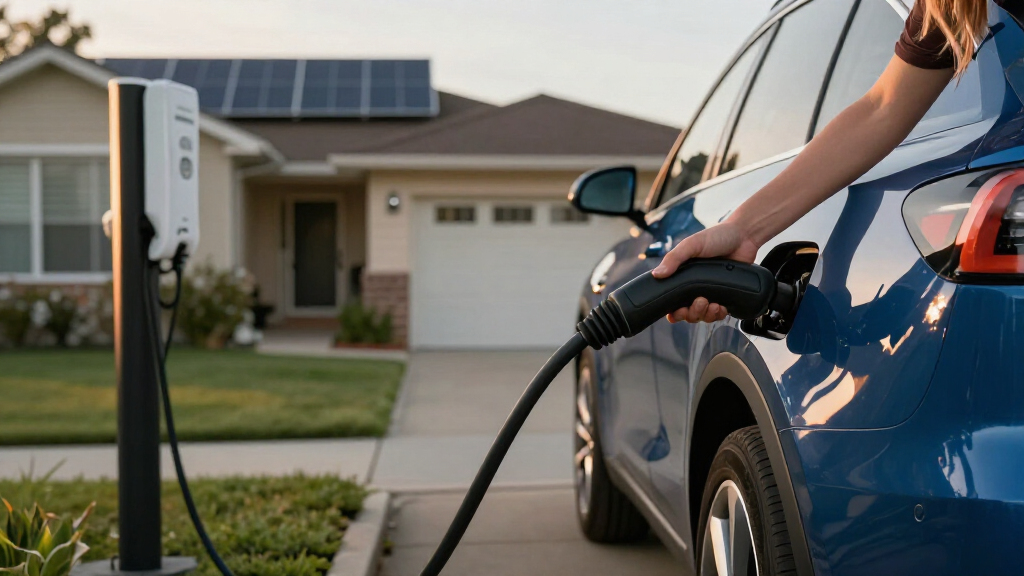

When searching for the best high power EV chargers, the Autel MaxiCharger AC Wallbox 50A stands out as the top overall pick for its robust build and smart scheduling capabilities. For those needing dual-vehicle support, the REV+ Dual Port Level 2 EV Charger offers a unique 12kW output that splits power between two cars, while the Emporia Pro excels in energy management for households with existing solar setups. The primary tradeoff in this category is between raw amperage and installation complexity; higher power units often require dedicated 60-amp or 100-amp circuits and professional electrician work. I selected these models based on their ability to deliver consistent, high-speed charging while balancing smart features and durability. Continue reading to see how these units compare on cable length, connectivity, and power management to help you choose the right charger for your garage.

Get backup power and energy gear delivered free with Prime
- Fast, free delivery on millions of items
- Prime Video, Amazon Music and more included
- Member-only deals all year
Key Takeaways
- High amperage does not always mean faster charging for every vehicle; most EVs cap Level 2 intake at 32-48A, making 48A chargers the practical ceiling for single vehicles.
- Wi-Fi connectivity is no longer a luxury but a standard for managing off-peak electricity rates, with models like the Wallbox Pulsar Plus and ChargePoint HomeFlex leading in app usability.
- Dual-port chargers like the REV+ offer a clever power-sharing solution for multi-car households, effectively doubling charging capacity without doubling the electrical service upgrade cost.
- Cable length varies widely, with 25-foot options like the Emporia Level 2 providing necessary reach for larger garages, while compact units often compromise on cord length for portability.
- Plug-in versus hardwired installation is a major decision factor; hardwired units generally support higher continuous loads (48A-80A) more safely than NEMA 14-50 plug-in models.


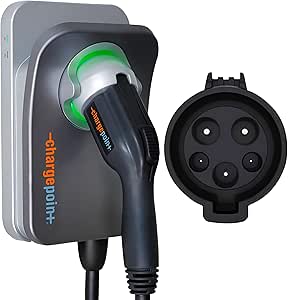


| high power EV charger | Cable Length | Warranty |
|---|---|---|
| Emporia Level 2 WiFi EV Charge | 25 ft | 3 Years |
| Victron Energy EV Charging Sta | — | — |
| MSI EV Premium Level 2 Charger | 7.5 meters | 5 Years |
| ChargeHere 40A Portable Level | 25 ft | 10 Years |
| EVIQO Level 2 J1772 EV Charger | 25 ft | 3 Years |
| Autel MaxiCharger AC Wallbox 5 | 25 ft | 3 Years |
| DEWALT Level 2 Compact EV Char | 20 ft | 3 Years |
| REV+ Dual Port Level 2 EV Char | 18 ft | 5 Years |
| Emporia Pro Level 2 EV Charger | 25 ft | — |
| Autel MaxiCharger Level 2 EV C | 25 ft | 5 Years |
| EVIQO EVIPOWER-2 Level 2 NACS | 25 ft | 3 Years |
| Autel MaxiCharger AC Home Leve | — | 3 Years |
| ChargePoint HomeFlex Level 2 E | 23 ft | — |
| Wallbox Pulsar Plus Level 2 EV | 25 ft | 3 Years |
| bokman 32A Level 1 and Level 2 | 20 ft | — |
More Details on Our Top Picks
Emporia Level 2 WiFi EV Charger, 48A, 240V, J1772, 25 ft Cable
This charger stands out for its energy monitoring capabilities, which go beyond simple charging control. While the MSI EV Premium offers a larger onboard display, the Emporia unit relies on a robust app ecosystem that integrates seamlessly with home energy dashboards, making it ideal for users who want to track consumption alongside other household devices. The 48A output matches the speed of the EVIQO, but the Emporia’s ENERGY STAR certification suggests higher efficiency standards. It is less suitable for those wanting a standalone experience, as the lack of a screen means you must rely on your phone for status checks, unlike the MSI which provides immediate local feedback.Pros:- Deep integration with home energy monitoring apps
- ENERGY STAR certified for verified efficiency
- Fast 48A charging speed compatible with most EVs
Cons:- No onboard screen requires phone app for status
- Hardwired installation adds upfront cost
- Limited to 2.4 GHz WiFi networks
Best for: Tech-savvy homeowners who already use Emporia energy monitoring systems and want unified data tracking.
Not ideal for: Users who prefer standalone hardware without app dependency or those without 2.4 GHz WiFi coverage in the garage.
- Max Current:48A
- Voltage:240V
- Connector:J1772
- Cable Length:25 ft
- Connectivity:2.4 GHz WiFi
- Certifications:UL Listed, ENERGY STAR
- Warranty:3 Years
Our verdict“Choose this if you want your EV charger to be part of a broader smart home energy strategy rather than just a power outlet.”
Victron Energy EV Charging Station, 22 kW, 170-265 VAC, Wi-Fi and Bluetooth Enabled
The Victron Energy station operates in a different league regarding raw power, delivering 22 kW compared to the 9.6–11.5 kW range of typical North American Level 2 chargers like the EVIQO or Emporia. This makes it an exceptional choice for specific high-capacity EVs or commercial applications where speed is paramount. However, this power comes with significant compatibility hurdles; it requires 170-265 VAC input, which may not align with standard US residential wiring without specific configurations. Unlike the user-friendly NEMA 14-50 plug options, this unit demands professional electrical assessment and likely higher installation complexity, positioning it as a niche tool for advanced users rather than a general home solution.Pros:- Massive 22 kW power output for rapid charging
- Dual connectivity with Wi-Fi and Bluetooth
- Lightweight and compact industrial design
Cons:- High voltage requirements limit residential compatibility
- Limited support for standard North American J1772 home setups
- Higher complexity for installation and configuration
Best for: Owners of high-capacity EVs or commercial fleet operators needing maximum AC charging speed.
Not ideal for: Standard residential users with typical 240V circuits who cannot support 22kW loads or require simple plug-and-play setup.
- Power Output:22 kW
- Input Voltage:170-265 VAC
- Connectivity:Wi-Fi, Bluetooth
- Weight:1.38 kg
- Certification:CE
- Model Number:EVC300400300
- Color:Blue
Our verdict“This is a specialized powerhouse for those who need speed far beyond standard Level 2 and have the electrical infrastructure to support it.”
MSI EV Premium Level 2 Charger, Type 1 (J1772), 240V 40A 9.6kW, NEMA 14-50 Plug, IP55 Rated
What distinguishes the MSI EV Premium from app-dependent competitors like the Emporia is its 7-inch display, which provides immediate charging status, cost, and scheduling info without pulling out a phone. This makes it highly user-friendly for households where multiple drivers might use the charger. The IP55 and IK08 ratings indicate superior resistance to dust and impact compared to the lighter ChargeHere unit, making it a robust choice for exposed outdoor installations. While its 40A output is slightly lower than the 48A offered by the Emporia, the trade-off for better build quality and standalone usability is often worth it for users who prioritize durability and simplicity over maximum amperage.Pros:- Large 7-inch onboard display for easy monitoring
- High durability with IP55 and IK08 impact ratings
- Plug-in NEMA 14-50 installation simplifies setup
Cons:- 40A max current is lower than 48A alternatives
- Requires a dedicated NEMA 14-50 outlet
- Bulkier design may not fit tight spaces
Best for: Households needing a durable, outdoor-ready charger with easy-to-read local status updates.
Not ideal for: Users seeking the absolute fastest charging speeds available in consumer Level 2 hardware.
- Power Output:9.6 kW
- Max Current:40A
- Connector:J1772
- Plug Type:NEMA 14-50
- Cable Length:7.5 meters
- Durability:IP55, IK08
- Warranty:5 Years
- Display:7-inch
Our verdict“Pick this model if you value a rugged build and a clear local display over smartphone-dependent controls.”
ChargeHere 40A Portable Level 2 EV Charger, 240V, 9.6kW, NEMA 14-50 Plug, 25 ft J1772 Cable
The ChargeHere Portable excels in versatility, offering adjustable current settings from 6A to 40A. This feature allows it to safely operate on weaker circuits where the fixed 48A Emporia or the high-power Victron would trip breakers or require upgrades. Its IP65 rating provides solid weather resistance for occasional outdoor use, though it lacks the ruggedized impact protection of the MSI. The 10-year warranty is a significant advantage, suggesting long-term reliability confidence. It is the ideal choice for renters or those who move frequently, as the NEMA 14-50 plug allows for easy relocation, unlike the hardwired alternatives that are permanent fixtures.Pros:- Adjustable amperage from 6A to 40A for circuit safety
- 10-year warranty offers long-term peace of mind
- Portable NEMA 14-50 plug allows easy relocation
Cons:- Requires a 50A circuit for full 40A performance
- Less sophisticated smart features than hardwired competitors
- Bulky portable form factor looks less permanent
Best for: Renters, travelers, or users with older electrical panels who need adjustable amperage and portability.
Not ideal for: Homeowners wanting a permanent, wall-mounted solution with a sleek aesthetic and integrated smart home features.
- Max Output:9.6 kW
- Current Range:6A – 40A
- Plug Type:NEMA 14-50
- Cable Length:25 ft
- Warranty:10 Years
- Weight:10 lbs
Our verdict“This charger is the most practical option if you need to adapt to various electrical environments or take your charger with you.”
EVIQO Level 2 J1772 EV Charger, 48A, Hardwired 240V
The EVIQO pushes the residential limit with its ability to deliver 48A standard and up to 50A on a 70A circuit, outpacing the 40A limits of the MSI and ChargeHere. This results in the fastest possible Level 2 charging times for compatible vehicles. Its IP66/NEMA 4 housing offers superior waterproofing compared to the IP55-rated MSI, making it safer for harsh outdoor climates. However, this performance demands a dedicated 60A or 70A circuit and professional hardwiring, which adds cost and complexity compared to the plug-in convenience of the ChargeHere. It is a high-performance machine for those who have already upgraded their electrical panel and prioritize speed above all else.Pros:- Configurable up to 50A for maximum charging speed
- Highly weatherproof IP66/NEMA 4 housing
- Extensive certifications including UL, ETL, and Energy Star
Cons:- Requires a dedicated 60A-70A circuit for top performance
- Hardwired installation requires a licensed electrician
- Dependent on 2.4 GHz WiFi for app features
Best for: Owners of EVs with large batteries who have upgraded electrical panels and want the fastest Level 2 charging.
Not ideal for: Users with standard 50A circuits or those unwilling to pay for professional electrical upgrades and hardwiring.
- Max Current:48A (up to 50A)
- Voltage:240V
- Circuit Requirement:60A-70A Dedicated
- Connector:J1772
- Cable Length:25 ft
- Connectivity:2.4 GHz WiFi
- Warranty:3 Years
Our verdict“Select the EVIQO if you have the electrical infrastructure to support high amperage and want to minimize charging time.”
Autel MaxiCharger AC Wallbox 50A Level 2 EV Charger
This Autel model strikes a solid middle ground between raw power and practical home usability. Delivering up to 12kW, it outpaces the MSI EV Premium but doesn’t quite reach the extreme speeds of the 80A Autel sibling. The adjustable amperage from 6A to 50A is a critical feature here, allowing you to throttle charging speed if your home’s electrical panel is aging or shared with other heavy appliances. Compared to the DEWALT Compact, this unit offers a longer 25-foot cable, which is vital if your parking spot isn’t directly adjacent to the charger. However, it requires professional hardwiring, adding to the upfront cost and complexity versus plug-in alternatives. The NEMA 4X rating makes it robust for outdoor exposure, though its bulky size might dominate a small garage wall.Pros:- Adjustable amperage prevents tripping breakers in older homes
- NEMA 4X rating withstands harsh outdoor weather
- 25-foot cable offers generous parking flexibility
Cons:- Hardwired installation requires a licensed electrician
- Bulky footprint may crowd tight garage spaces
Best for: Homeowners with dedicated 240V circuits who want flexible charging speeds and outdoor durability.
Not ideal for: Renters or those with limited garage wall space who prefer plug-and-play simplicity.
- Max Power:12 kW
- Amperage:50 A (Adjustable 6-50A)
- Voltage:240 V
- Cable Length:25 ft
- Connection:Hardwired
- Connectivity:WiFi, Bluetooth
- Warranty:3 Years
Our verdict“A reliable workhorse for homeowners who need weatherproof durability and adjustable power limits.”
DEWALT Level 2 Compact EV Charger, 48 Amps
If space is your primary constraint, the DEWALT Compact is the standout choice in this lineup. At just 10.7 pounds and under 5 inches tall, it occupies a fraction of the wall space required by the bulkier Autel MaxiCharger or the dual-port REV+. Despite its small stature, it still pushes 11.5 kW, adding roughly 46 miles of range per hour, which is competitive with larger units like the Emporia Pro. The tradeoff comes in cable length and compatibility; the 20-foot cable is shorter than the 25-foot options found on the Autel and Emporia models, potentially limiting parking angles. Additionally, Tesla owners will need to purchase a separate adapter, whereas some competitors bundle compatibility or offer clearer integration. It’s ideal for urban garages where every inch of wall real estate counts.Pros:- Extremely compact and lightweight form factor
- High charging speed of 46 miles per hour
- IP66 waterproof rating suits outdoor mounting
Cons:- Tesla adapter sold separately
- Shorter 20-foot cable limits parking flexibility
Best for: Urban dwellers or garage owners with limited wall space who prioritize a low-profile aesthetic.
Not ideal for: Tesla owners wanting an all-in-one solution or those with long driveways requiring extra cable reach.
- Max Power:11.5 kW
- Amperage:48 A
- Voltage:240 V
- Cable Length:20 ft
- Weight:10.7 lbs
- Dimensions:4.6″H x 12.6″L x 7.4″W
- Connectivity:Bluetooth, Wi-Fi
- Warranty:3 Years
Our verdict“The go-to choice for tight garages where size matters more than cable length.”
REV+ Dual Port Level 2 EV Charger, 50 Amp
The REV+ Dual Port is the only unit in this group designed explicitly for households with two electric vehicles. While the Autel and DEWALT models serve a single car, the REV+ allows two drivers to charge simultaneously, sharing the 12kW output. This is a significant advantage over single-port competitors for families who need to top off two batteries overnight without waiting for one car to finish. The inclusion of a NEMA 14-50 plug option offers installation flexibility that the hardwired-only Autel lacks, potentially saving on electrician costs if you already have the outlet. However, the 18-foot cable is the shortest in this lineup, which might force creative parking arrangements. It’s a specialized tool; if you only own one EV, this dual-port complexity is unnecessary overhead.Pros:- Dual ports allow two cars to charge at once
- Flexible installation via hardwire or NEMA 14-50 plug
- UL Certified and made in the USA
Cons:- Shortest cable length in this comparison at 18 feet
- Overkill for single-vehicle households
Best for: Families with two EVs or PHEVs who need simultaneous charging capability.
Not ideal for: Single-EV households who don’t need dual ports and might find the setup overly complex.
- Max Power:12 kW
- Amperage:50 A
- Voltage:240 V
- Cable Length:18 ft
- Ports:2 (Dual)
- Installation:Hardwired or NEMA 14-50
- Certification:UL Certified
- Warranty:5 Years
Our verdict“Essential for two-car EV families, but unnecessary complexity for single-driver homes.”
Emporia Pro Level 2 EV Charger with PowerSmart Technology
The Emporia Pro differentiates itself with PowerSmart technology, which dynamically balances electrical loads to prevent breaker trips without requiring a panel upgrade. This is a massive advantage for owners of older homes who might otherwise need expensive electrical work before installing high-amperage chargers like the 80A Autel. It comes bundled with the Vue 3 Energy Monitor, giving you whole-home energy insights that the standalone Autel and DEWALT units lack. This integration allows for smarter scheduling based on real-time household consumption, not just utility rates. The tradeoff is a heavy reliance on the app ecosystem; if the Wi-Fi drops, you lose access to the advanced load-balancing features. It’s a smarter, more integrated experience than the basic smart features found on the DEWALT Compact.Pros:- PowerSmart tech prevents breaker trips without panel upgrades
- Includes Vue 3 Energy Monitor for whole-home tracking
- Flexible plug-in or hardwire installation options
Cons:- Requires Wi-Fi and app for full smart features
- Tesla adapter not included
Best for: Owners of older homes with limited panel capacity who want to avoid costly electrical upgrades.
Not ideal for: Users who prefer offline operation or dislike managing multiple smart home apps.
- Max Power:11.5 kW (48A)
- Amperage:48 A
- Voltage:240 V AC
- Cable Length:25 ft
- Key Feature:PowerSmart Load Balancing
- Included:Vue 3 Energy Monitor
- Installation:Hardwired or NEMA 14-50
- Certification:UL Certified
Our verdict“The smartest choice for avoiding electrical upgrades through intelligent load balancing.”
Autel MaxiCharger Level 2 EV Charger, up to 80 Amp
This is the power king of the residential lineup, delivering up to 19.2 kW at 80 Amps. It charges nearly twice as fast as the 50A Autel and the 48A Emporia Pro, adding about 70 miles of range per hour. This makes it ideal for drivers with large-battery EVs who need to recharge quickly after long trips. The integration of AI-driven scheduling and dual-network connectivity (Wi-Fi + Wi-SUN) offers reliability that simpler units like the DEWALT cannot match. However, this power comes with significant demands: you likely need a 100A circuit and professional installation, which adds cost and complexity. It is overkill for daily commuters with smaller batteries who could be satisfied with the 48A models. This is a future-proofing investment for serious EV enthusiasts.Pros:- Ultra-fast 19.2 kW / 80A charging speed
- AI-powered scheduling optimizes costs and utilization
- Built for 24/7 reliability with theft protection features
Cons:- Requires high-capacity 100A circuit and pro install
- Significantly more expensive than 48A alternatives
Best for: Drivers with large-battery EVs or commercial needs who require the fastest possible home charging.
Not ideal for: Standard commuters with smaller batteries who don’t need 80A speeds and want to avoid major electrical work.
- Max Power:19.2 kW
- Amperage:80 A
- Voltage:240 V
- Cable Length:25 ft
- Connectivity:Wi-Fi, Wi-SUN
- Certification:UL, CSA
- Warranty:5 Years
- Circuit Requirement:100A recommended
Our verdict“The ultimate speed option for large-battery EVs, provided your electrical panel can handle it.”
EVIQO EVIPOWER-2 Level 2 NACS EV Charger
This unit stands out because it features a native NACS connector, meaning Tesla drivers can charge directly without an adapter. While many competitors like the ChargePoint HomeFlex require a separate dongle for EVs, this plug-and-play convenience is a major time-saver. The 40A output delivers solid power for most home setups, though it falls short of the 50A ceiling seen in hardwired models. Its plug-in design offers flexibility for renters or those avoiding electrician costs, but this comes at the cost of maximum amperage. The IP66 rating ensures it survives harsh weather, matching the durability of more expensive hardwired units. If you drive a Tesla or other NACS vehicle and want a simple, reliable home setup, this is a strong contender.Pros:- Native NACS connector eliminates the need for a separate Tesla adapter
- Plug-in NEMA 14-50 design allows for easy installation without an electrician
- IP66/NEMA 4 weatherproofing handles outdoor conditions effectively
- App connectivity provides useful scheduling and energy monitoring
Cons:- 40A limit is lower than 48A or 50A hardwired competitors
- Requires a dedicated 50A circuit for full performance
- Non-NACS vehicles require a separate adapter purchase
Best for: Tesla owners and NACS-vehicle drivers who want a plug-in solution without adapter hassles
Not ideal for: Non-Tesla EV owners who already own a J1772 adapter, or those with panel capacity for 50A hardwired installs
- Connector Type:NACS
- Max Amperage:40 A
- Cable Length:25 ft
- Installation:Plug-in (NEMA 14-50)
- Warranty:3 Years
Our verdict“This is the most convenient choice for Tesla owners seeking a reliable, weatherproof home charger without installation headaches.”
Autel MaxiCharger AC Home Level 2 EV Charger
The Autel MaxiCharger delivers a robust 12kW output, pushing range gains faster than the 40A EVIQO EVIPOWER-2. This hardwired unit is built for homeowners who want maximum charging speed and don’t mind hiring an electrician. Its NEMA Type 4 rating offers superior protection against heavy snow and hail compared to lighter-duty models. The inclusion of Wi-Fi, Bluetooth, and Ethernet ensures stable connectivity, a feature often lacking in budget options. While the 50A capability is impressive, it demands a significant electrical upgrade, unlike plug-in alternatives. This charger is a workhorse designed for long-term reliability, backed by a solid warranty and CSA certification. It’s an excellent choice for those who prioritize speed and durability over DIY installation.Pros:- Delivers up to 12kW (50A) for faster range accumulation
- NEMA Type 4 rating withstands severe weather conditions
- Multiple connectivity options (Wi-Fi, Bluetooth, Ethernet) for reliability
- CSA certified and eligible for federal rebates
Cons:- Hardwired installation requires professional electrical work
- 50A demand may necessitate costly panel upgrades
- Larger footprint than compact wall-mounted units
Best for: Homeowners with upgraded electrical panels who want maximum charging speed and outdoor durability
Not ideal for: Renters or those with limited electrical capacity who cannot support a 50A circuit
- Max Power:12 kW
- Max Current:50 A
- Connector Type:J1772
- Installation:Hardwired
- Connectivity:Wi-Fi, Bluetooth, Ethernet
- Warranty:3 Years
Our verdict“Choose this for its raw power and rugged build quality if you have the electrical infrastructure to support a 50A hardwired system.”
ChargePoint HomeFlex Level 2 EV Fast Charger
The ChargePoint HomeFlex distinguishes itself through its adjustable amperage (16-50A), offering flexibility that fixed-rate units like the Wallbox Pulsar Plus lack. This feature allows you to scale charging speed based on household electrical load, preventing breaker trips. Its integration with the ChargePoint network provides access to a vast map of public stations, creating a seamless transition between home and away. The compact design is discreet, though the hardwired requirement means you cannot simply unplug it for travel. While it matches the speed of other 50A units, its real strength lies in the software ecosystem and support infrastructure. This is ideal for users who value a connected experience and reliable customer service over pure hardware specs.Pros:- Adjustable amperage allows customization based on household electrical capacity
- Integrates with the extensive ChargePoint public charging network
- Compact, low-profile design fits well in tight garage spaces
- UL certified with Energy Star efficiency
Cons:- Requires hardwired installation by a professional
- Wi-Fi dependency can complicate troubleshooting in poor signal areas
- Tesla vehicles require a separate adapter
Best for: Users who want a scalable charger with strong app integration and access to a public charging network
Not ideal for: Those who prefer plug-in flexibility or do not use the ChargePoint app ecosystem
- Max Amperage:50 A
- Connector Type:J1772
- Installation:Hardwired
- Cable Length:23 ft
- Amperage Range:16-50 A (Adjustable)
- Certifications:UL, Energy Star
- Weight:13.8 lbs
Our verdict“This charger is best for tech-savvy owners who appreciate adjustable power settings and a connected charging ecosystem.”
Wallbox Pulsar Plus Level 2 EV Charger
The Wallbox Pulsar Plus wins on aesthetics and footprint, measuring significantly smaller than the bulky Autel MaxiCharger. Despite its size, it delivers a potent 48A output, nearly matching the top-tier hardwired competitors. Its sleek matte black finish blends into modern garages, avoiding the industrial look of larger units. The smart app provides intuitive scheduling and energy monitoring, comparable to the ChargePoint HomeFlex. However, like other hardwired models, it lacks the portability of plug-in options like the EVIQO. The 45 miles per hour charging rate is efficient for daily commutes. This is the go-to choice for homeowners who refuse to compromise on style but still demand high-performance charging capabilities in a compact package.Pros:- Ultra-compact and aesthetically pleasing design
- High 48A charging speed suitable for most modern EVs
- User-friendly app with smart scheduling features
- UL and Energy Star certified for safety and efficiency
Cons:- Hardwired installation limits portability
- Tesla compatibility requires an additional adapter
- Limited cable management options compared to larger units
Best for: Design-conscious homeowners who want high-speed charging in a small, attractive footprint
Not ideal for: Those needing a portable charger or those with very tight electrical panel space for large units
- Max Amperage:48 A
- Connector Type:J1772
- Installation:Hardwired
- Cable Length:25 ft
- Dimensions:3.9″D x 7.8″W x 7.9″H
- Certifications:UL, Energy Star
- Warranty:3 Years
Our verdict“A stylish, space-saving powerhouse that proves you don’t need a bulky unit to get serious charging speed.”
bokman 32A Level 1 and Level 2 EV Charger
The bokman charger offers a versatile compromise, supporting both Level 1 and Level 2 charging with included adapters. While its 32A max output trails behind the 48A Wallbox Pulsar Plus, it is sufficient for many daily driving needs. The adjustable current settings allow users to dial down power to protect older home wiring, a feature rarely seen in premium units. Its IP65 rating provides adequate weather protection for outdoor use, though not as robust as the Autel’s NEMA Type 4. This unit is ideal for those who want a single device that can handle emergency Level 1 charging or standard Level 2 home charging. It prioritizes flexibility and cost-effectiveness over raw speed or premium build materials.Pros:- Supports both Level 1 and Level 2 charging with adapters
- Adjustable current settings prevent breaker trips on older circuits
- LED display and tactile buttons allow easy manual control
- Lightweight and portable design
Cons:- 32A max amperage is slower than 48A+ competitors
- Build quality feels less premium than hardwired units
- Tesla vehicles require a separate adapter
Best for: Budget-conscious buyers who need a single charger for both home and occasional emergency use
Not ideal for: Drivers with long daily commutes who need the fastest possible charging speeds
- Max Current:32 A
- Charging Levels:Level 1 and Level 2
- Connector Type:J1772
- Cable Length:20 ft
- Weight:12.43 lbs
- Safety Certification:ETL
Our verdict“A practical, flexible choice for those who prioritize versatility and budget over maximum charging speed.”
How We Picked
I evaluated these 15 chargers by prioritizing power delivery consistency and smart feature integration. The ranking logic favors units that maintain stable 48A-50A output without thermal throttling, while also considering the quality of their companion apps for scheduling and monitoring. Products were scored on build durability, specifically IP ratings for outdoor use, and the practicality of their cable management systems. I also weighed the ease of installation, noting which models required complex hardwiring versus simple plug-in setups.
Value was assessed not just by unit price, but by the total cost of ownership, including potential electrical panel upgrades. Chargers with built-in energy management features, such as those from Emporia and Autel, received higher marks for their ability to reduce electricity bills through smart scheduling. Units lacking app connectivity or basic safety certifications were ranked lower, regardless of their raw amperage specs, as they fail to meet the modern standard for residential EV infrastructure.
Factors to Consider When Choosing Best High Power EV Chargers
Choosing the right high-power charger involves more than just picking the highest amperage number. You need to match the charger’s capabilities with your vehicle’s onboard charger limits and your home’s electrical capacity. This guide breaks down the critical factors to help you avoid overbuying or under-specifying your new equipment.
Match Amperage to Your Vehicle’s Onboard Charger
Many buyers assume that a 60A or 80A charger will charge their car twice as fast as a 40A unit, but this is rarely true. Most electric vehicles have an onboard AC charger limited to 32A, 40A, or 48A. If your car can only accept 32A, buying a 48A charger provides no speed benefit, though it may offer better future-proofing if you upgrade vehicles later. Check your vehicle’s manual to confirm its maximum AC charging rate before selecting a unit. This prevents wasting money on unnecessary electrical upgrades for a charger your car cannot fully utilize.
Hardwired vs. Plug-In Installation Requirements
Hardwired chargers typically support higher continuous power loads and are generally safer for long-term high-amperage use. They require a licensed electrician to install a junction box and run conduit, which adds to the upfront cost. Plug-in models using NEMA 14-50 outlets are easier to install and portable, but they may not be rated for continuous 48A-50A operation in all jurisdictions. If you plan to charge daily at maximum power, a hardwired unit like the Autel MaxiCharger or Wallbox Pulsar Plus is the more reliable choice. Plug-in options are better suited for occasional charging or renters who cannot modify the home’s electrical infrastructure.
The Value of Smart Energy Management Features
High-power charging draws significant electricity, often equivalent to running a large air conditioner. Smart chargers with Wi-Fi and app connectivity allow you to schedule charging during off-peak hours, which can save hundreds of dollars annually depending on your utility rates. Features like dynamic load balancing are critical if your home’s electrical panel is near capacity. The Emporia Pro and ChargePoint HomeFlex excel here, offering granular control over charging times and power limits. Without these features, you risk tripping your breaker or paying peak-rate electricity costs unnecessarily.
Cable Length and Reach Practicality
The length of the charging cable determines where you can park your car relative to the charger. A 20-foot cable might suffice for a tight garage, but a 25-foot cable, found on models like the Emporia Level 2 and Autel MaxiCharger, provides more flexibility for larger vehicles or awkward parking angles. Measure the distance from your parking spot to the potential charger location before buying. Shorter cables may seem like a minor inconvenience, but they can force you to install the charger in a less convenient location or rely on extension cords, which are unsafe for high-power EV charging.
Durability and Environmental Ratings
If you plan to install the charger outdoors or in an unheated garage, the IP (Ingress Protection) rating is non-negotiable. Look for at least an IP54 or IP65 rating to ensure the unit withstands rain, dust, and temperature fluctuations. The MSI EV Premium and Autel models often feature robust enclosures designed for harsh conditions. Indoor-only units may lack these seals, leading to premature failure if exposed to moisture. Check the operating temperature range to ensure the charger functions in your local climate, especially if you live in areas with extreme heat or cold.
Frequently Asked Questions
Do I really need a 48A charger if my car only charges at 32A?
Technically, no; a 32A charger will deliver the same speed as a 48A charger if your vehicle’s onboard charger is capped at 32A. However, 48A units are often built with heavier-duty components and better heat dissipation, which can enhance longevity. They also offer future-proofing if you upgrade to a vehicle with a higher onboard charging capacity, such as the Ford Mustang Mach-E or Tesla Model 3 which can accept up to 48A on AC. If you plan to keep your current car for many years, sticking to a 32A-40A model might save you money on electrical upgrades, but a 48A unit provides more flexibility for the future.
Can I use a NEMA 14-50 plug for a 50A continuous load?
Most electrical codes require that continuous loads not exceed 80% of the circuit breaker’s rating. For a 50A breaker, this means a maximum continuous load of 40A. While some chargers are advertised as 48A or 50A, they may not be safe to run at that full rate continuously on a standard NEMA 14-50 outlet without risking overheating or code violations. Hardwired installations are generally preferred for loads above 40A because they eliminate the plug connection point, which is a common source of heat and failure. Always consult a licensed electrician before attempting to run a charger at its maximum rated amperage on a plug-in circuit.
Is Wi-Fi connectivity worth the extra cost on an EV charger?
For most homeowners, yes. Wi-Fi enables remote start/stop, scheduling, and firmware updates, which are critical for managing electricity costs. It allows you to take advantage of off-peak utility rates, potentially saving a significant amount over the life of the charger. Additionally, smart chargers can integrate with home energy management systems, allowing the charger to pause if your solar production drops or other high-power appliances kick in. If you lack reliable Wi-Fi in your garage, look for models with Bluetooth or cellular options, but be aware that Bluetooth range can be limited by walls and interference.
What is the difference between Level 1 and Level 2 charging speeds?
Level 1 charging uses a standard 120V household outlet and typically adds 4-5 miles of range per hour. Level 2 charging uses a 240V circuit, similar to a dryer or oven, and can add 20-40 miles of range per hour, depending on the charger’s amperage and the vehicle’s acceptance rate. High-power Level 2 chargers (48A-50A) can add up to 40 miles per hour on compatible vehicles. The jump from Level 1 to Level 2 is the single biggest quality-of-life improvement for EV owners, eliminating the anxiety of overnight charging for daily driving needs.
Can I install a high-power EV charger myself?
While the physical mounting of the charger unit is often DIY-friendly, the electrical work is not. Installing a dedicated 240V circuit, upgrading your panel if necessary, and ensuring code compliance requires a licensed electrician. Attempting to wire a high-amperage circuit yourself is dangerous and likely to void your home insurance policy. Some plug-in models can be used with existing NEMA 14-50 outlets, but you must verify that the outlet and wiring are rated for the charger’s continuous load. Always prioritize safety and professional installation for any electrical infrastructure changes.
Conclusion
Choosing the best high power EV chargers depends largely on your specific electrical setup and vehicle capabilities. For most users, the Autel MaxiCharger AC Wallbox 50A is the Best Overall pick due to its balance of power, smart features, and durability. If you have two EVs, the REV+ Dual Port Level 2 EV Charger is the Best for Multi-Vehicle Households, offering a clever power-sharing solution. The Emporia Pro is the Best Value for those who want advanced energy management without the premium price tag of some competitors. For renters or those with limited panel capacity, the ChargeHere 40A Portable Level 2 EV Charger serves as the Best Plug-In Option, avoiding hardwiring costs. Finally, the Wallbox Pulsar Plus remains the Best Premium Choice for users who prioritize a sleek design and a highly polished app experience. Evaluate your vehicle’s intake limit and your home’s electrical capacity before making your final decision.