TL;DR

Get backup power and energy gear delivered free with Prime
- Fast, free delivery on millions of items
- Prime Video, Amazon Music and more included
- Member-only deals all year
Mitsubishi Heavy Industries is expanding sales of its ETI-W high-temperature centrifugal heat pump beyond Japan. The system uses waste heat to produce hot water at up to 90°C; MHI reports a heating COP of 4.01, but has not specified overseas launch markets or a rollout schedule.
Mitsubishi Heavy Industries is expanding overseas sales of its ETI-W centrifugal heat pump, a system designed to recover low-temperature industrial waste heat and supply hot water at up to 90°C. The move extends a product already available in Japan to international markets, though MHI has not identified specific countries or a sales timetable.
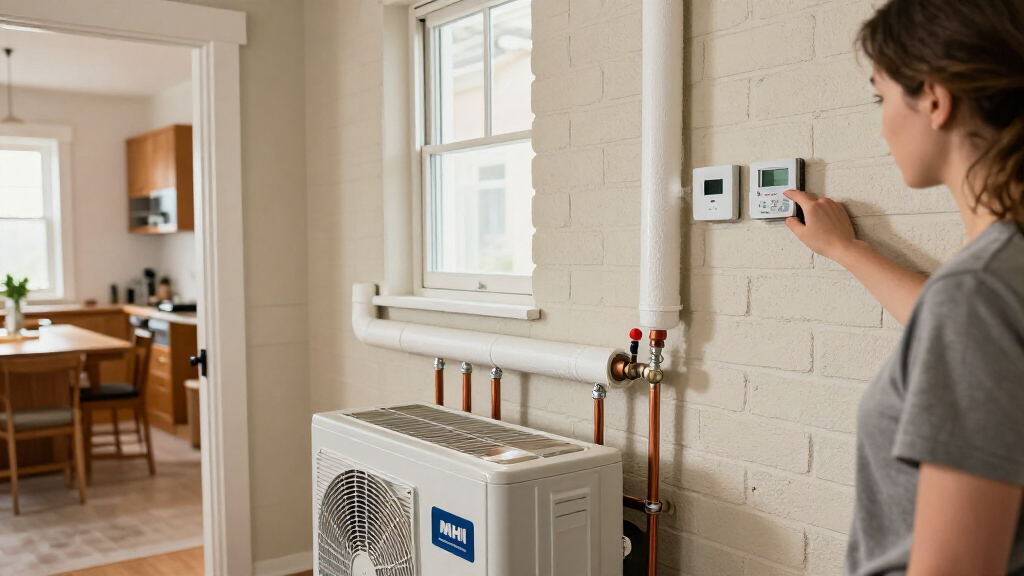
The ETI-W is a heat-recovery heat pump that uses HFO-1233zd(E) refrigerant. It is designed to capture low-temperature waste heat from factory production processes and upgrade that heat to produce hot water. Its maximum heating capacity is 640 kW, according to the report by Cooling Post.
MHI says the unit achieved a heating coefficient of performance (COP) of 4.01 while supplying water at temperatures up to 90°C. COP compares heat output with energy input under specified operating conditions; the report does not provide the testing conditions or further performance data for that figure.
The company plans to target process applications in electronics, automotive, food, chemical and pharmaceutical factories. It also identifies commercial and accommodation facilities as potential users, where the system could support heating and hot-water supply. MHI Thermal Systems says it will tailor thermal solutions to each customer’s site and requirements.
Waste Heat for Industrial Hot Water
The overseas expansion could give factories and other large facilities another option for using heat that would otherwise be rejected by production equipment. If a site has a suitable waste-heat source and demand for high-temperature water, recovering that heat may reduce reliance on separate heat-producing equipment. The actual energy and cost effects will depend on operating conditions, system design and the electricity used by the heat pump.
MHI also points to possible integration with existing chillers. At facilities equipped with a chiller, the ETI-W can be configured to recover heat held in the chiller’s cooling water and reuse it as high-temperature water, the company says. The proposed application matters because it could connect cooling and heating loads rather than treating them as separate needs.
Data centres are another potential use mentioned by MHI: the unit could use heat from the facility as a source for heating and hot-water demand. That is a stated application possibility, not confirmation of a specific installation or measured savings. The overseas sales move may broaden access to the technology, but its practical reach will depend on local availability and the suitability of individual sites.
high temperature heat pump for industrial use
As an affiliate, we earn on qualifying purchases.
As an affiliate, we earn on qualifying purchases.
From Japan to Overseas Sales
The ETI-W was available in Japan from 2025, according to Cooling Post. The report described the product as a centrifugal heat pump developed for the Japanese market that can use waste heat to provide water at up to 90°C. MHI’s current step is to expand sales beyond that domestic market.
The product’s design links heat recovery with high-temperature water production. This is relevant to industrial processes and buildings that need hot water, but the report does not say that every factory or facility will be a suitable installation. Heat source temperature, heat demand, existing equipment and site-specific engineering all affect how a system can be configured.
MHI Thermal Systems says it will propose solutions based on each customer’s circumstances. The report identifies potential sectors and system arrangements, but does not name overseas customers, completed installations, sales targets or countries where the ETI-W will first be offered.
“It will offer thermal solutions according to the specific circumstances for each customer.”
— MHI Thermal Systems, as reported by Cooling Post
Markets and Performance Details
The available report does not specify which overseas markets will receive the ETI-W first, when sales will begin in each market, or whether the expansion includes local manufacturing, distribution or service arrangements. It also gives no pricing, order figures, sales targets or confirmed overseas installations.
The reported COP of 4.01 is not accompanied by test conditions, a comparison with other systems, or information about performance across different operating temperatures and loads. MHI’s proposed uses in factories, commercial buildings and data centres are applications the company identifies; the source does not confirm that installations in those settings are already operating overseas or quantify energy, emissions or cost savings.
Overseas Rollout Details to Follow
The next developments to watch are MHI’s identification of target countries, the timing of commercial availability and any announcements of local partners or customer projects. Those details would clarify how quickly buyers outside Japan can obtain and service the equipment.
More technical information would also help customers assess whether the ETI-W fits their sites, including performance data under stated operating conditions and details of integration with existing chillers or process equipment. For now, the confirmed development is the expansion of overseas sales; the rollout schedule and results from international deployments remain unreported.
Key Questions
What is Mitsubishi Heavy Industries expanding overseas?
MHI is expanding sales of its ETI-W centrifugal heat pump, designed to recover waste heat and produce high-temperature hot water.
How hot can the ETI-W make water?
The system is designed to supply hot water at up to 90°C, according to Cooling Post.
What is the ETI-W’s reported heating performance?
MHI reports a COP of 4.01 during heating at water-supply temperatures up to 90°C. The source does not provide the test conditions for that figure.
Which facilities could use the heat pump?
MHI identifies factories in electronics, automotive, food, chemical and pharmaceutical sectors, along with commercial and accommodation facilities. It also describes potential use of recovered heat at data centres.
When and where will overseas sales begin?
The report does not name the first overseas markets or give a launch schedule. It says the ETI-W has been available in Japan since 2025 and that MHI is expanding sales internationally.
Source: rss
Halloween Picks
halloween
As an affiliate, we earn on qualifying purchases.