TL;DR

Get backup power and energy gear delivered free — and shop member deals
- Fast, free delivery on millions of items
- Access to Prime Big Deal Days deals on October 6–7
- Prime Video, Amazon Music and more included
Solar-powered outdoor string lights use a small panel to charge a rechargeable battery, which powers LED bulbs after dark. They work best when the panel gets several hours of direct daylight, but runtime varies with shade, season, brightness, and battery age. Choose them for atmosphere, check the weather rating and panel-cable length, and use separate fixtures when you need strong task or security lighting.
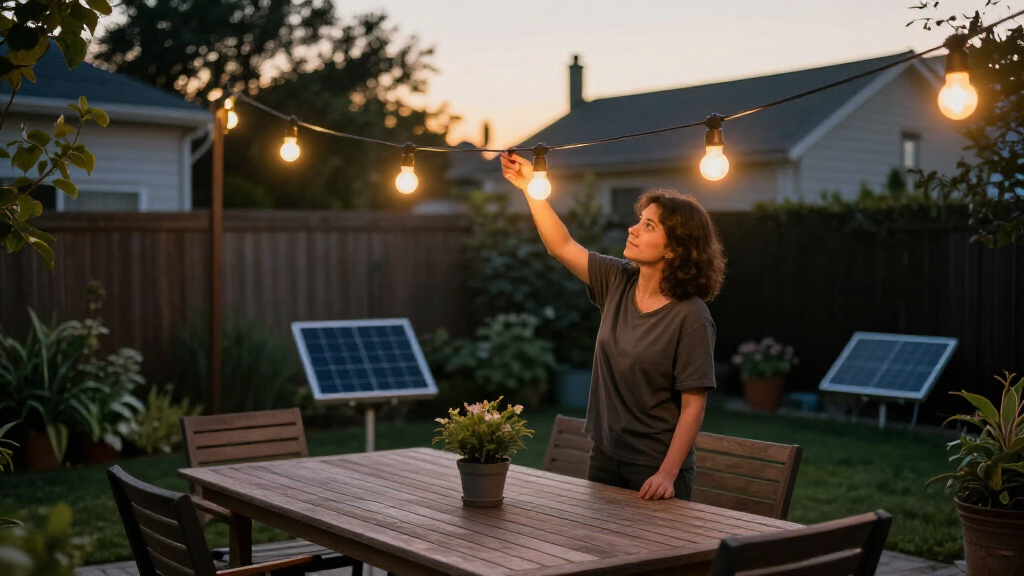
A patio can look magical at dusk and feel oddly gloomy ten minutes later. Solar-powered outdoor string lights offer a simple fix without running an extension cord across the lawn or adding an outdoor outlet.
They are not magic, though. Their glow depends on how much daylight reaches the panel, how the battery is charged, and what you expect the bulbs to do. In this guide, you’ll learn how the system works, where to hang it, what the product specs really tell you, and how to keep the lights going through changing weather.
That distinction matters: a warm string of bulbs can make dinner on the patio feel welcoming, but it usually won’t light every step across a dark yard. A few practical checks before you buy can save you from a lovely-looking set that fades before dessert.
Place the solar panel in the sun; many models let you mount it separately from the shaded string.
Treat advertised runtime as an estimate that changes with charging, brightness, season, and battery age.
Use solar string lights for atmosphere and add a brighter fixture for task lighting, steps, or security.
Check that the outdoor rating covers the panel, controller, cable, and bulbs, then follow the maker’s weather guidance.
Measure the strand route and panel lead before buying, and keep cables secured and out of walkways.
How solar string lights turn daylight into evening glow
Solar-powered outdoor string lights use a small photovoltaic panel to charge a rechargeable battery during daylight, then draw battery power to run LED bulbs after dark. Many models use a light sensor or a controller to switch on at dusk, so you get decorative light without plugging the strand into a nearby outlet.
Think of the panel as a tiny daytime pantry: it stores energy for later, and the battery is the shelf where that energy waits. At dusk, the controller opens the pantry and sends power to the bulbs. In a typical set, a light sensor or built-in controller handles the switch, though you may still need to press an on button or choose a lighting mode first.
For example, you might hang the strand along a balcony railing and mount the panel on the sunny side of the railing. The bulbs can glow above your chairs even if the nearest outlet is inside. Some recent sets add USB backup charging, remote controls, or several brightness modes, but these extras vary by model and should not be assumed to come standard.
The main tradeoff is straightforward: no outlet is needed, but performance depends on daylight and panel placement. LEDs help because they use relatively little power compared with incandescent bulbs, stretching the battery’s stored charge. Still, the controller, battery size, and operating mode all influence how long the lights run.
solar-powered outdoor string lights
As an affiliate, we earn on qualifying purchases.
As an affiliate, we earn on qualifying purchases.
Put the panel in the sun, even if the bulbs hang in the shade
Solar-powered outdoor string lights charge best when their panel receives several hours of direct sunlight, so place the panel where the sun reaches it rather than choosing a spot based only on where you want the bulbs. Shade, cloudy weather, short winter days, and a panel aimed away from the sun can all reduce the evening charge.
Here’s a common patio puzzle: the best place for a strand may be beneath a leafy pergola, while the best place for its panel is on a sunny fence beyond it. Many sets have a separate panel connected by a lead cable, allowing you to split the two locations. Check the cable length and mounting options before buying; a panel that cannot reach the sunny patch does little good.
As a practical starting point, watch the proposed panel location through the day. If a tree’s shadow covers it for most of the afternoon, try a south-facing fence, an open railing, or another spot with stronger sun, following the maker’s placement instructions. You do not need direct sun every moment the lights operate, but more useful daylight generally means a better chance of a longer evening glow.
Cloudy weather does not always stop charging, but diffuse light may produce less energy. Winter can be tougher: the days are shorter and the sun sits lower, so a summer runtime promise may not hold in January. Several hours of direct sun is a helpful goal, not a guarantee; the panel’s angle, local conditions, and surrounding shade all count.
Choose the lights for atmosphere, not whole-yard illumination
Solar-powered outdoor string lights are usually best for gentle ambient lighting, not for lighting an entire yard or serving as security fixtures. Compare the stated lumen output, bulb spacing, and brightness controls if you need to see food, steps, or a work surface clearly.
Picture a small dinner table under warm-white bulbs: the soft pools of light make faces and plates visible and give the patio a relaxed feel. That is a natural job for string lights. If you need to read fine print, chop vegetables, or spot a loose step at the far edge of the garden, add a brighter task or path light rather than expecting one decorative strand to do everything.
Lumens describe light output, but the experience also depends on spacing and direction. A strand with widely spaced bulbs can leave darker gaps, while more closely spaced bulbs may look more even across a railing. Warm-white light often feels cozy; cooler shades can appear crisper. More flashing modes do not mean better everyday lighting, so check whether the set offers a steady setting and useful dimming.
Compare the whole setup, not one attractive number. A high-output setting can drain the battery faster, while a lower setting may stretch the evening. For example, if you host late dinners, a dimmable strand may let you use a brighter setting at the table and a softer one after the meal. Ambient light and task light serve different jobs; pairing fixtures often gives you a more useful space than asking one set to do both.
Read runtime claims as estimates, not promises
A solar string light’s runtime depends on battery capacity, how fully it charged, the brightness setting, operating mode, and battery age. Treat a manufacturer’s quoted runtime as an estimate under particular conditions, not a promise that the bulbs will stay equally bright every night.
Imagine two neighbors buying the same set. One puts the panel in open afternoon sun and runs the lights on a low steady setting; the other leaves the panel beneath a roof overhang and selects a bright flashing mode. Their evening results can differ, even though the product boxes match. The battery can also lose capacity after years of use, which may shorten the time the lights stay on.
When you compare products, check for the manufacturer’s runtime estimate, battery details, available brightness settings, and whether the battery is replaceable. These details help you judge both nightly performance and the practical life of the set. A larger battery can store more energy, but it does not solve poor charging if the panel stays shaded. A replaceable battery may extend the set’s useful life, though replacing it adds a future cost and may require finding a compatible part. Sealed designs may be simpler, but can be harder to repair when the battery wears out.
To improve your odds of an all-evening glow, start with a well-charged battery, give the panel the sunniest practical position, and use a lower brightness setting if your model offers one. The tradeoff is visible: dimmer settings can extend runtime, but may provide less useful light at the table. If your priority is steady, bright light for a long gathering, a plug-in set may be more dependable because it is not limited by the day’s stored charge. Solar is convenient where outlets are impractical; consistent runtime is where a wired option can have the advantage.
Check weather ratings before you leave the strand outside
Choose string lights specifically rated for outdoor use, and check which parts that rating covers: bulbs, cable, panel, and controller. “Weather-resistant” does not automatically mean a product can be submerged or left exposed to every storm, freeze, or harsh condition.
That detail matters on a real patio. The bulbs may hang under an eave while the panel and controller sit on an exposed fence, where wind-driven rain reaches them. Read the manufacturer’s instructions for the complete set, not just the bulb description, and follow any advice about storms, freezing weather, or seasonal storage.
Installation also affects safety and durability. Secure the cable to suitable mounting points, keep it out of walkways where someone could trip, and avoid pulling it so tight that wind puts extra strain on the wire and sockets. For example, a strand draped across a garden path at ankle height may look charming in daylight but become a hidden snag after dark.
Outdoor-rated does not mean storm-proof. If strong weather is coming, use the maker’s guidance to decide whether to take the set down or protect it. Do not modify electrical parts or connectors to make them fit your space. If your plan involves permanent wiring or changes to household electrical systems, hire a licensed electrician and follow local permit and code requirements.
Install and maintain your lights in five practical steps
For reliable solar string lights, plan the panel location first, then map the strand, secure the cable, test the controls, and keep the panel clean. This order helps you avoid a pretty installation that gets weak sun or a cable stretched awkwardly around the patio.
- Scout for sun. Watch for several hours of direct daylight at the likely panel spot. If the bulbs belong under a shaded pergola, check whether a separate panel and its lead can reach an open fence.
- Measure the route. Measure the space and compare it with the cable length and bulb spacing. A 20-foot strand cannot cover a 25-foot railing without a gap or another solution.
- Choose secure mounting points. Plan where clips or hooks will go, keeping the cable away from doorways and walking paths. Leave enough slack to reduce strain when wind moves the strand.
- Set the controls and test at dusk. Charge the set as directed, select its steady or dimmed mode, and confirm whether it switches on automatically. Some models need a manual switch or mode selection before dusk activation works.
- Wipe the panel and check it occasionally. Dust, leaves, and grime can block sunlight. Use the manufacturer’s cleaning guidance, and protect or store the set as directed during harsh weather or long periods of non-use.
For example, a homeowner adding lights to a narrow balcony can measure the railing first, mount the panel where afternoon sun hits, and test the sensor before inviting guests. That quick test catches a forgotten switch and helps reveal whether nearby plants shade the panel. A clean, unshaded panel and a secure cable make a better starting point than extra lighting modes.
Frequently Asked Questions
How many hours of sunlight do solar string lights need?
It varies by model and local conditions, but several hours of direct sun generally gives the panel a better chance to charge well. Shade and cloudy skies can reduce the charge, so check the maker’s instructions and choose the sunniest practical location.
Will solar string lights work on cloudy days or in winter?
They may still charge in diffuse daylight, but often less effectively than in direct sun. Short winter days, low sun angles, and nearby shade can reduce the evening runtime, so a summer performance estimate may not match a winter evening.
Are solar string lights bright enough to light a patio?
They usually create decorative or ambient light rather than bright, even illumination across a whole patio. Check lumen output and bulb spacing, and add task lighting near a grill, work surface, or steps if you need to see details clearly.
Can the solar panel sit away from the lights?
Many sets connect a separate panel to the string with a cable, so you can hang bulbs in a shaded spot and put the panel in better sun. Check the lead length and mounting options before purchasing to confirm the panel can reach.
Can solar outdoor string lights stay outside in the rain?
Only use a set rated for outdoor exposure, and check whether its rating covers the bulbs, cable, panel, and controller. Follow the manufacturer’s instructions for heavy storms, freezing conditions, and storage; weather resistance does not mean the set is safe to submerge.
How can I help the lights stay on longer at night?
Give the panel a sunny position, start with a well-charged battery, and try a lower brightness setting if available. Runtime still varies with weather, season, operating mode, and battery age, so the product’s stated hours are best treated as an estimate.
Conclusion
Choose solar string lights when you want a warm outdoor glow without running a cord to an outlet. Before you buy, check the panel’s sun exposure, the strand and lead lengths, the brightness you need, and the product’s weather guidance.
Then give the panel a clear patch of daylight and let the evening begin: a few steady bulbs over the table can turn an ordinary patio into the place everyone lingers.
Halloween Picks
halloween
As an affiliate, we earn on qualifying purchases.