
TL;DR
Researchers have uncovered a 1950s Japanese computer called the Parametron, which operated without transistors or vacuum tubes, using a unique technology developed in post-war Japan. This discovery sheds light on early alternative computing approaches and Japan’s technological innovations.
A 1950s Japanese computer, known as the Parametron, has been identified as using a technology that does not involve transistors or vacuum tubes. This discovery highlights an alternative approach to early computing developed in Japan during the post-war period, offering new insights into the history of computer engineering.
The Parametron was developed in Japan in the 1950s as part of the country’s efforts to establish independent technological capabilities. Unlike most early computers that relied on vacuum tubes or transistors, the Parametron utilized a unique magnetic logic device based on parametric oscillation. Researchers confirmed the existence of this machine through recently uncovered archival materials and physical remnants discovered in a Japanese museum collection.
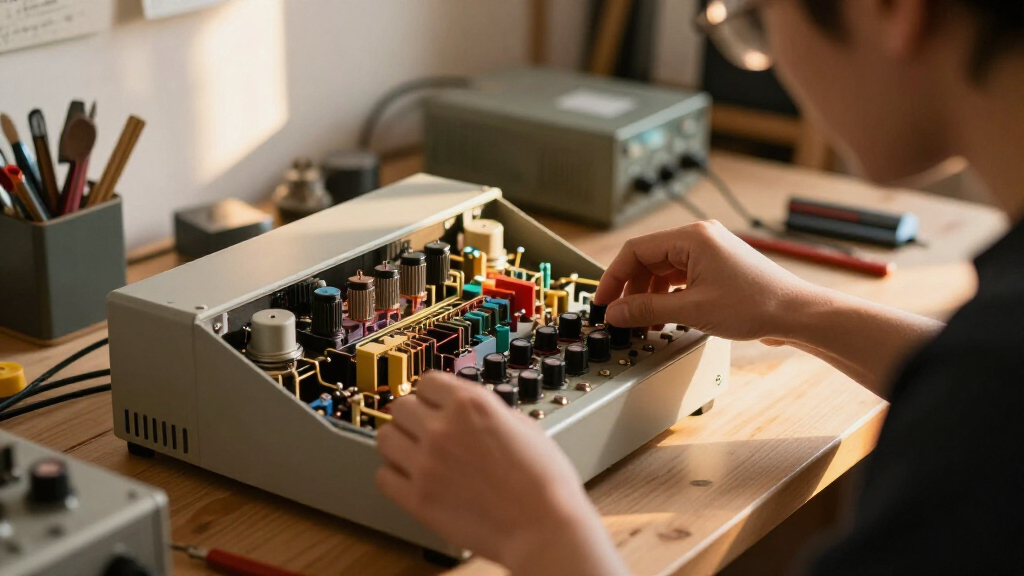
According to experts involved in the investigation, the Parametron’s core technology used magnetic elements to perform logical operations, which allowed it to function without the need for vacuum tubes or transistors. This approach was considered innovative at the time, although it remained largely experimental and did not see widespread adoption outside Japan. The device’s design differed significantly from contemporaries like the ENIAC or UNIVAC, which relied heavily on vacuum tubes, and later transistors.
The discovery was announced by a team of historians and engineers who analyzed the machine’s architecture and historical records. They noted that the Parametron’s technology was part of Japan’s broader post-war push for technological independence, driven by resource constraints and a desire to develop domestic computing solutions.
Historical Impact of Japan’s Unique Computing Approach
This discovery is significant because it reveals an alternative path in the history of computing technology. The Parametron’s magnetic logic system predates and differs from the transistor-based designs that became dominant worldwide. It demonstrates that early Japanese engineers experimented with different methods to achieve logical processing, which could influence modern research into magnetic and quantum computing. Additionally, understanding this technology broadens the narrative of global computing history, emphasizing Japan’s innovative efforts in the 1950s.

The AI Thinking Model: Reclaiming Critical Thinking in the Age of Artificial Intelligence
As an affiliate, we earn on qualifying purchases.
As an affiliate, we earn on qualifying purchases.
Early Japanese Computing Innovations and Post-War Development
During the 1950s, Japan was rebuilding its industrial base after World War II, with significant government and academic support for technological innovation. While Western countries rapidly adopted vacuum tube and transistor technology, Japan explored alternative methods, partly due to resource limitations and a desire for technological independence. The Parametron was part of this broader movement, with researchers developing magnetic logic devices that could potentially replace vacuum tubes.
Historical records indicate that the Parametron was tested in several Japanese research institutions, but it was not widely commercialized or adopted outside Japan. Its development was overshadowed by the rapid advancement of transistor technology, which proved more scalable and reliable. The recent discovery of the machine’s physical remnants and archival documents provides a rare glimpse into this lesser-known chapter of computing history.
“Using magnetic parametric oscillation for logic operations was an experimental but promising approach that could have influenced future magnetic or quantum computing research.”
— Professor Kenji Sato, electrical engineering expert
Extent of the Parametron’s Use and Influence
It is not yet clear how widespread the use of the Parametron was within Japan or if it influenced later developments in magnetic or quantum logic. The full technical details and operational history remain under investigation, and no commercial or large-scale implementations have been confirmed.Further Research and Potential Technological Insights
Researchers plan to conduct detailed technical analyses of the Parametron’s components and architecture. They aim to determine whether any prototypes or operational units still exist and explore its potential influence on later magnetic or quantum computing research. Additionally, efforts are underway to publish a comprehensive historical account of the device and its development context.
Key Questions
What exactly is the Parametron technology?
The Parametron used magnetic elements based on parametric oscillation to perform logical operations, allowing it to function without transistors or vacuum tubes.
Was the Parametron ever used commercially?
No, the Parametron remained an experimental technology with limited testing within research institutions in Japan. It was not adopted for commercial or widespread use.
How does the Parametron compare to other early computers?
Unlike contemporaries like the ENIAC or UNIVAC, which relied on vacuum tubes, the Parametron employed magnetic logic, representing an alternative approach that was largely experimental and not commercially developed.
Why is this discovery important today?
It broadens the understanding of early computing history, showing that Japan explored different technological paths, which could inform future magnetic or quantum computing research.
Are there any surviving units of the Parametron?
It is currently unknown whether any operational units still exist. Researchers are investigating the physical remnants and archival records to find out more.
Source: hn