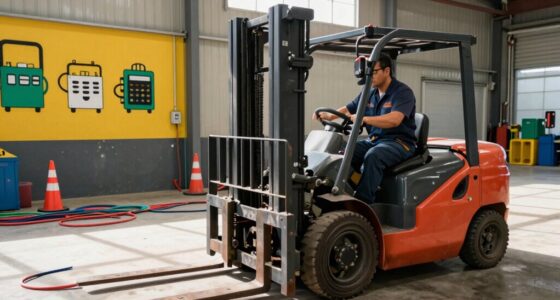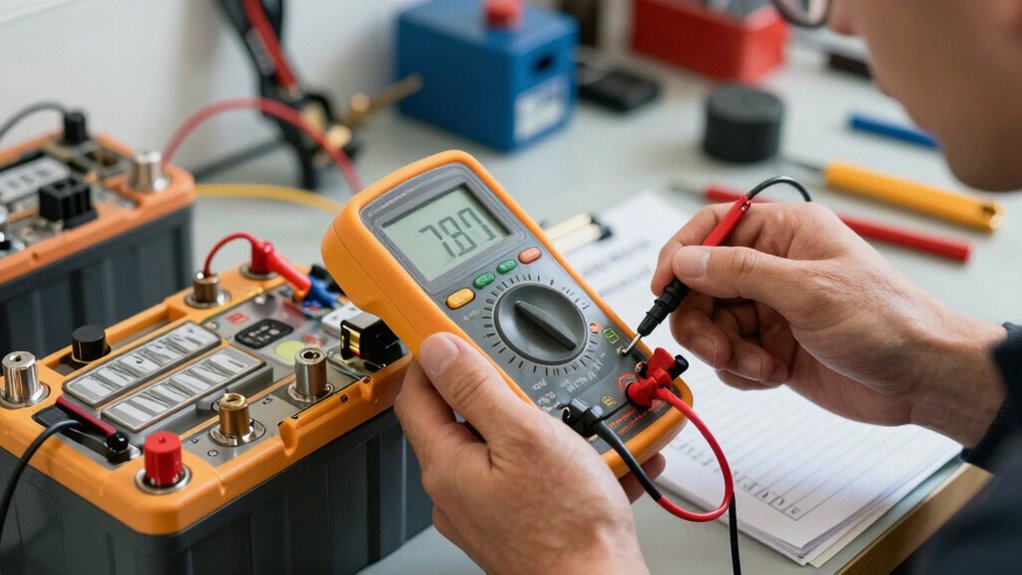

A good battery inspection checklist should include checking for physical damage like cracks or leaks, inspecting terminals for corrosion and tightness, and verifying electrolyte levels in lead-acid batteries. You should also measure voltage and performance with a multimeter, guarantee batteries are stored in a suitable environment, and look for signs of internal issues or odors. By following these steps, you’ll catch problems early and extend battery life—continue for more detailed tips.
Key Takeaways
- Conduct visual inspection for physical damage, corrosion, leaks, and terminal tightness.
- Check electrolyte levels and internal condition for signs of swelling, odors, or damage.
- Measure voltage and performance to identify undercharged or failing batteries.
- Ensure proper storage in cool, dry environments away from extreme temperatures.
- Follow safety protocols, promptly address issues, and perform routine maintenance for longevity.
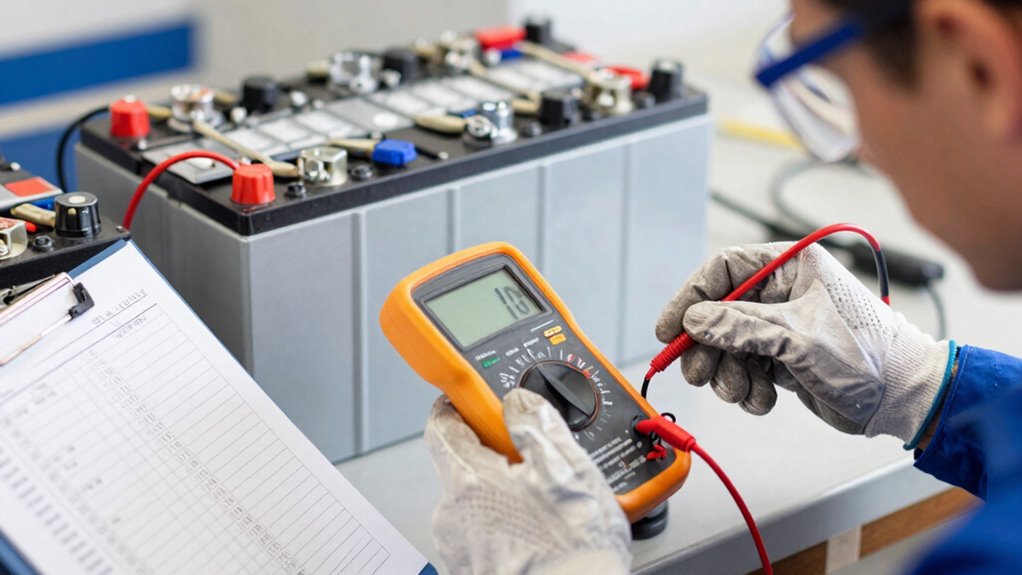
Regular battery inspections are essential to guarantee safety and ideal performance. When you take the time to check your batteries regularly, you reduce the risk of unexpected failures and ensure that your equipment functions smoothly. A comprehensive battery inspection checklist helps you stay organized and systematic, covering all critical aspects of battery health. It’s important to remember that safety is paramount, so paying attention to battery safety during inspections is a must. This means looking for signs of damage, leaks, or corrosion that could pose hazards. Proper maintenance tips include keeping terminals clean, ensuring proper fluid levels, and tightening connections, all of which contribute to the longevity and safe operation of your batteries.
Regular inspections ensure safety, prevent failures, and extend battery life through proper maintenance and vigilant monitoring.
Your checklist should start with a visual inspection of the battery itself. Look for any obvious physical damage such as cracks, bulges, or leaks. Corrosion around the terminals is another sign that maintenance is needed; it can interfere with electrical connections and lead to performance issues. Check the terminals to make sure they’re tight and free of corrosion. If you notice buildup, clean the terminals with a wire brush or an appropriate cleaning solution, and ensure they’re dry before reconnecting. Using protective gear, like gloves and safety glasses, during cleaning enhances battery safety and prevents injury.
Next, you should verify the electrolyte levels if you’re inspecting a lead-acid battery. Low electrolyte levels can cause internal damage and reduce battery efficiency. Be sure to top up with distilled water if needed, but always follow manufacturer guidelines. For sealed or maintenance-free batteries, look for any signs of swelling or abnormal odors that might indicate internal issues. During your inspection, also check the voltage and overall charge status with a multimeter. A significant deviation from the expected voltage can signal a failing battery or one that needs recharging. Regularly monitoring battery performance helps catch issues early and extend the lifespan of your batteries. Additionally, understanding battery chemistry can help you better interpret the signs of potential problems, such as abnormal temperature variations or unusual discharge patterns. Recognizing how different chemical compositions respond to various conditions can inform better maintenance decisions.
Finally, don’t forget to assess the overall environment where the battery is stored. Ensure it’s placed in a cool, dry location away from direct sunlight and extreme temperatures, which can accelerate wear and tear. Regularly inspect the surrounding area for potential hazards or sources of damage. Incorporating environmental considerations into your routine can significantly improve battery longevity and safety. Incorporating proper storage practices can help prolong the life of your batteries and prevent accidents. Incorporate these maintenance tips into your routine to prolong battery life and promote safety. By following a detailed inspection checklist, you stay proactive about battery care and preventing costly failures, ensuring your equipment remains reliable and safe to use.
lead-acid battery voltage tester
As an affiliate, we earn on qualifying purchases.
As an affiliate, we earn on qualifying purchases.
Frequently Asked Questions
How Often Should Battery Inspections Be Performed?
You should perform battery inspections regularly, ideally every 3 to 6 months, to monitor battery lifespan and charging cycles. Frequent checks help identify early signs of wear, corrosion, or capacity loss, ensuring peak performance. By staying on top of inspections, you can extend your battery’s life and prevent unexpected failures. Regular inspections are especially essential after many charging cycles or if the battery shows signs of decreased efficiency.
What Safety Precautions Are Necessary During Inspection?
During inspection, you should wear protective gear like gloves and safety goggles to prevent contact with battery acids. Guarantee proper ventilation to avoid harmful fumes buildup. Keep sparks, flames, and smoking materials away from the area. Turn off the battery and disconnect it if necessary, working in a well-ventilated space. Always follow safety protocols to prevent accidents and injuries, prioritizing your safety throughout the inspection process.
Can I Inspect a Battery Myself or Need Professional Help?
You can perform DIY maintenance on your battery if you have the right knowledge and safety gear, but for a thorough and safe assessment, it’s better to seek professional help. Professional assessment ensures that potential issues aren’t overlooked and that the inspection is done correctly. If you’re inexperienced or unsure, it’s wise to rely on experts, especially for complex or risky inspections, to prevent damage or injury.
What Tools Are Required for a Thorough Battery Inspection?
Think of inspecting your battery as tuning a musical instrument. You’ll need a multimeter to check charging voltage and a wire brush or a battery terminal cleaner to remove corrosion. A flashlight helps spot leaks or cracks. Use gloves and safety glasses for protection. These tools help you assess corrosion buildup and verify the voltage aligns with manufacturer specs, keeping your battery in harmony and preventing unexpected breakdowns.
How Do I Interpret Abnormal Readings During Inspection?
When you encounter abnormal readings during an inspection, it indicates potential issues with your battery’s lifespan or corrosion. Look for unusually low voltage or high resistance, which suggest decline or damage. Check for corrosion detection signs like white or blueish deposits on terminals, which can affect performance. Address these abnormalities promptly, as they can shorten your battery’s lifespan and compromise reliability, ensuring you maintain peak battery health.
Conclusion
Regularly inspecting your battery can considerably extend its lifespan and prevent unexpected failures. By following a thorough checklist, you guarantee all key components are in good shape. Did you know that 80% of battery failures are due to poor maintenance? Staying proactive with inspections not only saves you money but also keeps your equipment running smoothly. Make these checks a routine, and you’ll be better prepared to handle any battery-related issues before they escalate.