A good home charging area for batteries and EV gear is all about convenience and safety. Place your charging station near the parking area for easy access, guaranteeing it’s close to your electrical panel. Use weatherproof equipment and verify proper lighting for nighttime use. Choose designs that blend with your home’s aesthetic while keeping the area clutter-free. With the right setup, you can enhance you and your vehicle’s experience. There’s more to explore about optimizing your charging space.
Key Takeaways
- Position the charging station near parking areas to ensure convenient access and reduce clutter in garages or driveways.
- Ensure your home’s electrical system meets the requirements for the charger to prevent overloads and ensure safety.
- Utilize weatherproof equipment for outdoor installations, adhering to local safety regulations to enhance safety features.
- Choose aesthetically pleasing designs that harmonize with your home’s architecture and landscaping for a cohesive look.
- Invest in multi-vehicle charging stations to minimize waiting times and enhance efficiency for multiple electric vehicles.

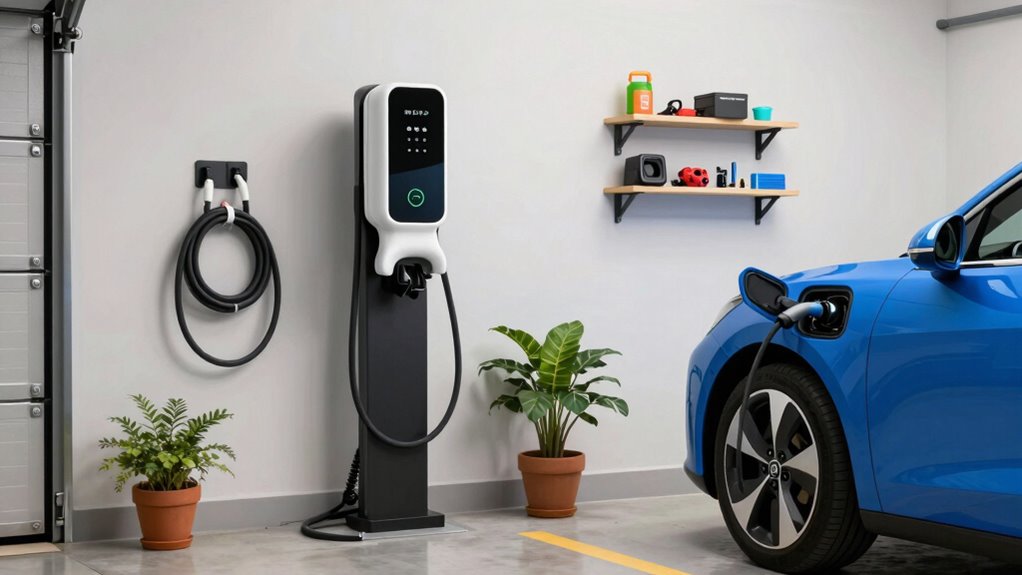
Creating a good home charging area for batteries and EV gear is vital, especially as electric vehicles become more popular. You want to guarantee that your charging station design is practical, efficient, and safe. Start by considering the location of your charging station. Ideally, it should be close to where you park your vehicle, making it easy to plug in without hassle. Think about space optimization, too; you don’t want your charging area to clutter your garage or driveway.
Next, pay attention to the electrical requirements. Make sure your home’s electrical system can support the charger you plan to install. You might need to consult an electrician to confirm you have the right amperage and voltage. This step is essential for preventing overloads and guaranteeing your charging station operates effectively. Also, implementing proper electrical wiring can enhance safety and efficiency. Ensuring your electrical system is up to code is crucial for safety and compliance.
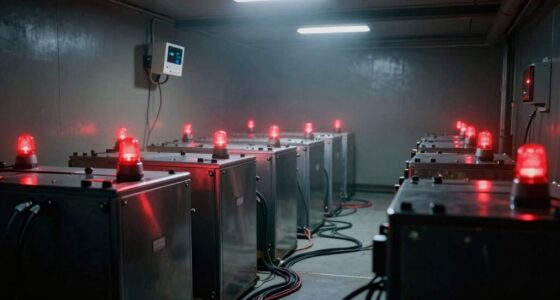
Safety considerations are also paramount. This includes using weatherproof equipment if your charging station is outdoors and confirming that the installation complies with local codes. You should also think about cord management. Nobody likes tangled cables, so look for solutions that keep cords neatly organized and out of the way. A charging station with built-in cord management features can save you time and frustration.
Accessibility features should be on your radar, too. If you have family members or guests who may need to use the charging station, make sure it’s easily reachable for everyone. This could mean installing the charger at a height that’s comfortable for all users or providing clear signage. Additionally, considering lighting arrangements can improve visibility and safety during night-time use.
Aesthetic integration is another factor you should consider. Your charging station doesn’t have to be an eyesore. Look for designs that blend well with your home’s architecture and landscaping. A visually appealing charging station can enhance your property’s overall look while serving its purpose.
If you have multiple vehicles, think about multi-vehicle support. Some charging stations allow you to charge more than one vehicle simultaneously, which can be a great investment for families. This way, you won’t have to wait for one car to finish charging before plugging in another. Additionally, understanding the energy efficiency of your charging setup can help you reduce overall energy consumption and costs. Ensuring proper ventilation in your charging area can also prevent overheating during use, which is crucial for safety.
As an affiliate, we earn on qualifying purchases.
Frequently Asked Questions
How Do I Choose the Right Charger for My Electric Vehicle?
To choose the right charger for your electric vehicle, consider charger types like Level 1 and Level 2. Evaluate charging speed based on your daily driving needs. Check installation requirements to guarantee it fits your home setup. Look for safety features to protect against electrical hazards. Avoid compatibility issues by confirming your EV’s requirements. Finally, smart chargers can offer advanced features like monitoring and scheduling, enhancing your charging experience.
Can I Install a Charging Station Myself?
You can absolutely install a charging station yourself, but imagine the satisfaction of powering up your EV with your own hands! Just remember, DIY installation comes with safety considerations. You’ll need to choose a suitable charging location and guarantee you’ve got the right permits required. It’s essential to follow local regulations and guidelines to avoid any hazards. If you’re unsure, consulting a professional is always a smart move.
What Is the Average Cost of Home Charging Equipment?
The average cost of home charging equipment typically ranges from $500 to $2,500, depending on factors like the charging station type and installation requirements. You’ll want to evaluate cost comparisons between different models and brands. Installation factors, such as electrical upgrades, can add to your overall expenses. By researching your options and understanding your home’s electrical system, you can find a charger that fits both your budget and needs.
How Long Does It Take to Charge an EV at Home?
Charging an EV at home typically takes between 4 to 10 hours, depending on your charging speed and the battery capacity. Did you know that a Level 2 charger can add about 25 miles of range per hour? If your EV has a larger battery, you might be on the longer end of that range. So, plug it in overnight, and you’ll wake up to a fully charged vehicle ready for your day!
Are There Any Tax Incentives for Installing Home Charging Stations?
Yes, there are tax incentives for installing home charging stations. You can take advantage of federal credits that markedly reduce your costs. Many states offer rebates to further encourage energy efficiency, and some even provide installation grants. By researching your local options, you can maximize these benefits, making your charging setup more affordable while supporting your shift to electric vehicles. It’s a smart investment for both your wallet and the environment.
Conclusion
In the end, creating an ideal home charging area for your batteries and EV gear is about more than just convenience—it’s about safety and efficiency. Picture your setup: the perfect location, the right equipment, and a seamless flow of energy. But what happens if you overlook even one detail? The stakes are higher than you think. Don’t just charge; elevate your experience and guarantee that every moment spent powering up is as secure and effective as possible.