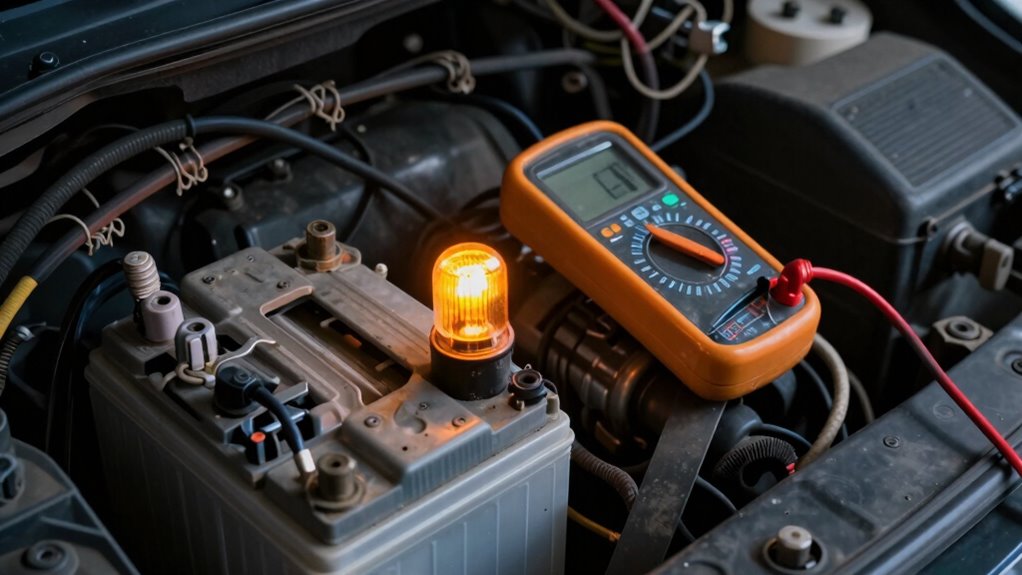

A weak battery struggles to provide enough power to start your vehicle, often showing signs like sluggish engine turns or corrosion on terminals. A failing charging system, usually caused by a bad alternator, can’t keep the battery charged while driving, leading to dim lights and dashboard warning lights. If you notice these symptoms, understanding the key differences can help you diagnose the issue accurately—keep exploring to learn how to tell them apart and prevent roadside surprises.
Key Takeaways
- A weak battery struggles to hold a charge, causing starting issues even when the alternator is functioning properly.
- A failing charging system prevents the alternator from replenishing the battery, leading to eventual battery depletion.
- Dimming headlights during startup typically indicate a weak battery; flickering lights suggest alternator problems.
- Testing voltage at the battery and alternator reveals if the battery or charging system is at fault.
- Regular maintenance and electrical tests help distinguish between a weak battery and a failing charging system early.
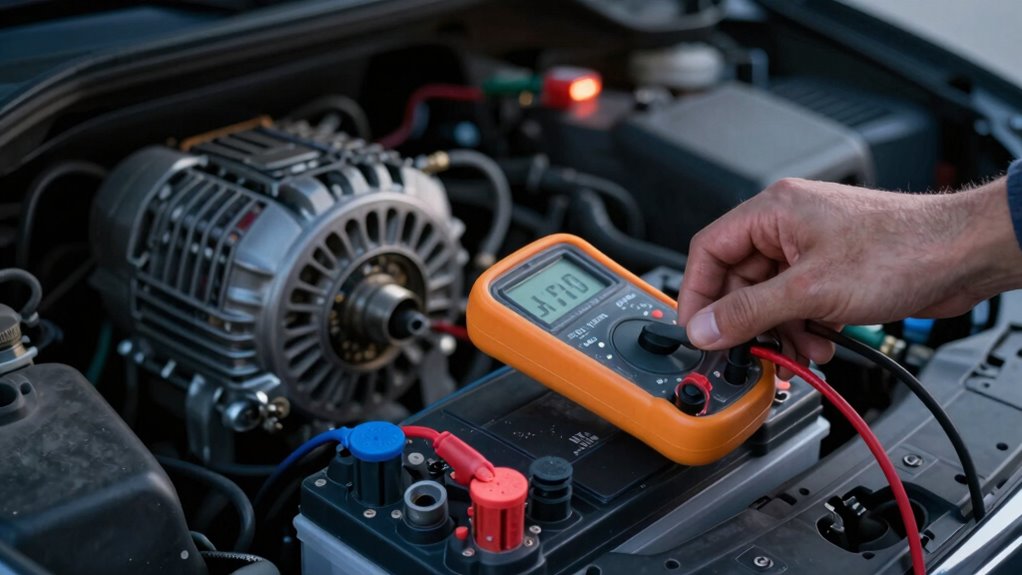
When your car struggles to start, it can be confusing to determine whether the issue lies with a weak battery or a failing charging system. A dead or slow-starting engine might seem straightforward, but understanding the underlying cause requires a closer look at your vehicle’s electrical components. Often, the first thing you’ll notice is the battery’s condition. If your battery has battery corrosion—white or bluish deposits around the terminals—it can hinder the flow of electricity, making it harder for your car to start. Corrosion acts like a barrier, preventing a solid connection between the battery and the cables, which can cause the engine to turn over sluggishly or not at all.
Battery corrosion can block electrical flow, causing slow or failed engine starts.
On the other hand, if your battery appears clean and in good condition but your car still won’t start reliably, then it’s time to consider the alternator’s role. The alternator is responsible for charging the battery while your engine runs. If it’s failing, your battery isn’t getting the charge it needs to power the starter and other electrical systems. Alternator failure often results in dimming headlights, flickering dashboard lights, or a warning light on your dashboard indicating low voltage. When the alternator isn’t working properly, your battery may initially seem fine, but over time, it becomes drained and cannot sustain the electrical demands, leading to starting problems.
Differentiating between a weak battery and a failing charging system can be tricky without proper testing. A simple test involves turning on your headlights; if they dim significantly when you try to start the engine, it’s likely a battery issue. If the headlights stay bright but the engine still struggles to turn over, the problem might be with the alternator. In some cases, a weak or failing alternator can cause your battery to become discharged, which mimics a dead battery. Regular maintenance, including checking for battery corrosion and testing the alternator’s output, can help you catch these issues early. Additionally, testing the electrical system with proper tools is crucial for accurate diagnosis.
Furthermore, understanding the signs of electrical system failure can help you identify problems before they worsen. It’s also important to be aware that battery health can decline over time due to various factors, making regular inspections vital. Recognizing early symptoms, such as dim headlights or strange electrical noises, can prevent more extensive damage. Being aware of how voltage fluctuations impact vehicle performance can also aid in early detection. Ultimately, if your car’s starting troubles persist, it’s best to have a professional mechanic perform a comprehensive electrical system test. They can identify whether you’re dealing with a weak battery, battery corrosion, or alternator failure. Addressing the root cause promptly can save you from being stranded and extend the lifespan of your vehicle’s electrical system. Recognizing the signs and understanding the difference between these issues ensures you get the right repairs, keeping your car reliable and running smoothly.

ANCEL BA101 Car Battery Tester, 12V Digital Automotive Alternator Meter Diagnostic Tool,100-2000 CCA Load Capacity, Charging & Cranking Analyzer for Truck, Boat, RV, Marine Vehicle, and More
- Early Battery Issue Detection: Identifies problems before breakdowns
- Comprehensive Battery Analysis: Displays SOH, SOC, voltage, current, CCA
- Reliable and Accurate Results: High-quality clips and smart chip ensure dependability
As an affiliate, we earn on qualifying purchases.
As an affiliate, we earn on qualifying purchases.
Frequently Asked Questions
Can a Weak Battery Cause Electrical System Failures?
Yes, a weak battery can cause electrical system failures. When your battery’s lifespan is nearing its end, it struggles to provide consistent power, leading to issues like dim lights or starting problems. To prevent this, you should perform regular charging system diagnostics. These tests help identify if your battery is weak or if there’s an underlying charging system problem, ensuring your vehicle stays reliable and avoids unexpected failures.
How Often Should I Replace My Car Battery?
You should replace your car battery every 3 to 5 years for peak performance. Regular battery maintenance, like cleaning terminals and checking voltage, helps extend its life. Follow charging tips such as avoiding frequent short trips and ensuring your charging system is working properly. If your vehicle shows signs of slow starts or dim headlights, it’s time to get the battery checked and possibly replaced to prevent future breakdowns.
What Are Signs of a Failing Alternator?
You’ll notice signs of a failing alternator if your car’s lights dim or flicker, and your battery warning light appears. You might also experience difficulty starting your vehicle or unusual electrical issues. Regular alternator maintenance helps extend your battery lifespan and keeps your charging system healthy. If these signs show up, get your alternator checked promptly to prevent further electrical problems and avoid unexpected breakdowns.
Can a Faulty Battery Drain Quickly?
Yes, a faulty battery can drain quickly, especially if there’s battery corrosion, which hampers charging efficiency. Corrosion buildup on terminals prevents proper power flow, causing the battery to lose charge faster. If your battery struggles to hold a charge or dims your headlights, it’s a sign that corrosion might be affecting its performance. Regular cleaning and maintenance can improve charging efficiency and help prevent rapid draining issues.
Is It Safe to Jump-Start a Car With a Weak Battery?
You can jump-start a car with a weak battery, but it’s risky if you don’t take proper precautions. Coincidentally, good battery maintenance and correct charging techniques are essential for safety and avoiding damage. Confirm the jumper cables are connected properly, and keep engine components away from moving parts. If unsure, consult a mechanic. Properly addressing your battery’s health helps ensure safe, reliable starts and prolongs its lifespan.
Conclusion
Understanding the difference between a weak battery and a failing charging system is like knowing whether your car’s heart or its wiring is failing. When you notice dim lights or slow starts, check your battery first; if it’s healthy, then the problem might be with your charging system. Address these issues promptly, so your vehicle doesn’t become a sinking ship in the middle of nowhere. Stay vigilant—your car’s health depends on it.