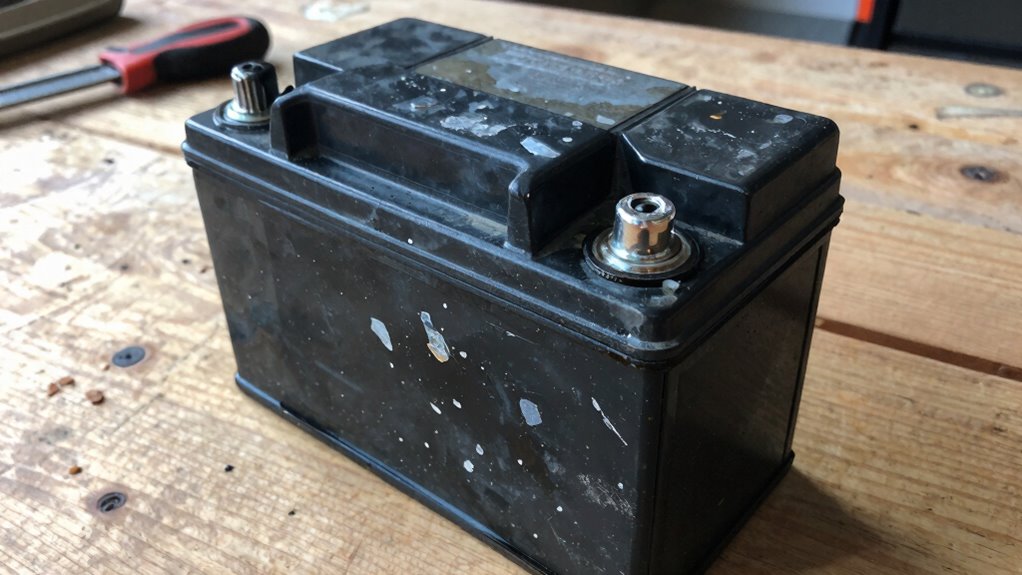

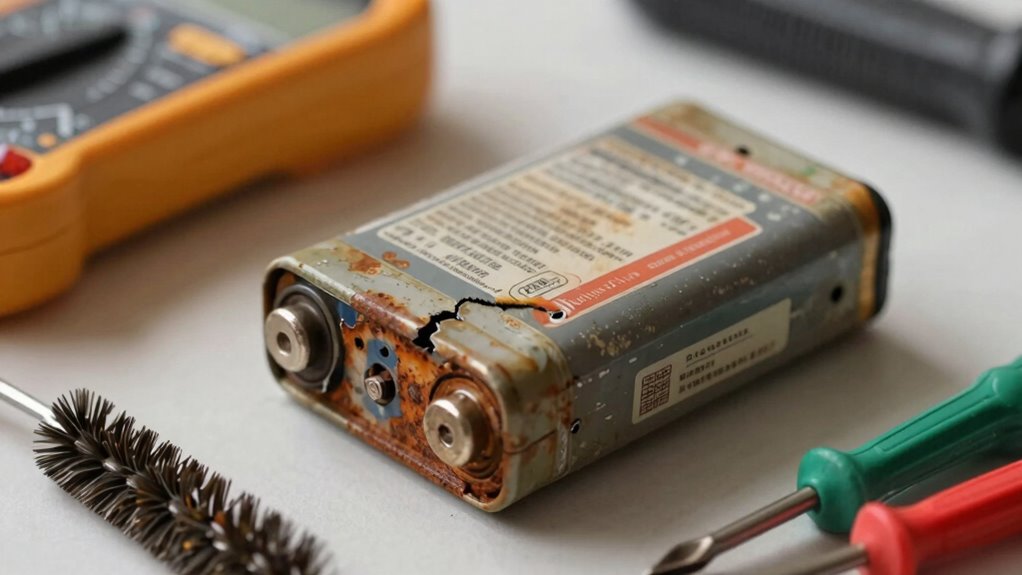
To determine if a battery is worth reconditioning, start by inspecting its physical condition for cracks, leaks, or corrosion. Check its age and usage history—if it’s heavily used or damaged, reconditioning may not help. Test the voltage with a multimeter; a markedly low reading indicates potential but not guarantee. If the battery shows minor signs of wear and isn’t physically damaged, it might be worth trying. Keep going to discover more tips for evaluating its true potential.
Key Takeaways
- Check the battery’s age and usage history to assess potential for successful reconditioning.
- Inspect physical condition for cracks, leaks, or corrosion that may prevent safe reconditioning.
- Measure voltage with a multimeter; significantly low voltage indicates possible reconditioning potential.
- Evaluate signs of capacity loss or deterioration; severe damage often makes replacement more viable.
- Consider the type of battery and failure mode; some chemistries degrade beyond practical reconditioning.
Deciding whether a battery is worth reconditioning can save you time and money, but it’s not always straightforward. To make that decision, you need to understand the battery’s chemistry and evaluate its current condition. Different types of batteries—lead-acid, lithium-ion, NiMH—have unique characteristics and failure modes. For example, lead-acid batteries often develop sulfate crystals that can sometimes be broken down through reconditioning, while lithium-ion batteries tend to degrade gradually, making them less likely to be worth restoring once their capacity drops considerably. Knowing the specific battery chemistry helps you set realistic expectations about reconditioning potential and guides you in choosing the right reconditioning tools.
Before attempting to revive a battery, check its age and usage history. If it’s been used heavily or stored improperly, chances are it’s beyond saving. You should also examine the battery for physical damage—cracks, leaks, corrosion—that could make reconditioning unsafe or ineffective. If the battery looks intact but isn’t holding a charge, perform a simple voltage test with a multimeter. If the voltage is well below the recommended level for its type, reconditioning might be worth trying; if it’s close to zero, it’s likely dead. Understanding battery chemistry is crucial in predicting how well reconditioning might work. Additionally, evaluating the state of health of the battery can give you more insight into its remaining lifespan and reconditioning potential. Sometimes, understanding the failure modes of batteries can help you identify whether reconditioning has a realistic chance of success. Recognizing the signs of capacity loss can help you determine if a reconditioning attempt is justified.
Reconditioning tools are essential in this process. Basic tools like a multimeter to measure voltage and a battery charger with repair modes are a must-have. For some batteries, especially lead-acid types, you might need desulfators or specialized reconditioning kits designed to break down sulfate buildup. Lithium-ion batteries often require careful discharging and charging cycles, so use tools that allow precise control over voltage and current. It’s also helpful to familiarize yourself with battery maintenance practices to prevent future issues. Keep in mind that reconditioning isn’t always a permanent fix—sometimes it just prolongs the battery’s life enough for a few more uses, which can be worthwhile if the battery is costly or difficult to replace. Properly maintaining batteries can significantly enhance their lifespan and effectiveness.
Ultimately, your decision hinges on a combination of understanding the battery’s chemistry, evaluating its physical and electrical condition, and having the right tools at hand. If you notice considerable damage or if the battery is old with deep capacity loss, it’s probably better to recycle it and invest in a new one. But if the battery is relatively fresh and shows signs of just simple degradation, reconditioning might be a cost-effective way to extend its life. Just remember to always prioritize safety and follow proper procedures when working with batteries.

Battery Restorer and Desulfator for Lead Acid – Prolong Life & Boost Charge Capacity, Battery Acid Refill and Additive for Golf Cart, RVs, Bikes, ATVs, Car 64oz
- Proven Battery Revival Solution: Restores old and weak lead acid batteries
- Cost-Effective Battery Maintenance: Reduces need for costly replacements
- Universal Compatibility: Works with all lead acid batteries
As an affiliate, we earn on qualifying purchases.
As an affiliate, we earn on qualifying purchases.
Frequently Asked Questions
How Long Does Battery Reconditioning Typically Take?
Battery reconditioning typically takes anywhere from a few hours to a full day, depending on the battery chemistry and the reconditioning process. For lead-acid batteries, it might be quicker, around 4-6 hours, whereas lithium-ion batteries could take longer due to their complexity. You need to follow the proper reconditioning process carefully, ensuring each step is completed thoroughly for the best results. Patience is key to restoring battery performance effectively.
Is Reconditioning Safe for All Types of Batteries?
Think of reconditioning batteries like tending a garden; each plant (or battery) has its own needs. Reconditioning isn’t safe for all types, especially those with sensitive battery chemistry like lithium-ion or sealed lead-acid batteries, unless you follow strict safety precautions. Always research specific safety guidelines, wear protective gear, and understand the battery’s chemistry before attempting. When in doubt, consult a professional to avoid risks.
What Tools Are Needed for Battery Reconditioning?
To recondition a battery, you’ll need basic tools like a multimeter, a charger, and safety equipment. The specific tools depend on the battery chemistry, such as lead-acid or lithium-ion. Reconditioning costs are generally lower than replacing batteries, making the process worthwhile. Make certain you have proper protective gear and follow safety guidelines to avoid risks. Proper tools help you effectively restore battery performance and extend its lifespan.
Can Reconditioning Extend a Battery’s Lifespan Significantly?
Yes, reconditioning can substantially extend a battery’s lifespan, especially for lead-acid and lithium-ion types, by restoring capacity and performance. By understanding the battery chemistry, you can carefully apply the right techniques, reducing waste and environmental impact. Reconditioning not only saves money but also diminishes the environmental footprint, as it delays disposal and minimizes harmful waste. Proper reconditioning practices ensure you get the most out of your batteries while helping the planet.
Are There Any Signs a Battery Is Beyond Repair?
Yes, a battery is beyond repair if you notice severe battery corrosion, which damages the internal components. Additionally, if its charging capacity drops drastically or it consistently fails to hold a charge despite reconditioning efforts, it’s likely beyond salvage. These signs indicate the internal damage is too extensive, making reconditioning ineffective and better replaced for reliable performance.
Conclusion
Reconditioning a battery can save you money and reduce waste, but it’s only worth it if the battery still has some life left. If it holds a charge and shows signs of recovery after testing, give it a try. Did you know that reconditioning batteries can extend their lifespan by up to 50%? That’s a smart way to get more value out of your batteries while helping the environment. So, assess carefully and decide if reconditioning is the right move for you.