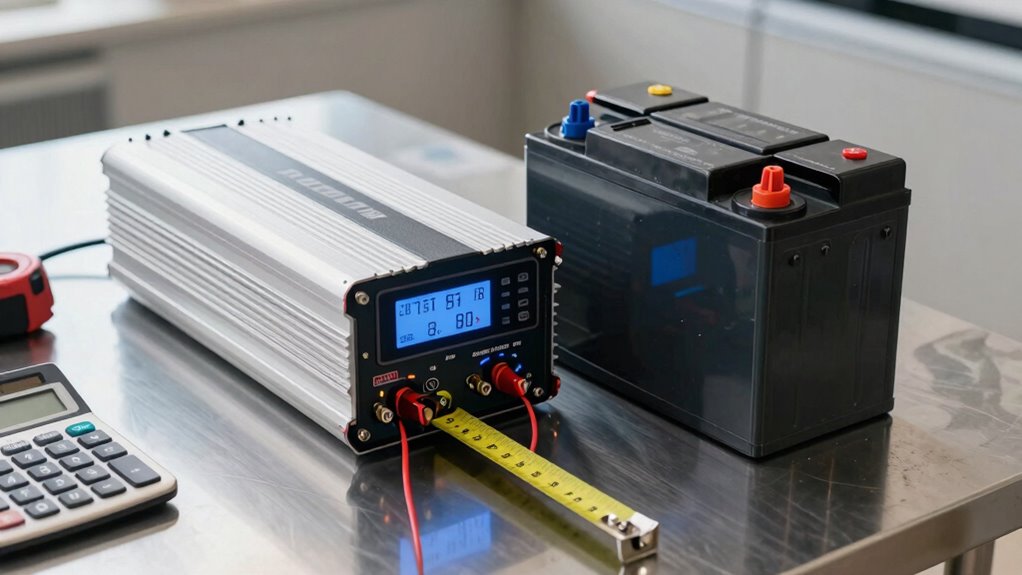
To match an inverter to your battery capacity, start by calculating the energy consumption of your appliances. Know the wattages and peak demands to guarantee the inverter can handle them. Make certain the inverter’s continuous and peak power ratings align with your battery’s discharge characteristics. Choosing the right battery type, like lithium-ion or lead-acid, is essential for efficiency. The right pairing can notably improve performance. Discover more about optimizing your solar system setup for long-term benefits.
Key Takeaways
- Assess total energy consumption of devices to guide inverter selection and ensure capacity matches battery storage.
- Choose an inverter with a continuous power rating that meets peak energy demands of all appliances.
- Match inverter specifications to battery type, considering discharge rates and efficiencies for optimal performance.
- Ensure the inverter’s power ratings align with load calculations to prevent underutilization or overloading.
- Opt for higher efficiency inverters to maximize available power and enhance the overall performance of the solar system.
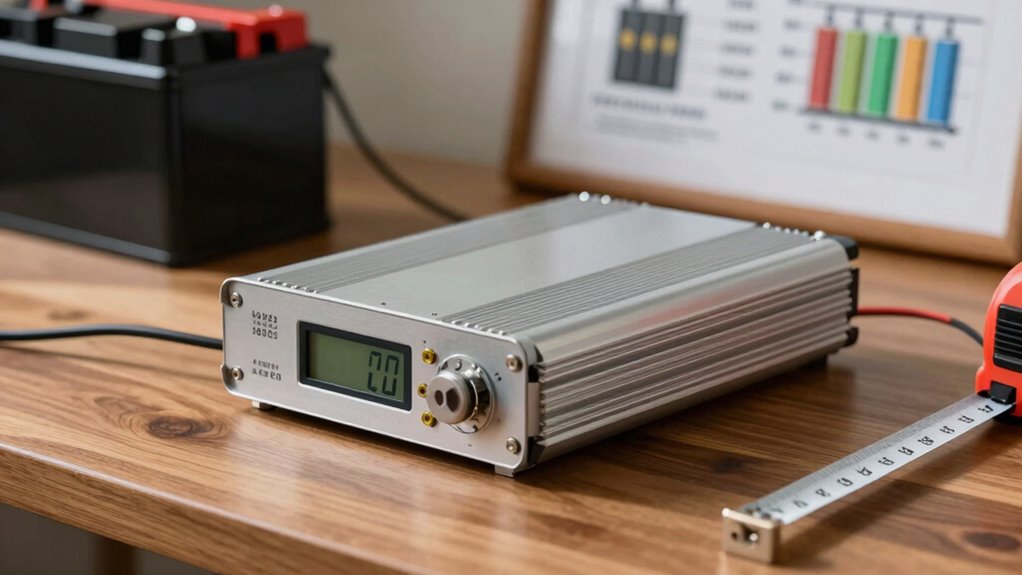
When you’re setting up a solar power system, matching your inverter to your battery capacity is crucial for maximizing efficiency. You want to verify that your inverter can handle the energy demands of your system without overloading or underutilizing the battery. This process begins with accurate battery sizing. You need to know how much energy your battery can store and how much energy your system will require. If your battery’s capacity is too large for the inverter, you might not fully utilize the battery’s potential. Conversely, if the inverter is too small, it can lead to quick battery depletion and potential damage.
Start with a load calculation. This means figuring out how much energy your appliances and devices consume. List everything you plan to power, and note their wattages. For instance, if you plan to run a refrigerator, lights, and a computer, you’ll need to aggregate their energy requirements to get an accurate picture of your total load. This load calculation will guide you in inverter selection, confirming that you choose one capable of handling your peak energy demands. Additionally, understanding your system’s energy efficiency can help you optimize the entire setup for better performance and longevity. Incorporating system components that are compatible and efficient can further enhance overall system performance.
Start with a load calculation to determine your appliances’ energy needs, ensuring you select an inverter that meets your peak demands.
Next, consider the continuous and peak power ratings of your inverter. Continuous power is what it can handle over a sustained period, while peak power represents short bursts of energy that might be needed for starting up appliances like motors. Your inverter must match these ratings to your load calculations. If your appliances require a lot of power initially, but your inverter can’t keep up, you’ll run into problems. It’s also important to consider the discharge characteristics of your battery, as this impacts how effectively the inverter can draw power over time.
Also, think about the type of battery you’re using. Different batteries have varying discharge rates and efficiencies. For example, lithium-ion batteries discharge at a different rate compared to lead-acid batteries. Your inverter needs to complement these characteristics to confirm energy efficiency throughout your system. If your inverter isn’t suited for the battery type, you won’t get the best performance.
Finally, keep in mind that energy efficiency is key. An inverter that operates at a higher efficiency rating will waste less energy, translating to more power for your devices. When you’ve factored in your battery capacity, load calculations, and inverter specifications, you’re well on your way to creating a reliable solar power system that meets your energy needs effectively. Paying attention to off-grid solar power and other system components will help ensure your setup is both efficient and resilient. By paying attention to these details, you’ll confirm that your investment in solar energy pays off in the long run.

BELTTT 3000W Pure Sine Wave Inverter 12V DC to 120V AC for Solar, Off-Grid, RV, Truck, Home, Power Inverter with Dual AC, 20A Socket, 5V 2.1A USB, Hardwire Port, Remote Controller 23Ft Cable
- Pure Sine Wave Output: Matches utility grid waveform for sensitive devices
- High Power Capacity: 3000W continuous, 6000W surge power
- High Conversion Efficiency: Over 93% efficiency with low no-load loss
As an affiliate, we earn on qualifying purchases.
As an affiliate, we earn on qualifying purchases.
Frequently Asked Questions
What Is the Lifespan of an Inverter?
An inverter typically lasts between 5 to 15 years, depending on usage and maintenance. By prioritizing inverter maintenance, you can considerably extend its lifespan. Regularly cleaning and checking connections boosts inverter efficiency, ensuring it operates smoothly. If you notice any unusual noises or performance drops, address them promptly to avoid further issues. Keeping an eye on your inverter helps you maximize its longevity and maintain peak performance for your energy needs.
Can I Use Multiple Batteries With One Inverter?
Yes, you can use multiple batteries with one inverter! Just make certain you choose compatible battery types and connect them properly. You can wire them in series or parallel, depending on your voltage and capacity needs. Series connections increase voltage, while parallel connections boost capacity. Always check your inverter’s specifications to confirm it can handle the combined output. This way, you’ll maximize performance and efficiency for your setup!
How Do Temperature Changes Affect Battery Performance?
Temperature changes markedly affect battery performance; for instance, a 10°C drop can reduce capacity by up to 20%. As you use your batteries, keep in mind these temperature effects, which cause performance variations. Cold temperatures slow down chemical reactions, leading to less available power, while excessive heat can increase self-discharge rates and damage internal components. So, monitoring and maintaining ideal temperatures is essential for ensuring your batteries work efficiently.
Are There Specific Brands Recommended for Inverters?
When choosing an inverter, consider brands like Victron Energy, Renogy, and AIMS Power. Each offers different inverter types, such as pure sine wave and modified sine wave, so compare their features and efficiency. You’ll find that Victron’s known for reliability, while Renogy is great for budget-friendly options. AIMS Power often provides robust performance. Researching brand comparisons will help you pick the best inverter for your specific needs.
What Safety Precautions Should I Take When Using an Inverter?
When using an inverter, you should always follow safety guidelines to avoid accidents. Confirm your inverter has overload protection to prevent overheating and potential damage. Keep it in a well-ventilated area to reduce the risk of fire. Regularly check for frayed wires or loose connections. Avoid connecting too many devices at once, and always adhere to the manufacturer’s recommendations to confirm safe and efficient operation. Stay safe while enjoying your power needs!
Conclusion
In the end, choosing the right inverter for your battery capacity can make all the difference. Imagine this: you’re relying on your system during a critical moment, and it falters. The stakes are high, but with the right match, you’ll have peace of mind knowing your power needs are covered. Don’t leave it to chance—take the time to guarantee your inverter and battery work seamlessly together. You’ll thank yourself when it matters most.