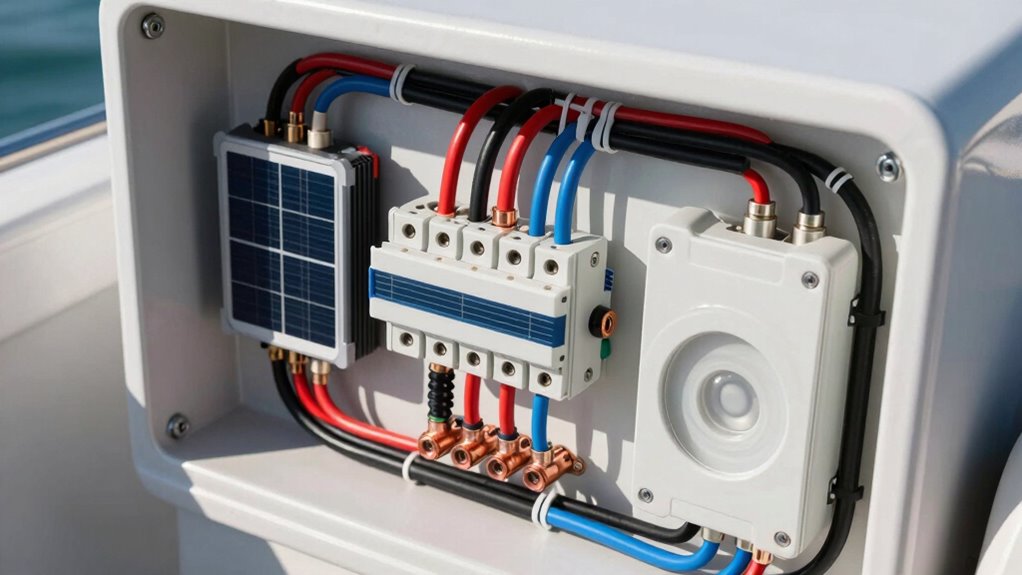
A clean wiring plan for solar, alternator, and shore power guarantees your system is safe, efficient, and easy to maintain. Use high-quality marine-grade wiring and proper fusing to prevent corrosion and electrical issues. Incorporate automatic transfer switches or combiners for seamless power source switching, and keep everything organized to simplify troubleshooting. Prioritize battery management and safety devices to extend system life. Keep exploring to discover essential tips for designing the ultimate energy setup.
Key Takeaways
- Use dedicated, high-quality marine-grade wiring for solar, alternator, and shore power connections to ensure safety and durability.
- Implement automatic transfer switches or combiners for seamless, safe switching between power sources without back-feed risks.
- Properly fuse and protect all circuits to prevent overloads, short circuits, and potential fire hazards.
- Organize wiring routes to minimize chafing, moisture exposure, and facilitate easy troubleshooting and maintenance.
- Incorporate battery management systems to balance, monitor, and prevent overcharging or deep discharges across all power sources.
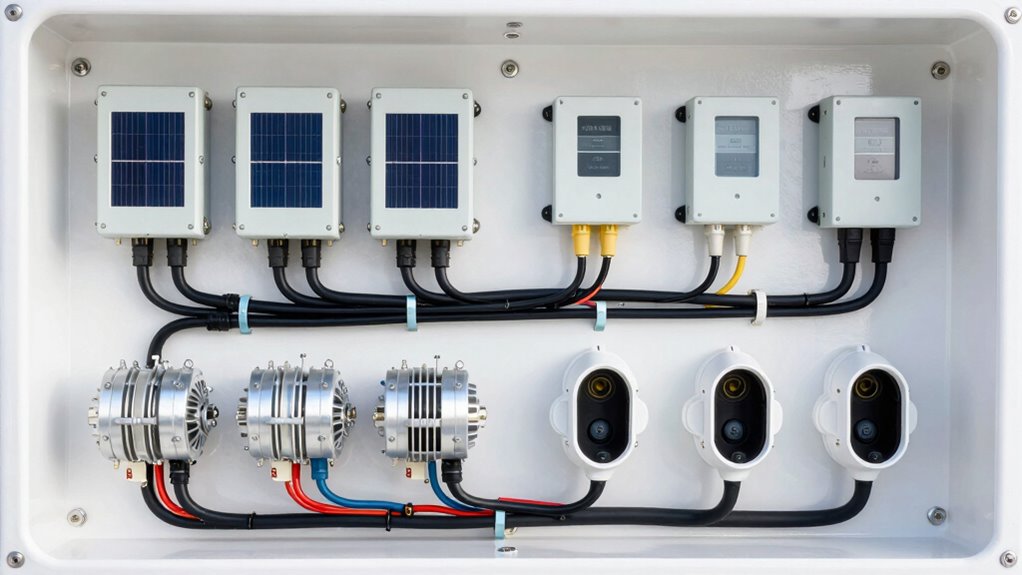
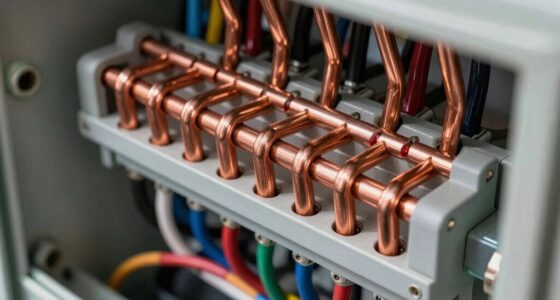
When it comes to powering your boat sustainably and reliably, solar and alternator shore power systems offer effective solutions. These systems work together to ensure your vessel has a steady energy supply while reducing reliance on fossil fuels. To maximize their benefits, you need to pay close attention to battery management and wiring safety. Proper battery management involves monitoring your batteries’ charge levels, preventing overcharging, and ensuring they’re balanced correctly. With a well-designed system, your batteries won’t get stressed or damaged, which extends their lifespan and maintains ideal performance. Using a battery management system (BMS) or smart charge controllers helps you keep tabs on the state of charge and prevents dangerous situations like thermal runaway or deep discharges. When you’re integrating solar panels and alternators into your setup, make sure your wiring is done safely and neatly. Proper wiring safety isn’t just about avoiding shorts; it’s about ensuring your system can handle the current load reliably. Use high-quality, marine-grade wiring, and keep all connections secure and protected from moisture and corrosion. When installing components, follow manufacturer guidelines and marine electrical standards to minimize risks. Proper fusing and circuit protection are crucial, especially when dealing with high currents from solar panels or the alternator. This prevents damage to your equipment and reduces the risk of electrical fires. You should also organize wiring routes carefully, avoiding chafing or exposure to elements that could cause deterioration over time. Label all connections clearly, so troubleshooting becomes easier without risking accidental disconnections or incorrect wiring. When managing power sources, consider using combiners or transfer switches that automatically choose the best power source—solar, alternator, or shore power—without risking back-feed or overloads. These devices improve wiring safety by isolating systems appropriately. Regular maintenance is essential for keeping your setup excellent. Check connections, clean terminals, and verify that all safety devices are functioning correctly. If you notice any signs of corrosion or loose wiring, address them immediately to prevent potential failures. Paying attention to battery health monitoring and implementing preventative measures can significantly extend system reliability. By focusing on proper battery management and wiring safety, you ensure your boat’s power system remains dependable, efficient, and safe. Combining solar, alternator, and shore power creates a flexible, eco-friendly energy network that supports your boating adventures while safeguarding your investment. When you prioritize clean wiring and diligent battery care, you’ll enjoy peace of mind, knowing your system is designed for long-term performance and safety.

0 Gauge Wire 40FT (20FT Red/Black) Copper Clad Aluminum Battery Cable Kit
- Complete Installation Kit: Includes wire, lugs, and heat shrink tubing
- True 1/0 AWG Specification: Ensures maximum power transfer and efficiency
- High Current Capacity: Supports up to 250A for demanding systems
As an affiliate, we earn on qualifying purchases.
As an affiliate, we earn on qualifying purchases.
Frequently Asked Questions
How Do I Calculate My Boat’s Total Power Needs?
To calculate your boat’s total power needs, start by listing all your devices and their power consumption in amps or watts. Add up their usage to find the total daily power consumption. Then, consider your battery capacity to guarantee it can support this load, accounting for usage hours. This way, you’ll know if your current power setup suffices or if upgrades are needed to meet your energy demands.
What Safety Precautions Are Necessary for Wiring?
You should never overlook grounding safety and wire insulation when wiring your boat. Before starting, turn off all power sources and double-check connections. Use proper insulation to prevent shorts, and make certain grounding is solid to avoid shocks or fires. Always wear protective gear, keep tools insulated, and follow manufacturer instructions. Suspense builds when you realize that missing a single step can jeopardize your safety and your vessel’s integrity.
Can I Upgrade My System Later Easily?
Yes, you can upgrade your system later easily with modular expansion and system integration. Planning for future additions now allows you to add panels, batteries, or chargers without major rewiring. Choose compatible components and keep your wiring organized. This way, when you’re ready to expand, the process is straightforward, saving you time and effort. Upgrading becomes seamless, ensuring your system grows alongside your needs.
How Does Temperature Affect Solar Panel Efficiency?
Ever wondered why your solar panels might produce less power on hot days? Temperature substantially impacts solar panel efficiency, as high temperatures cause degradation and reduce output. Using panels with favorable temperature coefficients helps minimize this effect. Cooler conditions keep panels operating closer to their ideal efficiency, so you get more power. Remember, proper installation and maintenance can also help manage temperature effects, ensuring your system performs well year-round.
What Maintenance Is Required for the Entire System?
You should regularly inspect your system for corrosion, especially on terminals and connections, to prevent damage and ensure safety. Keep batteries clean and check their lifespan, replacing them when needed to maintain peak performance. Test your charge controllers and inverter connections, and clean dust or debris from solar panels for maximum efficiency. Proper maintenance prolongs system life, prevents costly repairs, and keeps your energy setup running smoothly.
Conclusion
Now that you’ve seen how solar, alternator, and shore power work together, isn’t it time to upgrade your wiring for a cleaner, more reliable energy source? Imagine the freedom of never worrying about running out of power or harming the environment. With this smart setup, you can enjoy your adventures fully, knowing you’re making a positive impact. So, why settle for less when you can have a sustainable and efficient system that keeps you moving forward?