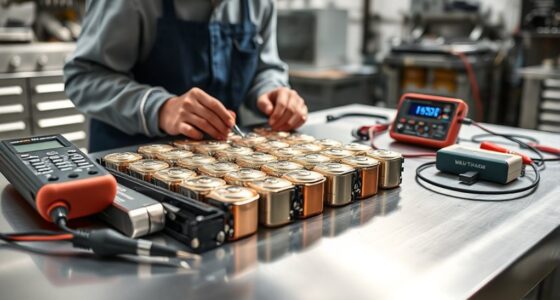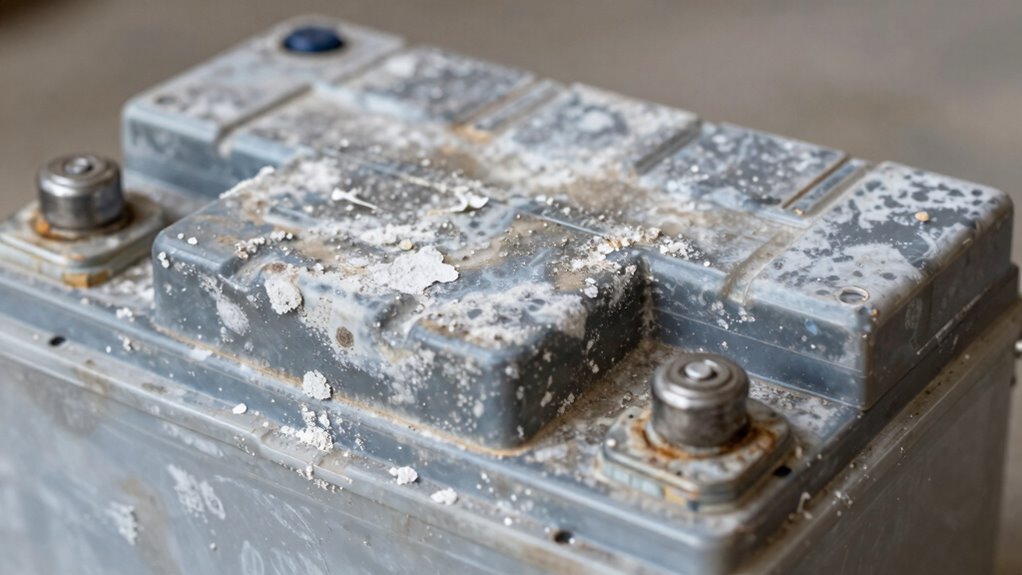

Sulfation is the main cause of lead-acid battery failure, silently reducing capacity and lifespan over time. It happens when sulfate crystals form on the plates, especially if you often undercharge, leave the battery unused, or experience deep discharges. Signs include difficulty starting, longer recharge times, and visible chalky deposits. Detecting these early can save your battery—continue exploring to learn effective ways to prevent and treat sulfation before irreversible damage occurs.

Get backup power and energy gear delivered free — and shop member deals
- Fast, free delivery on millions of items
- Access to Prime Big Deal Days deals on October 6–7
- Prime Video, Amazon Music and more included
Key Takeaways
- Sulfation causes white, chalky deposits on lead plates, reducing battery efficiency and lifespan.
- It results from incomplete charging or prolonged inactivity, leading to sulfate crystal buildup.
- Early signs include reduced runtime, longer charging times, and visible deposits on plates.
- Regular maintenance, proper charging, and terminal cleaning help prevent sulfation development.
- Detecting sulfation early with voltage checks and visual inspections extends battery life.

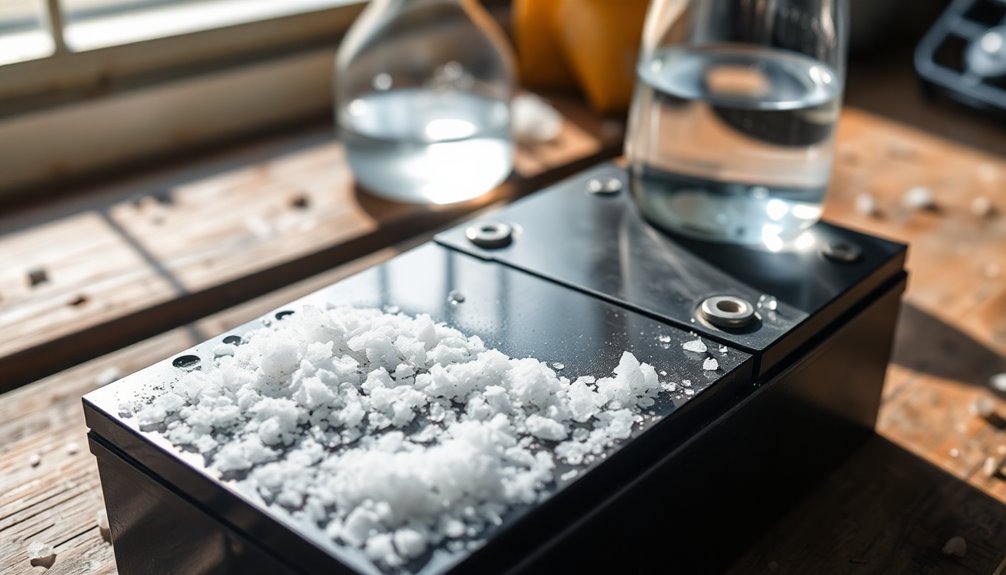
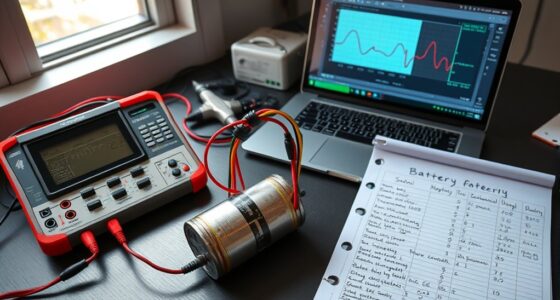
Have you ever wondered how your body processes toxins and supports essential functions? The same principle applies to lead-acid batteries, where sulfation acts as a silent killer, gradually reducing their capacity and lifespan. Understanding what causes sulfation and how to spot it early can save you time, money, and frustration. Proper battery maintenance is vital to prevent sulfation from taking hold. Regularly checking your batteries for signs of wear, ensuring they’re charged correctly, and avoiding deep discharges are key steps. When you maintain your batteries properly, you help keep sulfation at bay and extend their service life. Troubleshooting tips are invaluable here; if your battery isn’t holding a charge or if it’s taking longer than usual to recharge, sulfation might be the culprit. In such cases, inspecting the plates for a white, chalky buildup can confirm your suspicions. This buildup occurs when sulfate crystals form on the lead plates, a process accelerated by incomplete charging or prolonged periods of inactivity. The good news is that early detection allows you to take corrective action before the damage becomes irreversible. Using a hydrometer to test the electrolyte’s specific gravity can also reveal early signs of sulfation, as weakened or uneven readings often indicate that sulfate crystals are impeding the chemical reactions inside the battery. When troubleshooting, consider whether your charging system is functioning properly; an undercharged battery is more prone to sulfation. Sometimes, a desulfation process involving specialized chargers can help break down those stubborn crystals, but this isn’t always effective if sulfation has advanced too far. Preventive measures are your best defense—regularly cleaning terminals, ensuring tight connections, and avoiding deep discharges help maintain ideal battery health. If you notice your battery is aging faster than expected or if it’s suddenly losing capacity, it’s time to reassess your maintenance routine. Keep an eye out for the telltale signs of sulfation—reduced runtime, difficulty starting, or visible buildup—and act quickly. Remember, troubleshooting tips like checking voltage, inspecting plates, and maintaining proper charge levels can make all the difference. Maintaining good battery hygiene isn’t just about avoiding inconvenience; it’s about safeguarding your equipment and ensuring reliable operation. Additionally, understanding the battery’s chemical process can help you better grasp how sulfation impacts performance and longevity. By staying vigilant and proactive, you can prevent sulfation from becoming a silent killer, ultimately prolonging your battery’s life and saving you money in the long run. Proper battery maintenance and a keen eye for early warning signs are your best tools in fighting sulfation’s gradual damage, keeping your batteries healthy and your systems running smoothly.
As an affiliate, we earn on qualifying purchases.
Frequently Asked Questions
Can Sulfation Occur in All Types of Batteries?
Sulfation can occur in all types of batteries, but it’s most common in lead-acid batteries due to their chemical composition and design. When discharged, lead plates develop sulfate crystals, and if left unchecked, these can harden and reduce capacity. Other batteries, like lithium-ion, are less prone because of their different chemical makeup and construction. Proper maintenance and charging practices help prevent sulfation across various battery types.
How Long Does It Take for Sulfation to Develop?
You want to know how long sulfation takes? Well, it’s like waiting for your battery’s lifespan to hit the jackpot—usually after 300 to 500 charging cycles. Sulfation begins as soon as your battery starts aging, but it sneaks in slowly, often unnoticed until performance drops. So, if you keep ignoring proper charging, sulfation will develop faster, turning your once-reliable power source into a useless paperweight.
Is Sulfation Reversible Without Replacing the Battery?
Yes, sulfation can often be reversed without replacing the battery through battery rejuvenation techniques. You can try sulfation removal methods like controlled recharging or specialized treatments to break down the lead sulfate crystals. These processes help restore some capacity and extend your battery’s lifespan. However, if sulfation is severe or persistent, professional rejuvenation might be necessary, or replacement could become the best option.
What Environmental Factors Accelerate Sulfation?
While high temperatures accelerate sulfation, extreme cold can also worsen it by slowing chemical reactions. Humidity impacts sulfation by promoting corrosion on battery terminals, speeding up deterioration. You might notice your battery struggles more in hot, humid environments, leading to quicker sulfation buildup. To protect your battery, avoid storing it in high-temperature, high-humidity areas, and keep it cool and dry whenever possible to slow down sulfation’s harmful effects.
Can Regular Maintenance Prevent Sulfation Entirely?
Regular maintenance can substantially extend your battery’s lifespan, but it can’t prevent sulfation entirely. Implementing proper maintenance strategies like keeping the battery charged, checking fluid levels, and cleaning terminals helps delay sulfation. However, over time, sulfation naturally occurs due to usage and environmental factors. To maximize battery life, stay consistent with maintenance routines, monitor your battery’s health, and address issues promptly, even if sulfation is inevitable eventually.
Conclusion
By staying vigilant and catching signs early, you can help keep your lead-acid batteries healthy and thriving longer. Think of sulfation as a quiet thief that slowly steals power and performance—yet with a little attention, you can outsmart it. Regular maintenance and gentle checks are your best allies in this quiet battle. Stay proactive, and your batteries will reward you with reliable performance when you need it most.
Evergreen bestsellers Picks
bestsellers
As an affiliate, we earn on qualifying purchases.