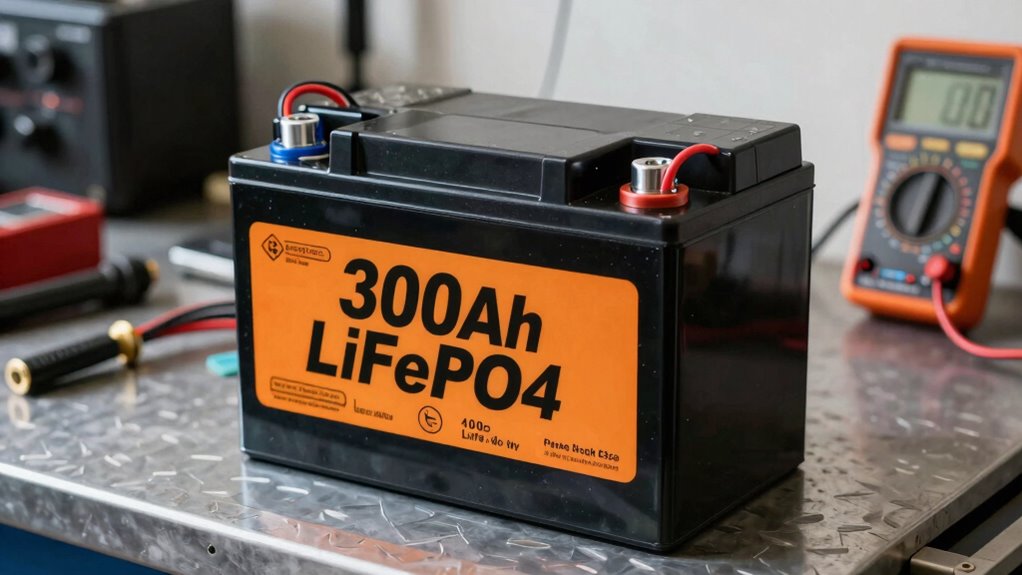

A 300Ah LiFePO4 battery typically lasts between 8 and 12 years, depending on how you use and maintain it. Its lifespan mainly depends on cycle count and how deeply you discharge it—shallow cycles extend the battery’s life, while deep ones shorten it. Proper temperature control and good charging habits further help preserve capacity. If you want to understand how different usage patterns impact longevity, keep exploring the key factors behind battery cycle life.

Get backup power and energy gear delivered free — and shop member deals
- Fast, free delivery on millions of items
- Access to Prime Big Deal Days deals on October 6–7
- Prime Video, Amazon Music and more included
Key Takeaways
- A 300Ah LiFePO4 battery typically lasts 8-12 years at 50% DoD, considering 2,000–3,000 cycles.
- Deep discharges reduce cycle life, shortening overall lifespan, while shallow cycles extend it.
- Proper thermal management and optimal charging practices help maximize battery longevity.
- End-of-life is usually reached when capacity drops below 80%, limiting usable capacity.
- Actual lifespan depends on usage patterns, cycle depth, maintenance, and operating conditions.
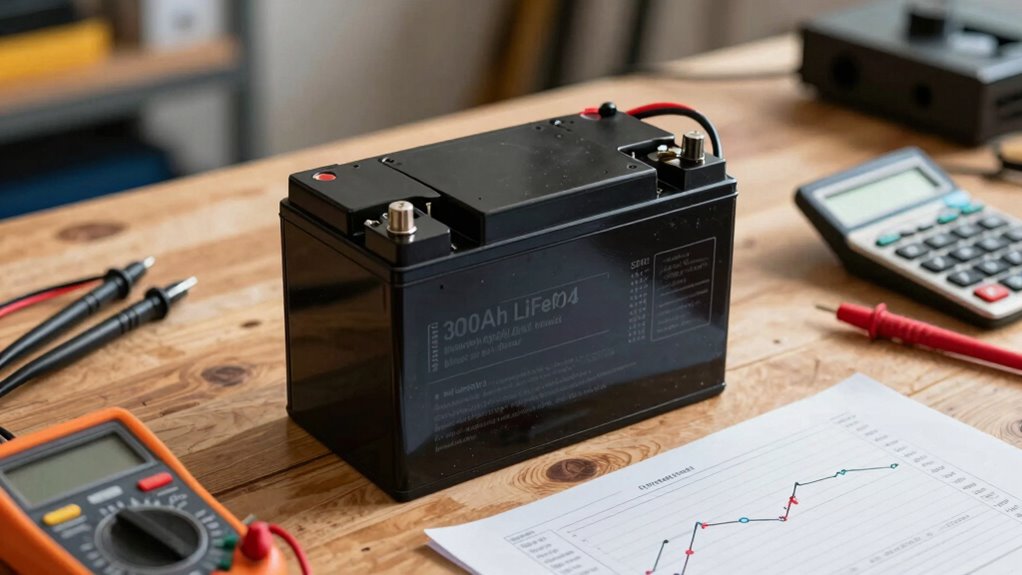
Are you wondering how long a LiFePO4 battery truly lasts? If so, understanding its lifespan involves more than just the number of years it’s been in use. It requires a look at how battery degradation occurs over time and how to estimate its lifespan based on cycle count and usage patterns.
LiFePO4 batteries are known for their longevity compared to other lithium-ion chemistries. However, like all batteries, they do experience battery degradation with each charge and discharge cycle. Every time you draw from the battery and then recharge it, you slightly diminish its capacity. Over hundreds or thousands of cycles, this capacity reduction accumulates, making the battery less efficient and ultimately limiting its usable life. That’s why lifespan estimation isn’t just about age; it’s about how many full cycles the battery can handle before its capacity drops to a certain point—usually around 80% of its original capacity.
LiFePO4 batteries degrade over cycles, limiting lifespan to around 80% capacity after thousands of uses.
For a 300Ah LiFePO4 battery, cycle life is a key factor in its overall longevity. Manufacturers often quote a cycle life of anywhere from 2,000 to 5,000 cycles, but this depends on how deeply you discharge the battery each time. Shallow discharges, such as using only 20-30% of its capacity per cycle, can substantially extend its cycle life. Conversely, deep discharges—using most of the battery’s capacity—accelerate battery degradation and shorten its lifespan.
To estimate how long your 300Ah LiFePO4 will last, you need to weigh your typical usage. If you use about 50% of its capacity per cycle, you might expect around 2,000 to 3,000 cycles before hitting that 80% capacity threshold. This translates to roughly 8-12 years of service, assuming you cycle the battery daily. If you discharge less frequently or less deeply, the battery could last even longer. Keep in mind that temperature, charging practices, and overall maintenance also influence battery degradation and lifespan estimation. Additionally, proper thermal management can help optimize the battery’s longevity by reducing the effects of temperature fluctuations.
300Ah LiFePO4 deep cycle battery
As an affiliate, we earn on qualifying purchases.
As an affiliate, we earn on qualifying purchases.
Frequently Asked Questions
How Does Temperature Affect Lifepo4 Battery Lifespan?
Temperature greatly impacts your LiFePO4 battery’s lifespan. If you expose it to high ambient conditions, thermal degradation accelerates, reducing cycle life and performance. Conversely, cold temperatures slow chemical reactions, temporarily lowering capacity but generally preserving battery health. To maximize longevity, keep your battery within recommended temperature ranges, avoiding extreme heat or cold, and guarantee proper thermal management. This way, you prevent thermal degradation and extend your battery’s useful life.
Can I Safely Overcharge or Over-Discharge a 300AH Lifepo4?
You shouldn’t overcharge or over-discharge your 300Ah LiFePO4 battery, as overcharge risks damaging the cells and shortening lifespan. Always stay within the recommended voltage and discharge limits to guarantee safety and longevity. Overcharging can cause overheating, while excessive discharge leads to capacity loss. Use a proper charger with built-in protections, and monitor voltage levels to keep your battery operating at its best and avoid costly damages.
What Maintenance Practices Extend Lifepo4 Battery Life?
Maintaining your LiFePO4’s longevity starts with proper practices. Regularly perform battery calibration to guarantee accurate capacity readings and enable ideal performance. Additionally, practice voltage balancing to prevent uneven cell wear and prolong lifespan. Keep the battery within recommended voltage ranges, avoid deep discharges, and store it in a cool, dry place. These proactive steps help maximize your battery’s durability, delivering dependable power for years to come.
How Do Different Brands Compare in Cycle Life?
You’ll find that different brands vary considerably in cycle life due to their reputation and manufacturing standards. Reputable brands with strict quality controls typically offer longer-lasting LiFePO4 batteries, often exceeding others in durability and cycle count. Cheaper brands may cut corners, leading to shorter cycle life. Always research brand reviews and certifications to guarantee you choose a reliable product that meets high manufacturing standards for maximum longevity.
Does Storage Duration Impact Battery Longevity?
Storage duration can impact your battery’s longevity, especially if you neglect proper storage conditions. If you store your LiFePO4 battery in a cool, dry place and avoid deep discharges, it will last longer. Leaving it fully charged or discharged for extended periods accelerates degradation. Regularly checking and maintaining ideal storage conditions minimizes capacity loss, ensuring your battery stays healthy and performs well over its lifespan.
Conclusion
So, the truth is, a 300Ah LiFePO4 battery can genuinely last thousands of cycles if you follow proper care. Don’t buy into hype that it’ll degrade quickly or that it’s fragile. With correct charging, avoiding deep discharges, and good maintenance, you’ll see consistent performance over years. These batteries aren’t just hype—they’re reliable, long-lasting power sources if you treat them right. So, rest assured, your investment will pay off in dependable, extended use.
Fall Picks
fall essentials
As an affiliate, we earn on qualifying purchases.